POVERTY FROM THE PERSPECTIVE OF THE WORD OF GOD
INTRODUCTION
This study aims to understand poverty in light of the Scriptures, analyzing its causes, its consequences, and God’s perspective on the subject. The Bible addresses poverty in various ways—material, spiritual, social, and eschatological. God’s Word offers us both warnings and hope.
POVERTY AND HUMAN CAUSES
Laziness and Corruption as Causes
Proverbs 10:3-5 The LORD does not let the righteous go hungry, but He thwarts the craving of the wicked. He who works with a slack hand becomes poor, but the hand of the diligent brings wealth. He who gathers in summer is a prudent son, but he who sleeps during the harvest is a son who brings shame.
The purpose of these proverbs is to warn us against unjust gain and to show that the cause of much poverty is laziness and corruption. The biblical reason is that the Lord does not let the righteous go hungry.
The Bible also reveals that poverty is not always the result of individual laziness. There is poverty caused by structural pressure, judicial injustice, and exploitation.
Amos 5:11-12 You oppress the poor… therefore you will not dwell in the houses you have built.
James 5:4 The wages of the workers who harvested your fields, which you withheld by fraud, are crying out against you.
Exodus 23:6 You shall not pervert the justice due to your poor in their lawsuits.
Not all poverty stems from laziness; much arises from injustice, exploitation, and oppression. The believer must discern and combat both causes.
Greed and the Sense of Superiority.
A sense of superiority is shameful, for it breeds greed and envy in people. This is the cause of much poverty in the world. Oppressive power breeds fear and appropriates the material possessions of others.
Believers must be very wary of feelings of superiority and the desire to possess; otherwise, injustice may arise regarding the treasure we seek.
The Bible declares that the love of money is the root of all kinds of evil.
1 Timothy 6:9-10 Those who want to get rich fall into temptation… the love of money is the root of all kinds of evil.
Luke 6:24 But woe to you who are rich now, for you have already received your comfort.
Matthew 19:24 It is easier for a camel to go through the eye of a needle…
The danger of wealth is just as serious as that of poverty. The Bible warns as much about the dangers of accumulation as it does about the dangers of want.
POVERTY AND DIVINE PROVIDENCE
God is the Provision for His People.
Psalm 37:25 I was young and now I am old, yet I have never seen the righteous forsaken or their children begging for bread.
The Lord establishes the steps of good people, even when they face material hardship. All who accept Jesus should expect a wealth defined by a long-term perspective. Note that Israel was under God’s care, yet Israel became entangled with pagan nations, and poverty struck Israel suddenly. Their gold, silver, and copper—as well as their children and wives—were all taken away.
God has always been the provision for His people. He always met their physical needs, even when severe trials arose—such as wars, famines, and harsh economic or social conditions. Yet now, because of sin, the leaders of Babylon had seized their material possessions.
God does not promise the righteous an absence of material poverty, but He does promise His presence and provision.
Philippians 4:11-12 I have learned to adapt to any and every circumstance… I know what it is to be in need and what it is to have plenty.
Matthew 8:20 The Son of Man has nowhere to lay His head.
2 Corinthians 6:10 …sorrowful, yet always rejoicing; poor, yet making many rich.
Job, Jeremiah, Paul, and Jesus Himself experienced want. Understand that material poverty is not automatically a sign of sin or divine abandonment.
POVERTY AND CHRISTIAN SERVICE
Greatness in the Kingdom is Found in Service.
Matthew 20:26-28 Jesus called them together and said, “You know that the rulers of the nations lord it over them, and their high officials exercise authority over them. Not so with you. Instead, whoever wants to become great among you must be a servant, and whoever wants to be first must be a slave—just as the Son of Man did not come to be served, but to serve, and to give his life as a ransom for many.”
The Church’s power should serve as an example to the world’s rulers, yet prominent leaders have failed in this regard. Jesus rejected the worldly model of governance for His disciples. He declared that greatness in the Kingdom of God is measured neither by exercising dominance over others nor by material wealth, but by one’s dedication to serving one’s neighbor.
There is no biblical basis for a believer to seek higher positions in order to exercise authority or dominion over others. On the contrary, one should dedicate one’s life to helping people.
The positive model is found in the early Church, which practiced sharing.
Acts 2:44-45 All the believers were together and had everything in common. They sold property and possessions to give to anyone who had need.
2 Corinthians 8:13-15 It is not a matter of relieving others while you yourselves become overburdened, but rather a matter of equality.
The answer to corruption is not merely denunciation, but the practice of a Kingdom economic alternative—one based on sharing, service, and equality.
The Corruption of Religious Leadership.
It was Jesus who redeemed us; it was Jesus who paid the ransom. Yet, some church leaders are now charging—and collecting with interest and inflation adjustments—for the salvation that was given freely. They have discovered that the blood of Christ holds great value—my God!
Observe: where a church leader is materially wealthy, the members are poor. This is a system of a purely human nature. These leaders are driven by the sins of superiority, envy, and greed. They view poverty as an evil, yet they will not share their possessions with anyone.
Corrupt pastoral leaders impoverish people both spiritually and physically; they destroy dreams and prospects. This is a time when human governments have drawn some church leaders into spiritual degradation.
Romans 2:21-22 Non You, then, who teach others, do you not teach yourself? You who preach against stealing, do you steal? You who say one should not commit adultery, do you commit adultery? You who abhor idols, do you commit sacrilege?
Spiritual poverty is the most serious of all.
Revelation 3:17 You say: “I am rich; I have acquired wealth and need nothing.” Yet you do not realize that you are wretched, pitiable, poor, blind, and naked.
James 2:5 – Listen, my beloved brothers: Has not God chosen those who are poor in the eyes of the world to be rich in faith and heirs of the Kingdom He promised to those who love Him?
There are those who are materially rich but wretched before God, and those who are materially poor but rich in faith. True wealth is spiritual.
POVERTY AND THE EXAMPLE OF CHRIST.
Jesus Christ Voluntarily Became Poor.
2 Corinthians 8:9 For you know the grace of our Lord Jesus Christ, that though He was rich, yet for your sake He became poor, so that through His poverty you might become rich.
The *kenosis* of Christ is the supreme model to follow.
Philippians 2:5-8 Have the same mindset as Christ Jesus… He emptied Himself, taking the form of a servant.
Luke 2:7. He was born in a manger.
John 19:23-24. He died naked, with lots cast for His garments.
Jesus did not merely speak about poverty; He was poor. Voluntary poverty out of love for one’s neighbor is a virtue, not a source of shame. The Church that follows Christ cannot despise the poor, for its Lord was one of them.
POVERTY AND ESCHATOLOGICAL HOPE
Matthew 6:19-20. Do not store up treasures on earth… but store up treasures in heaven.
Revelation 21:4 He will wipe every tear from their eyes. There will be no more death, nor sorrow, nor crying, nor pain.
Poverty will be definitively overcome not by material prosperity in this present age, but by the consummation of the Kingdom. The Christian perspective on poverty is eschatological. We already experience the Kingdom, though not yet fully.
Matthew 5:3 Blessed are the poor in spirit, for theirs is the Kingdom of heaven.
Christian hope lies not in the accumulation of earthly goods, but in the promise of the coming Kingdom, where every tear will be wiped away.
CONCLUSION. There is nothing new under the sun. Wrongdoing has existed for over 2,000 years. In these times, unbelievers blaspheme the name of the Lord Jesus. Believers themselves are the first to dishonor Him, for they neither practice nor live out what they preach.
Spiritual corruption brings the greatest discredit to the Gospel. Some leaders have used the name of Jesus for personal gain, building mansions and now flaunting their wealth on social media.
2 Corinthians 8:9 For you know the grace of our Lord Jesus Christ, that though He was rich, yet for your sake He became poor, so that you through His poverty might become rich.
Poverty cannot rob people of the spiritual sensitivity to be rich in God’s grace. Poverty becomes folly when there is a reckless pursuit of material wealth. Absurdities occur when people lose humility regarding their possessions.
All presumption is folly; it is harmful and evil. The glory of the poor lies in being rich in spirit through Jesus Christ.

Matthew 5:3 Blessed are the poor in spirit, for theirs is the Kingdom of heaven. The Word of God brings understanding that surpasses all thoughts regarding poverty. We are neither saved by wealth nor condemned by poverty, but rather by the grace of Christ, who became poor to enrich us.

When the believer, like Paul, is able to keep his eyes fixed on Christ in all circumstances, in sickness or in health, in abundance or in lack, then the believer has command over his or her soul.
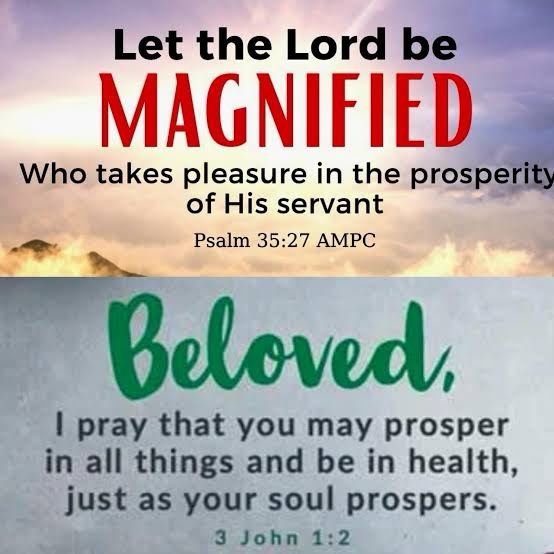
We embrace the Biblical principles extracted from the Word of God for the prosperity of the believer, which is prosperity in “all things including the soul and being in good health” (3 John 1:2)
Psalms 35: 27 Let them shout for joy and be glad, Who favor my righteous cause; And let them say continually, “Let the LORD be magnified, Who has pleasure in the prosperity of His servant.”
The inclusion of the prosperity of the soul is what separates the believer from the individual who relentlessly pursues “materialistic prosperity” at all cost.
Jesus Himself warns us of the perils of pursuing this path.
Matthew 16:26
26 For what profit is it to a man if he gains the whole world, and loses his own soul? Or what will a man give in exchange for his soul?
From this we can immediately conclude that material wealth and possessions do not necessarily, validate the level of spirituality/God consciousness of an individual.
FAITHFULNESS, CONFIDENCE AND TRUSTING IN THE INTEGRITY OF THE RIGHTEOUSNESS OF GOD ATTRACTS PROSPERITY
The words of Job after he had suffered great loss reveals a heart that is after God
Job 1:20 Then Job arose, tore his robe, and shaved his head; and he fell to the ground and worshiped. 21 And he said: “Naked I came from my mother’s womb, And naked shall I return there. The LORD gave, and the LORD has taken away; Blessed be the name of the LORD.” 22 In all this Job did not sin nor charge God with wrong.
Job rebukes his wife for her “counsel”, revealing his integrity and internal code of righteousness
Job 2:9 Then his wife said to him, “Do you still hold fast to your integrity? Curse God and die!” 10 But he said to her, “You speak as one of the foolish women speaks. Shall we indeed accept good from God, and shall we not accept adversity?” In all this Job did not sin with his lips.
Job trusted in the integrity of the righteousness of God to reward faithfulness in His sons through seasons of testing that reveal His Divine nature (gold)
Job 23:10 But He knows the way that I take; When He has tested me, I shall come forth as gold.
Proverbs 28:20 A faithful man will abound with blessings ….
Faithfulness, which is credited as righteousness attracts prosperity (Genesis 15:6)
Job 42:12 Now the LORD blessed the latter days of Job more than his beginning; for he had fourteen thousand sheep, six thousand camels, one thousand yoke of oxen, and one thousand female donkeys. 13 He also had seven sons and three daughters.
THE APOSTLE PAUL HOLDS A SIMILAR POSITION CONCERNING HIS PROSPERITY
Philippians 4:11-13
11 Not that I speak in regard to need, for I have learned in whatever state I am, to be content: 12 I know how to be abased, and I know how to abound. Everywhere and in all things I have learned both to be full and to be hungry, both to abound and to suffer need. 13 I can do all things through Christ who strengthens me.
Paul says “for I have learned in whatever state I am, to be content”
The Greek word for learned is …….
manthánṓ̄ …. to have learned something, to understand it; it is equivalent to epiginṓskō (G1921), to know more fully. The synonymous use is also indicated in 2 Timothy 3:7 where the two words, manthánō and epígnōsis (G1922), a full knowledge, are used (Extracted from CWSB)
This would infer that this is not a random or emotionally inspired thought that Paul had; Paul was fully convicted and persuaded through the “manthano process” that his state of “prosperity” had no influence on his relationship with Christ
Like Job, Paul chose to worship the Lord in all circumstances. The acid test of the believer’s faithfulness in the Lord is evidenced by our ability to worship the Lord in the absence of prosperity. This reveals the true inclination of the soul.
This is a major expression of DOMINION.
WHEN WE DEMONSTRATE DOMINION OVER THE STATE OF OUR SOUL
David commanded his soul and all that was within him to “BLESS THE LORD”
Psalms 103:1 Bless the LORD, O my soul; And all that is within me, bless His holy name!
COMMAND THE SOUL TO DEMONSTRATE RIGHTEOUSNESS IN SACRIFICIAL GIVING
Malachi 3:8 “Will a man rob God? Yet you have robbed Me! But you say, ‘In what way have we robbed You?’ In tithes and offerings. 9 You are cursed with a curse, For you have robbed Me, Even this whole nation.
Not only was the priesthood held accountable for corruption, but also the whole nation of Israel has been held accountable for defrauding the storehouse of God. A failure to address this Divine observation uttered by the prophet of God would attract judgement over the potential agricultural harvest and prosperity of the nation.
This is a “revelation, reflection and forensic audit” of the condition of the “soul” of the priesthood and the whole nation.
2 Chronicles 20:20 So they rose early in the morning and went out into the Wilderness of Tekoa; and as they went out, Jehoshaphat stood and said, “Hear me, O Judah and you inhabitants of Jerusalem: Believe in the LORD your God, and you shall be established; believe His prophets, and you shall prosper.”
THE REFORMATION BROUGHT BY JESUS CHRIST – A NEW COVENANT
Jesus flipped the tables and He drove out the money changers in the Temple; He dismantled operations that sold doves. He declared the house of His Father had become “a den of thieves” and a place for the exploitation of the people of God. His actions announced the season of Reformation in the Temple by declaring His Father’s House as a “House of Prayer”
The spirit of Jesus resonates with the Prophet Malachi who declared the priesthood and the nation as “robbers”
This season of Reformation is in perfect alignment with the Word of God that has been demonstrated by Jesus, the One who is greater than the Temple
Matthew 12:6 Yet I say to you that in this place there is One greater than the temple.
BELIEVERS MUST GUARD AGAINST THE SPIRIT OF ENTITLEMENT
There was a clear process in the development of the early church concerning activating support from within the community of believers
First Step
Baptism of the Holy Spirit
In Acts 2:1-4, on the Day of Pentecost, the 120 disciples were in the place that was commanded by Jesus.
Second Step
The elements of the culture of the church were established
Acts 2:42
42 And they continued steadfastly in the apostles’ doctrine and fellowship, in the breaking of bread, and in prayers.
Third Step
Fear of God came upon every soul followed by signs and wonders
Acts 2:43
43 Then fear came upon every soul, and many wonders and signs were done through the apostles.
Fourth Step
TOTAL UNITY AMONG THE BELIEVERS, THEY WERE TOGETHER
Acts 2:44
44 Now all who believed were together, and had all things in common
Fifth Step – SHARED THEIR BLESSINGS
Acts 2:45
45 and sold their possessions and goods, and divided them among all, as anyone had need.
Believers cannot expect the benefits of association WITHOUT associating. We must build bilateral relationships that add value to one another.
TRADUÇÃO PARA O PORTUGUÊS

POBREZA SOB A PERSPECTIVA DA PALAVRA DE DEUS
INTRODUÇÃO
Este estudo busca entender a pobreza à luz das Escrituras, analisando suas causas, suas consequências e a perspectiva de Deus sobre o assunto. A Bíblia aborda a pobreza de várias maneiras — materiais, espirituais, sociais e escatológicas. A Palavra de Deus nos oferece tanto avisos quanto esperança.
POBREZA E CAUSAS HUMANAS
Preguiça e Corrupção como Causas
Provérbios 10:3-5 O SENHOR não deixa os justos passar fome, mas Ele reprime a ânsia dos ímpios. Quem trabalha com mão frouxa torna-se pobre, mas a mão dos diligentes traz riqueza. Quem se junta no verão é um filho prudente, mas quem dorme durante a colheita é um filho que traz vergonha.
O propósito desses provérbios é nos alertar contra ganhos injustos e mostrar que a causa de muita pobreza é a preguiça e a corrupção. A razão bíblica é que o Senhor não deixa os justos passar fome.
A Bíblia também revela que a pobreza nem sempre é resultado da preguiça individual. Há pobreza causada por pressão estrutural, injustiça judicial e exploração.
Amós 5:11-12 Vocês oprimem os pobres… portanto, você não morará nas casas que construiu.
Tiago 5:4 Os salários dos trabalhadores que colheram seus campos, que você reteve por fraude, clamam contra você.
Êxodo 23:6 Não delas perverter a justiça devida aos teus pobres em suas causas.
Nem toda pobreza vem da preguiça; muito surge da injustiça, exploração e opressão. O crente deve discernir e combater ambas as causas.
Ganância e o Senso de Superioridade.
Um sentimento de superioridade é vergonhoso, pois gera ganância e inveja nas pessoas. Essa é a causa de muita pobreza no mundo. O poder opressor gera medo e apropria-se dos bens materiais dos outros.
Os crentes devem ter muito cuidado com sentimentos de superioridade e o desejo de possuir; caso contrário, pode surgir injustiça em relação ao tesouro que buscamos.
A Bíblia declara que o amor ao dinheiro é a raiz de todos os tipos de mal.
1 Timóteo 6:9-10 Aqueles que querem enriquecer caem na tentação… O amor pelo dinheiro é a raiz de todo tipo de mal.
Lucas 6:24 Mas ai de vós, que são ricos agora, pois já receberam o conforto.
Mateus 19:24 É mais fácil para um camelo passar pelo buraco de uma agulha…
O perigo da riqueza é tão sério quanto o da pobreza. A Bíblia alerta tanto sobre os perigos da acumulação quanto sobre os perigos da necessidade.
POBREZA E PROVIDÊNCIA DIVINA
Deus é a Provisão para Seu Povo.
Salmo 37:25 Eu era jovem e agora sou velho, mas nunca vi os justos abandonados ou seus filhos pedindo pão.
O Senhor estabelece os passos das pessoas boas, mesmo quando enfrentam dificuldades materiais. Todos que aceitam Jesus devem esperar uma riqueza definida por uma perspectiva de longo prazo. Note que Israel estava sob os cuidados de Deus, mas Israel se envolveu com nações pagãs, e a pobreza atingiu Israel de repente. Seu ouro, prata e cobre — assim como seus filhos e esposas — foram todos levados.
Deus sempre foi a provisão para o Seu povo. Ele sempre supriu suas necessidades físicas, mesmo quando surgiram provações severas — como guerras, fomes e condições econômicas ou sociais severas. Mas agora, por causa do pecado, os líderes da Babilônia haviam confiscado seus bens materiais.
Deus não promete aos justos a ausência de pobreza material, mas Ele promete Sua presença e provisão.
Filipenses 4:11-12 Aprendi a me adaptar a qualquer e toda circunstância… Eu sei o que é estar em necessidade e o que é ter muito.
Mateus 8:20 O Filho do Homem não tem onde repousar a cabeça.
2 Coríntios 6:10 … triste, mas sempre alegre; pobres, mas tornando muitos ricos.
Jó, Jeremias, Paulo e o próprio Jesus sentiram a nenossência. Entenda que a pobreza material não é automaticamente sinal de pecado ou abandono divino.
POBREZA E SERVIÇO CRISTÃO
A grandeza no Reino se encontra no serviço.
Mateus 20:26-28 Jesus os convocou e disse: “Vocês sabem que os governantes das nações dominam sobre eles, e seus altos oficiais exercem autoridade sobre eles. Não é assim com você. Em vez disso, quem quiser se tornar grande entre vocês deve ser um servo, e quem quiser ser o primeiro deve ser escravo — assim como o Filho do Homem não veio para ser servido, mas para servir, e para dar sua vida como resgate por muitos.”
O poder da Igreja deveria servir de exemplo para os governantes do mundo, mas líderes proeminentes falharam nesse aspecto. Jesus rejeitou o modelo mundano de governança para Seus discípulos. Ele declarou que a grandeza no Reino de Deus não se mede não pelo exercício de domínio sobre os outros nem pela riqueza material, mas pela dedicação de cada um ao serviço ao próximo.
Não há base bíblica para que um crente busque posições superiores a fim de exercer autoridade ou domínio sobre os outros. Pelo contrário, deve-se dedicar a vida a ajudar as pessoas.
O modelo positivo está na Igreja primitiva, que praticava o compartilhamento.
Atos 2:44-45 Todos os crentes estavam juntos e tinham tudo em comum. Eles vendiam propriedades e bens para dar a quem precisasse.
2 Coríntios 8:13-15 Não se trata de aliviar os outros enquanto vocês mesmos ficam sobrecarregados, mas sim de igualdade.
A resposta para a corrupção não é apenas a denúncia, mas a prática de uma alternativa econômica do Reino — baseada em compartilhamento, serviço e igualdade.
A corrupção da liderança religiosa.
Foi Jesus quem nos redimiu; foi Jesus quem pagou o resgate. No entanto, alguns líderes da igreja agora cobram — e cobram com juros e ajustes de inflação — pela salvação que foi concedida livremente. Eles descobriram que o sangue de Cristo tem grande valor — meu Deus!
Observe: onde um líder da igreja é materialmente rico, os membros são pobres. Este é um sistema de natureza puramente humana. Esses líderes são movidos pelos pecados da superioridade, inveja e ganância. Eles veem a pobreza como um mal, mas não compartilham seus bens com ninguém.
Líderes pastorais corruptos empobrecem as pessoas tanto espiritual quanto fisicamente; Eles destroem sonhos e perspectivas. Este é um momento em que governos humanos envolveram alguns líderes da igreja na degradação espiritual.
Romanos 2:21-22 Não Vocês, então, que ensinam os outros, não ensinam a si mesmos? Você, que prega contra o roubo, rouba? Vocês que dizem que não se deve cometer adultério, cometem adultério? Você, que abomina ídolos, comete sacrilégio?
A pobreza espiritual é a mais grave de todas.
Apocalipse 3:17 Vocês dizem: “Eu sou rico; Adquiri riqueza e não preciso de nada.” Mas você não percebe que é miserável, digno de pena, pobre, cego e nu.
Tiago 2:5 – Escutem, meus amados irmãos: Deus não escolheu os pobres aos olhos do mundo para serem ricos em fé e herdeiros do Reino que Ele prometeu aos que O amam?
Há aqueles que são materialmente ricos, mas miseráveis diante de Deus, e aqueles que são materialmente pobres, mas ricos na fé. A verdadeira riqueza é espiritual.
POBREZA E O EXEMPLO DE CRISTO.
Jesus Cristo voluntariamente se tornou pobre.
2 Coríntios 8:9 Pois vocês conhecem a graça de nosso Senhor Jesus Cristo, que embora Ele fosse rico, por vossa causa Ele se tornou pobre, para que, por sua pobreza, vocês se tornassem ricos.
A *quenose* de Cristo é o modelo supremo a seguir.
Filipenses 2:5-8 Tenham a mesma mentalidade de Cristo Jesus… Ele se esvaziou, assumindo a forma de um servo.
Lucas 2:7. Ele nasceu em uma manjedoura.
João 19:23-24. Ele morreu nu, com sortes para suas vestes.
Jesus não falou apenas sobre pobreza; Ele era pobre. A pobreza voluntária por amor ao próximo é uma virtude, não uma fonte de vergonha. A Igreja que segue Cristo não pode desprezar os pobres, pois seu Senhor era um deles.
POBREZA E ESPERANÇA ESCATOLÓGICA
Mateus 6:19-20. Não acumule tesouros na terra… Masguarde tesouros no céu.
Apocalipse 21:4 Ele enxugará toda lágrima dos olhos deles. Não haverá mais morte, nem tristeza, nem choro, nem dor.
A pobreza será definitivamente superada não pela prosperidade material nesta era presente, mas pela consumação do Reino. A perspectiva cristã sobre a pobreza é escatológica. Já experimentamos o Reino, embora ainda não completamente.
Mateus 5:3 Bem-aventurados os pobres de espírito, pois deles é o Reino dos céus.
A esperança cristã não está no acúmulo de bens terrenos, mas na promessa do Reino que está por vir, onde toda lágrima será enxugada.
CONCLUSÃO. Não há nada de novo sob o sol. Irregularidades existem há mais de 2.000 anos. Nesses tempos, os descrentes blasfemam o nome do Senhor Jesus. Os próprios crentes são os primeiros a desonrá-Lo, pois não praticam nem vivem o que pregam.
A corrupção espiritual traz o maior descrédito ao Evangelho. Alguns líderes usaram o nome de Jesus para benefício próprio, construindo mansões e agora ostentando sua riqueza nas redes sociais.
2 Coríntios 8:9 Pois vocês conhecem a graça de nosso Senhor Jesus Cristo, que embora fosse rico, por vossa causa se tornou pobre, para que vocês, por sua pobreza, se tornassem ricos.
A pobreza não pode privar as pessoas da sensibilidade espiritual para serem ricas na graça de Deus. A pobreza se torna tolice quando há uma busca imprudente por riqueza material. Absurdos acontecem quando as pessoas perdem a humildade em relação aos seus pertences.
Toda presunção é tolice; É prejudicial e maligno. A glória dos pobres está em ser rico em espírito por Jesus Cristo.
Mateus 5:3 Bem-aventurados os pobres de espírito, pois deles é o Reino dos céus. A Palavra de Deus traz um entendimento que supera todos os pensamentos sobre pobreza. Não somos salvos pela riqueza nem condenados pela pobreza, mas sim pela graça de Cristo, que se tornou pobre para nos enriquecer.

PERSPECTIVA – ROY PILLAY
Quando o crente, como Paulo, consegue manter os olhos fixos em Cristo em todas as circunstâncias, na saúde ou na doença, em abundância ou em falta, então o crente tem comando sobre sua alma.
Abraçamos os princípios bíblicos extraídos da Palavra de Deus para a prosperidade do crente, que é prosperidade em “todas as coisas, incluindo a alma, e estar em boa saúde” (3 João 1:2)
Salmos 35:27 Que gritem de alegria e alegrem-se, Que apoiam minha causa justa; E que digam continuamente: “Seja magnificado o SENHOR, que se alegra na prosperidade de Seu servo.”
A inclusão da prosperidade da alma é o que separa o crente do indivíduo que busca incansavelmente a “prosperidade material” a qualquer custo.
O próprio Jesus nos alerta sobre os perigos de seguir esse caminho.
Mateus 16:26
26 De que adianta um homem conquistar o mundo inteiro e perder sua própria alma? Ou o que um homem dará em troca de sua alma?
A partir disso, podemos concluir imediatamente que a riqueza material e as posses não necessariamente validam o nível de espiritualidade/consciência de Deus de um indivíduo.
FIDELIDADE, CONFIANÇA E CONFIANÇA NA INTEGRIDADE DA JUSTIÇA DE DEUS ATRAEM PROSPERIDADE
As palavras de Jó, após ter sofrido grande perda, revelam um coração que está depois de Deus
Jó 1:20 Então Jó se levantou, rasgou sua túnica e raspou a cabeça; e ele caiu no chão e adorou. 21 E ele disse: “Nua vim do ventre da minha mãe, e nua voltarei para lá. O SENHOR deu, e o SENHOR tirou; Bendito seja o nome do SENHOR.” 22 Em tudo isso, Jó não pecou nem acusou Deus de injustiça.
Jó repreende sua esposa por seu “conselho”, revelando sua integridade e código interno de justiça
Jó 2:9 Então sua esposa lhe disse: “Ainda te apegas à tua integridade? Maldito Deus e morra!” 10 Mas ele disse a ela: “Você fala como uma das mulheres tolas fala. Devemos realmente aceitar o bem de Deus, e não aceitaremos a adversidade?” Em tudo isso, Jó não pecou com seus lábios.
Jó confiou na integridade da justiça de Deus para recompensar a fidelidade em Seus filhos por meio de temporadas de provas que revelam Sua natureza Divina (ouro)
Jó 23:10 Mas Ele sabe o caminho que eu tomo; Quando Ele me tiver testado, eu me manifestarei como ouro.
Provérbios 28:20 Um homem fiel será abundante em bênçãos….
A fidelidade, que é creditada como retidão, atrai prosperidade (Gênesis 15:6)
Jó 42:12 Agora, o SENHOR abençoou os últimos dias de Jó mais do que seu princípio; pois ele tinha quatorze mil ovelhas, seis mil camelos, mil jugos de bois e mil burras. 13 Ele também teve sete filhos e três filhas.
O APÓSTOLO PAULO MANTÉM UMA POSIÇÃO SEMELHANTE EM RELAÇÃO À SUA PROSPERIDADE
Filipenses 4:11-13
11 Não que eu fale sobre necessidade, pois aprendi, em qualquer estado em que esteja, a estar contente: 12 Sei como ser humilhado, e sei como abundar. Em todo lugar e em todas as coisas aprendi tanto a estar cheio quanto a sentir fome, tanto a abundar quanto a sofrer necessidades. 13 Posso fazer tudo por Cristo, que me fortalece.
Paulo diz: “pois aprendi, em qualquer estado que esteja, a estar contente”
A palavra grega para erudito é …….
manthánṓ̄ …. ter aprendido algo, entendê-lo; éequivalente a epiginṓskō (G1921), para conhecer mais completamente. O uso sinônimo também é indicado em 2 Timóteo 3:7, onde as duas palavras, manthánō e epígnōsis (G1922), um conhecimento completo, são usadas (extraído do CWSB)
Isso sugeriria que esse não é um pensamento aleatório ou emocionalmente inspirado que Paulo teve; Paulo foi totalmente convencido e convencido, por meio do “processo manthano”, de que seu estado de “prosperidade” não tinha influência em sua relação com Cristo
Como Jó, Paulo escolheu adorar o Senhor em todas as circunstâncias. O teste crítico da fidelidade do crente no Senhor é evidenciado pela nossa capacidade de adorar o Senhor na ausência de prosperidade. Isso revela a verdadeira inclinação da alma.
Essa é uma grande expressão do DOMINION.
QUANDO DEMONSTRAMOS DOMÍNIO SOBRE O ESTADO DA NOSSA ALMA
David ordenou à sua alma e a tudo que havia dentro dele que “ABENÇOEM O SENHOR”
Salmos 103:1 Abençoe o SENHOR, ó minha alma; E tudo o que está dentro de mim, abençoe o Seu nome santo!
ORDENE À ALMA QUE DEMONSTRE JUSTIÇA EM DOAÇÕES SACRIFICIAIS
Malaquias 3:8 “O homem roubará Deus? E mesmo assim você me roubou! Mas você diz: ‘De que maneira te roubamos?’ Em dízimos e oferendas. 9 Você está amaldiçoado com uma maldição, pois me roubou, até toda esta nação.
Não só o sacerdócio foi responsabilizado pela corrupção, mas também toda a nação de Israel foi responsabilizada por fraudar o depósito de Deus. A falha em abordar essa observação divina proferida pelo profeta de Deus atrairia julgamento sobre a potencial colheita agrícola e prosperidade da nação.
Esta é uma “revelação, reflexão e auditoria forense” da condição da “alma” do sacerdócio e de toda a nação.
2 Crônicas 20:20 Assim, eles se levantaram cedo pela manhã e saíram para o deserto de Tekoa; e ao saírem, Josafate levantou-se e disse: “Ouçai-me, ó Judá e vós, habitantes de Jerusalém: crede no SENHOR vosso Deus, e vocês serão estabelecidos; cream em Seus profetas, e prosperarei.”
A REFORMA TRAZIDA POR JESUS CRISTO – UMA NOVA ALIANÇA
Jesus virou a mesa e expulsou os cambistas do Templo; Ele desmantelou operações que vendiam pombas. Ele declarou que a casa de Seu Pai havia se tornado “um antro de ladrões” e um lugar para a exploração do povo de Deus. Suas ações anunciaram a temporada da Reforma no Templo ao declarar a Casa de Seu Pai como uma “Casa de Oração”
O espírito de Jesus ressoa com o Profeta Malaquias, que declarou o sacerdócio e a nação como “ladrões”
Esta temporada da Reforma está em perfeita alinhamento com a Palavra de Deus demonstrada por Jesus, Aquele que é maior que o Templo
Mateus 12:6 Mas eu lhes digo que neste lugar há Um maior que o templo.
OS CRENTES DEVEM SE PROTEGER CONTRA O ESPÍRITO DE DIREITO
Houve um processo claro no desenvolvimento da igreja primitiva em relação à ativação do apoio dentro da comunidade de crentes
Primeiro Passo
Batismo do Espírito Santo
Em Atos 2:1-4, no Dia de Pentecostes, os 120 discípulos estavam no local ordenado por Jesus.
Segundo Passo
Os elementos da cultura da igreja foram estabelecidos
Atos 2:42, 42: E eles continuaram firmemente na doutrina e comunhão dos apóstolos, na partilha do pão e nas orações.
Terceiro Passo
O medo de Deus veio sobre cada alma, seguido de sinais e maravilhas
Atos 2:43, 43 Então o medo tomou sobre toda alma, e muitos milagres e sinais foram feitos pelos apóstolos.
Quarto Passo
UNIDADE TOTAL ENTRE OS CRENTES, ELES ESTAVAM JUNTOS
Atos 2:44, 44 Agora todos os que crem estavam juntos, e tinham todas as coisas em comum
Quinto Passo – COMPARTILHARAM SUAS BÊNÇÃOS
Atos 2:45, 45, e venderam seus bens e bens, e os dividiram entre todos, conforme cada um precisasse.
Os crentes não podem esperar os benefícios da associação SEM se associar. Devemos construir relações bilaterais que agreguem valor uns aos outros.


Leave a Reply