We are familiar with the Divine collaboration in the connection of Peter to Cornelius.
The scriptures record that Peter received a vision from the Lord where an angel of the Lord informs Peter that the Lord had noted the offerings and alms of Cornelius, a devout man who feared God (Acts 10:4)
Peter is instructed by the angel to connect to Peter for his next set of instructions
Acts 10:5 Now send men to Joppa, and send for Simon whose surname is Peter. 6 He is lodging with Simon, a tanner, whose house is by the sea. He will tell you what you must do.”
The Vision received by Peter while he was praying. God revealed Peter’s calling to go to the Gentiles.
Acts 10:9 The next day, as they went on their journey and drew near the city, Peter went up on the housetop to pray, about the sixth hour. 10 Then he became very hungry and wanted to eat; but while they made ready, he fell into a trance 11 and saw heaven opened and an object like a great sheet bound at the four corners, descending to him and let down to the earth. 12 In it were all kinds of four-footed animals of the earth, wild beasts, creeping things, and birds of the air. 13 And a voice came to him, “Rise, Peter; kill and eat.”14 But Peter said, “Not so, Lord! For I have never eaten anything common or unclean.” 15 And a voice spoke to him again the second time, “What God has cleansed you must not call common.”
A delegation of three men from the household of Cornelius arrive at the house of Peter.
Acts 10:19 While Peter thought about the vision, the Spirit said to him, “Behold, three men are going seeking you. 20 Arise therefore, go down and go with them, doubting nothing; for I have sent them.”
The Holy Spirit instructs Peter to go with the three men without any fear or doubt because they have not been sent by Cornelius only, but by the Lord Himself.
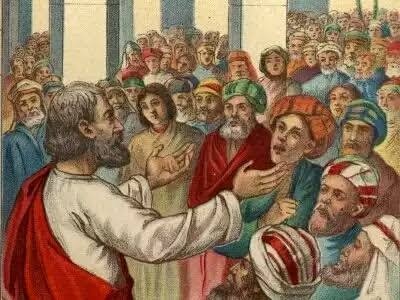
Peter arrives at the home of Cornelius and preaches about Jesus Christ passionately. Whilst Peter is speaking the Holy Spirit fell upon all those Gentiles who were listening to him; they began to speak with tongues and magnify God.
Acts 10:45 And those of the circumcision who believed were astonished, as many as came with Peter, because the gift of the Holy Spirit had been poured out on the Gentiles also. 46 For they heard them speak with tongues and magnify God. Then Peter answered, 47 “Can anyone forbid water, that these should not be baptized who have received the Holy Spirit just as we have?” 48 And he commanded them to be baptized in the name of the Lord. Then they asked him to stay a few days.
The response from the apostles and the brethren in Jerusalem. Paul defends the amazing grace of God (Read Acts 11 Verses 4-18)
Acts 11: 1 Now the apostles and brethren who were in Judea heard that the Gentiles had also received the word of God. 2 And when Peter came up to Jerusalem, those of the circumcision contended with him, 3 saying, “You went in to uncircumcised men and ate with them!”
The accusatory voice from the apostles and the brethren in Jerusalem was that Peter had transgressed the law by “eating with uncircumcised men”
To this company in Jerusalem, this represented a serious spiritual violation. The reality is that the Lord revealed the vision of the Great Sheet with all kinds of four-footed animals of the earth, wild beasts, creeping things, and birds of the air ONLY to Peter.
These animals are symbolic of the Gentiles receiving the gospel. Peter has to present his vision and mandate to a people who believe that circumcision is mandatory for social fellowship with Gentiles; they had great difficulty in processing the new reality that the baptism in the Holy Spirit is not exclusively reserved for believers of Jewish origin only.
Peter had to explain in great detail, from the beginning, before the brethren in Jerusalem accepted this particular moment as a game changing moment in heralding the Divine endorsement of ministry to the Gentiles without insisting on the need for circumcision.
The prophecy of Isaiah also includes the Lord’s intention to use tbe Gentiles as priests and Levites.
Isaiah 66:19 I will set a sign among them; and those among them who escape I will send to the nations: to Tarshish and Pul and Lud, who draw the bow, and Tubal and Javan, to the coastlands afar off who have not heard My fame nor seen My glory. And they shall declare My glory among the Gentiles. 20 Then they shall bring all your brethren for an offering to the LORD out of all nations, on horses and in chariots and in litters, on mules and on camels, to My holy mountain Jerusalem,” says the LORD, “as the children of Israel bring an offering in a clean vessel into the house of the LORD. 21 And I will also take some of them for priests and Levites,” says the LORD.
TRADUÇÃO PORTUGUESA (Traduzido por Rafael Nogueira Rezende)
A MENSAGEM DE PEDRO À CASA DE CORNÉLIO
Estamos familiarizados com a colaboração divina na conexão de Pedro a Cornélio.
As escrituras registram que Pedro recebeu uma visão do Senhor onde um anjo do Senhor informa a Pedro que o Senhor havia anotado as ofertas e esmolas de Cornélio, um homem devoto que temia a Deus (Atos 10:4).
Pedro é instruído pelo anjo a se conectar a Pedro para seu próximo conjunto de instruções
Atos 10:5-6 Envia, pois, homens a Jope, e manda chamar Simão, que tem por sobrenome Pedro. Ele está hospedado com Simão, um curtidor, cuja casa está à beira-mar. Ele lhe dirá o que você deve fazer.
A Visão recebida por Pedro enquanto ele estava orando. Deus revelou o chamado de Pedro para ir aos gentios.
Atos 10:9-15 No dia seguinte, indo eles para a sua viagem e aproximando-se da cidade, Pedro subiu ao eirado para orar, por volta da hora sexta. Então ele ficou com muita fome e queria comer; mas enquanto eles se preparavam, ele caiu em transe e viu o céu aberto e um objeto como um grande lençol amarrado nos quatro cantos, descendo até ele e descendo até a terra. Nela havia toda espécie de quadrúpedes da terra, animais selvagens, répteis e aves do céu. E ouviu-se uma voz: Levanta-te, Pedro; matar e comer.”Mas Pedro disse: “Não é assim, Senhor! Pois nunca comi nada comum ou impuro.” E uma voz lhe falou novamente pela segunda vez: “O que Deus purificou, você não deve chamar comum”.
Uma delegação de três homens da casa de Cornélio chega à casa de Pedro.
Atos 10:19-20 Enquanto Pedro pensava na visão, o Espírito lhe disse: “Eis que três homens vão procurá-lo. Levanta-te, pois, e desce e vai com eles, sem duvidar de nada; porque eu os enviei.”
O Espírito Santo instrui Pedro a ir com os três homens sem medo ou dúvida, porque eles não foram enviados apenas por Cornélio, mas pelo próprio Senhor.
Pedro chega à casa de Cornélio e prega sobre Jesus Cristo apaixonadamente. Enquanto Pedro falava, o Espírito Santo desceu sobre todos os gentios que o ouviam; eles começaram a falar em línguas e a engrandecer a Deus.
Atos 10:45-48 E os que creram na circuncisão ficaram admirados, todos os que vieram com Pedro, porque o dom do Espírito Santo também havia sido derramado sobre os gentios. Pois eles os ouviram falar em línguas e engrandecer a Deus. Então Pedro respondeu: “Pode alguém proibir a água, para que não sejam batizados estes que receberam o Espírito Santo como nós?” E mandou que fossem batizados em nome do Senhor. Então eles pediram que ele ficasse alguns dias.
A resposta dos apóstolos e irmãos em Jerusalém. Paulo defende a maravilhosa graça de Deus (Leia Atos 11, versículos 4-18)
Atos 11: 1-3 Ora, os apóstolos e irmãos que estavam na Judéia ouviram que os gentios também haviam recebido a palavra de Deus. E quando Pedro subiu a Jerusalém, os da circuncisão contenderam com ele,dizendo: “Você entrou em homens incircuncisos e comeu com eles!”
A voz acusatória dos apóstolos e dos irmãos em Jerusalém foi que Pedro havia transgredido a lei “comendo com homens incircuncisos”
Para este grupo em Jerusalém, isso representava uma séria violação espiritual. A realidade é que o Senhor revelou a visão do Grande Lençol com todos os tipos de animais quadrúpedes da terra, animais selvagens, répteis e pássaros do céu SOMENTE para Pedro.
Esses animais simbolizam os gentios que recebem o evangelho. Pedro tem que apresentar sua visão e mandato a um povo que acredita que a circuncisão é obrigatória para a comunhão social com os gentios; eles tiveram grande dificuldade em processar a nova realidade de que o batismo no Espírito Santo não é reservado exclusivamente aos crentes de origem judaica.
Pedro teve que explicar em grande detalhe, desde o início, antes que os irmãos em Jerusalém aceitassem este momento em particular como um momento de mudança de jogo ao anunciar o endosso divino do ministério aos gentios sem insistir na necessidade da circuncisão.
A profecia de Isaías também inclui a intenção do Senhor de usar os gentios como sacerdotes e levitas.
Isaías 66:19-21 Porei um sinal entre eles; e os que escaparem, enviarei às nações: a Társis, a Pul e a Lude, que puxam o arco, a Tubal e a Javã, às regiões longínquas, que não ouviram a minha fama, nem viram a minha glória. E eles anunciarão a minha glória entre os gentios. Então trarão todos os vossos irmãos como oferta ao Senhor, de todas as nações, em cavalos, e em carros, e em liteiras, em mulas e em camelos, ao meu santo monte Jerusalém”, diz o Senhor, “como os filhos de Israel trazem uma oferta em vaso limpo à casa do Senhor. E também tomarei alguns deles para sacerdotes e levitas”, diz o Senhor.
The throne is not a literal or physical grand chair because God is a Spirit, and a Spirit does not require a throne to sit. God is transcendent. He is omnipresent.
The throne is a spiritual position of God’s sovereign rule and governance.
The prophet Isaiah had a vision of the Lord :
Isaiah 6:1 In the year that King Uzziah died, I saw the Lord sitting on a throne, high and lifted up, and the train of His robe filled the temple.
Isaiah 66:1 Thus says the LORD: “Heaven is My throne, And earth is My footstool. Where is the house that you will build Me? And where is the place of My rest?
The prophet is creating an imagery so that our human minds can perhaps grasp the vision of a Sovereign Creator ruling over everything that has been created by Him and for His purpose.
Our early teachings on the City Church referred to the revelation that the Apostle John had in Revelation 22
Revelation 22: 1 Then the angel showed me the river of the water of life, bright as crystal, flowing from the throne of God and of the Lamb 2 through the middle of the street of the city; also, on either side of the river, the tree of life 2 with its twelve kinds of fruit, yielding its fruit each month. The leaves of the tree were for the healing of the nations. 3 No longer will there be anything accursed, but the throne of God and of the Lamb will be in it, and fhis servants will worship him (NIV Translation)
The throne of God and of the Lamb is the source of the water that flows into the city through the city’s Main Street. The origin of these waters are referred to as the headwaters; this is where the water is in its purest form. Water is symbolic of the word of God and doctrine; the commands of God that are released from His throne
This is the believer’s FIRST GREAT EXPECTATION
The reality is that as the headwaters depart from the Throne, the environment closest to the Throne would receive the waters in its purest form. The image created in our minds is that the locations that are furthest from the throne are most vulnerable to contamination of the waters.
Here is an interesting health statistic ……
“According to the United Nations, every year there are more deaths caused by polluted water than all types of violence combined, including war” (Extracted from East Coast University)
We submit that there needs to be a revival in the preaching and teaching of the Word of the Lord. The demand of the Lord is to purify these waters. Like Jericho, the “City of Fragrance” may appear pleasant, but the reality is that the waters are bad (2 Kings 2:19)
Amos 8:11 “Behold, the days are coming,” says the Lord GOD, “That I will send a famine on the land, Not a famine of bread, Nor a thirst for water, But of hearing the words of the LORD. 12 They shall wander from sea to sea, And from north to east; They shall run to and fro, seeking the word of the LORD, But shall not find it.
The 7 letters written to the 7 City Churches reveal various discrepancies between our expectation from the THRONE OF GOD and the activities in each one of those 7 churches. There is a “throne” located in every church.
Contamination of the waters have been observed and noted by the Lord. The throne in the church in Pergamos was identified by Jesus as the throne of satan.
Revelation 2:13 “I know your works, and where you dwell, where Satan’s throne is. And you hold fast to My name, and did not deny My faith even in the days in which Antipas was My faithful martyr, who was killed among you, where Satan dwells.
These are various contaminants and impurities noted by the Lord in the gathering in Pergamos
Revelation 2:14 But I have a few things against you, because you have there those who hold the doctrine of Balaam, who taught Balak to put a stumbling block before the children of Israel, to eat things sacrificed to idols, and to commit sexual immorality. 15 Thus you also have those who hold the doctrine of the Nicolaitans, which thing I hate. 16 Repent, or else I will come to you quickly and will fight against them with the sword of My mouth.
There is a section of the membership of this gathering who :
• are committed to the doctrine of Balaam • are committed to the doctrine of the Nicolaitans
When Balaam was restrained by God not to curse His people because they are blessed, Balaam formulated an alternative strategy to weaken, ensnare and dilute the faith of the people of God. He told Balak to arrange for the Moabite harlots to seduce the sons of God. These Moabite women invite the people of God to their sacrifices at idolatrous altars that worshipped Baal of Peor. The judgement of God resulted in the deaths of 24000 people.
All this will happen where satan has installed his throne.
Numbers 25:1 Now Israel remained in Acacia Grove, and the people began to commit harlotry with the women of Moab. 2 They invited the people to the sacrifices of their gods, and the people ate and bowed down to their gods. 3 So Israel was joined to Baal of Peor, and the anger of the LORD was aroused against Israel.
The doctrine of the Nicolaitans “Nicolaitan” means to be conquered by the people. The city of Pergamos was immersed in a pagan culture of the worship of multiple deities. Jesus does not hate the Nicolaitans; Jesus hates their deeds and their doctrine. He finds their deeds “utterly repulsive” (translation of Greek word “miseo” for hate). Believers ought not to love what Jesus hates and finds utterly repulsive.
Pergamos was one of the most wicked ancient cities. The worship culture embraced occultism, mysticism, Roman wizadry, Judaism. In order to maintain peace in the church, the doctrine of the Nicolaitans and Balaam allow for the construction of a doctrine that accommodates the aspirations of everyone. We are called to live in the midst of this type of diversity whilst retaining our faithfulness to the Lord and to the culture of the people of God. Like Daniel and his friends in Babylon. Like Joseph in Egypt.
Let us study Psalm 89. Let us build a perspective on this subject.
Psalms 89:14 Righteousness and justice are the foundation of Your throne; Mercy and truth go before Your face
This immediately creates an expectation around His throne
Hebrews 1:8 But to the Son He says: “Your throne, O God, is forever and ever; A scepter of righteousness is the scepter of Your kingdom. 9 You have loved righteousness and hated lawlessness; Therefore God, Your God, has anointed You with the oil of gladness more than Your companions.”
Whatever part of the building process we are involved in, the structure must be built on the foundation of the righteousness and justice of God. If we love righteousness, then we will hate lawlessness.
Christ Jesus is our Perfect Righteousness. Let us understand this clearly. Many of us were not born into the faith; we accepted the Lord when we were adults; we have chosen not to stitch and tailor our own mantle that is made from a filthy rag or a polluted garment. When we receive Christ in faith, believing in Him and His finished work on the Cross, the righteousness that comes from God through faith in Christ is imputed to us.
Philippians 3:8 Yet indeed I also count all things loss for the excellence of the knowledge of Christ Jesus my Lord, for whom I have suffered the loss of all things, and count them as rubbish, that I may gain Christ 9 and be found in Him, not having my own righteousness, which is from the law, but that which is through faith in Christ, the righteousness which is from God by faith;
Believers are expected to follow the example set by Christ to represent His righteousness
1 Peter 2:21 For to this you were called, because Christ also suffered for us, leaving us an example, that you should follow His steps: 22 “Who committed no sin, Nor was deceit found in His mouth”
We allow ourselves to be a living testimony of the strength of the Lord made perfect in our weakness. In this we choose to boast; that in our weakness we discover His perfected strength.
The throne of David and Solomon was also referred to as the throne of the Lord
1 Chronicles 29:23 Then Solomon sat on the throne of the LORD as king instead of David his father, and prospered; and all Israel obeyed him.
Zechariah 12:8 In that day the LORD will defend the inhabitants of Jerusalem; the one who is feeble among them in that day shall be like David, and the house of David shall be like God, like the Angel of the LORD before them.
The Ark of God was also regarded as the spiritual throne from where God would speak from between the two cherubim
Exodus 25:22 And there I will meet with you, and I will speak with you from above the mercy seat, from between the two cherubim which are on the ark of the Testimony, about everything which I will give you in commandment to the children of Israel
This is the reason David wanted the Ark of God brought back to Jerusalem. David wanted the Ark of God (symbolising the Presence of God) to be installed into the Tabernacle in Jerusalem.
Even in nations it is possible to build without righteousness and justice in its foundation
Let us consider the reform and rebuilding efforts in our own nation, South Africa, after our independence was achieved in 1994.
We will discover an interesting revelation.
After the democratic elections the new government embarked on an aggressive reformation and rebuilding program which achieved major breakthroughs. If we examine the achievements over the past 30 years, these are some of the achievements………..
an independent judiciary
An excellent constitution that ensures freedom of expression – religious freedom
Massive human rights overall that protects the rights of all citizens
‘Every accused person has a right to a fair trial, which includes the right to be presumed innocent, to remain silent, and not to testify during the proceedings.
Today 93 % people have access to safe drinking water – 60% in 1994
51% of the people had electricity before 1994 – today almost 90 per cent having access.
Millions of people now have access to their own homes
Billions invested in schools and education
Although all these advances were made, crime and corruption was still a problem.
The Crime index remained consistently high over the past 20 years 75-78
In his iconic speech in 1999, President Mandela pointed out that what we needed was an RDP of the soul of the nation
What the nation needed was “spiritual renewal and recovery of its soul”
Although South Africa has one of the best constitutions in the world, that reveaIs its foundational commitment to righteousness and justice in its governance of the people, it realised that inspite of the billions invested in rebuilding services, infrastructure, economy, health, education and other areas, it neglected the spiritual renewal and recovery of the soul of the nation.
God would have saved the cities of Sodom and Gomorrah by collaborating and executing His will and His leadership through a representative government comprising ten righteous men (Genesis 18:32)
Reformation and rebuilding efforts within the Body of Christ must inspire and lead in the area of spiritual recovery and renewal
The Apostle John declared to Gaius …….
3 John 1:2 Beloved, I pray that you may prosper in all things and be in health, just as your soul prospers. 3 For I rejoiced greatly when brethren came and testified of the truth that is in you, just as you walk in the truth. 4 I have no greater joy than to hear that my children walk in truth.
Biblical prosperity must also extend to include our health (spiritual temple) and the soul which includes our conscience, mind, will, and emotions of a person. The soul is the seat of feelings, desires, and affections
Whether it is the local household of faith, the greater family of God, the institutional church or the Church in the city, we must discern the demands from above concerning His throne. The foundational principles of righteousness and justice must be acknowledged and embraced.
Concerning truth, the entirety of His Word is truth. David declares ……
Psalms 51:6 Behold, You desire truth in the inward parts, And in the hidden part You will make me to know wisdom.
For spiritual renewal and the recovery of our soul, the Word of the Lord must have a penetrating effect on our soul.
The rebuilding of the natural temple; the rebuilding of the walls by Nehemiah – this represents structural reformation
Spiritual renewal and recovery of the soul happens when Ezra arrives and teaches the Word of the Lord. What we need is a revival in the Word of the Lord
Psalms 19:7 The law of the LORD is perfect, converting the soul; The testimony of the LORD is sure, making wise the simple; 8 The statutes of the LORD are right, rejoicing the heart;
The commandment of the LORD is pure, enlightening the eyes;
Psalms 19:9 The fear of the LORD is clean, enduring forever; The judgments of the LORD are true and righteous altogether. 10 More to be desired are they than gold, Yea, than much fine gold; Sweeter also than honey and the honeycomb.
Spiritual renewal and the recovery of the soul is made possible through the ENTRANCE of the Word of God – The living and powerful, two-edged sword, the perfect Law of the Lord, must be given access to pierce even to the division of soul and spirit
This is what David writes ……
Psalms 23:3 He restores my soul; He leads me in the paths of righteousness for His name’s sake. 4 Yea, though I walk through the valley of the shadow of death, I will fear no evil; For You are with me; Your rod and Your staff, they comfort me.
THE PROMISE MADE BY GOD Concerning Canaan
Exodus 6:5 And I have also heard the groaning of the children of Israel whom the Egyptians keep in bondage, and I have remembered My covenant. 6 Therefore say to the children of Israel: I am the LORD; I will bring you out from under the burdens of the Egyptians, I will rescue you from their bondage, and I will redeem you with an outstretched arm and with great judgments. 7 I will take you as My people, and I will be your God. Then you shall know that I am the LORD your God who brings you out from under the burdens of the Egyptians. 8 And I will bring you into the land which I swore to give to Abraham, Isaac, and Jacob; and I will give it to you as a heritage: I am the LORD.’ ” 9 So Moses spoke thus to the children of Israel; but they did not heed Moses, because of anguish of spirit and cruel bondage.
This promise is declared from a throne whose foundation is righteousness and justice
The prevailing culture of Egypt for God’s people was cruel bondage, enslavement and anguish of spirit. The Lord will not sit comfortably on His throne whilst His people are being subjected to this treatment.
The righteousness of God will declare ……
Luke 4:18 “The Spirit of the LORD has anointed Me to proclaim liberty to the captives and recovery of sight to the blind, to set at liberty those who are oppressed
God will do what He promised to do. Justice will prevail. Even if the people have not heeded the voice of Moses – God will not break His covenant with His Servant and His people.
Moses was not appointed by an institution. He was called and commissioned by God.
This is our dependance, confidence and trust in the righteousness and justice of His throne. After 40 years, the promise of God is in plain sight. The children of Israel are positioned at the edge of the wilderness, in the plains of Moab they are able to see Canaan just across the Jordan River
From years of wandering, now standing at the threshold to embrace and assume their new national identity as Israel – a people who have struggled with God and with men, and have prevailed.
Deuteronomy 1:3 Now it came to pass in the fortieth year, in the eleventh month, on the first day of the month, that Moses spoke to the children of Israel according to all that the LORD had given him as commandments to them
Deuteronomy is a book of repetition of all the covenant laws that God had given them 40 years ago at Mount Sinai. God’s people never outgrow their need to be reminded, as Peter said, I will not be negligent to remind you always of these things, though you know and are established in the present truth
It was critically important for their survival as a people for Moses to give them the laws, ordinances and statutes of God for a second time BEFORE CROSSING OVER
Before we cross the Jordan – we need to experience a revival in the Word of the Lord
Righteousness and the Justice of God must be factored into the administration of Moses
Deuteronomy 1: 16 “Then I commanded your judges at that time, saying, ‘Hear the cases between your brethren, and judge righteously between a man and his brother or the stranger who is with him. 17 You shall not show partiality in judgment; you shall hear the small as well as the great; you shall not be afraid in any man’s presence, for the judgment is God’s. The case that is too hard for you, bring to me, and I will hear it.’ 18 And I commanded you at that time all the things which you should do
This is one area we need reformation. The scripture declares ….. “Judge righteously”
This refers to the demand for representative judgement to the elected judges among God’s people . We need to expand our hearings to include the defendant (Matthew 18 protocol). We must guard against “crimes against humanity”. Moses is outlining the right to a fair trial. Jesus also sets out protocols to resolve offenses (Matthew 18)
TRADUÇÃO PORTUGUÊS (Traduzido por Rafael Nogueira Rezende)
SEU TRONO
O trono não é uma grande cadeira literal ou física porque Deus é um Espírito, e um Espírito não requer um trono para se sentar. Deus é transcendente. Ele é onipresente.
O trono é uma posição espiritual do governo e domínio soberano de Deus.
O profeta Isaías teve uma visão do Senhor:
Isaías 6:1 No ano em que morreu o rei Uzias, vi o Senhor assentado em um trono, alto e exaltado, e a orla do seu manto encheu o templo.
Isaías 66:1 Assim diz o Senhor: “O céu é o meu trono, e a terra é o escabelo dos meus pés. Onde está a casa que você vai me construir? E onde está o lugar do Meu descanso?
O profeta está criando uma imagem para que nossas mentes humanas possam talvez compreender a visão de um Criador Soberano governando tudo o que foi criado por Ele e para Seu propósito.
Nossos primeiros ensinamentos sobre a Igreja da Cidade se referiam à revelação que o apóstolo João teve em Apocalipse 22
Apocalipse 22:1-3 Então o anjo me mostrou o rio da água da vida, resplandecente como cristal, que flui do trono de Deus e do Cordeiro 2 pelo meio da praça da cidade; também, em ambos os lados do rio, a árvore da vida 2 com seus doze tipos de frutos, dando seus frutos a cada mês. As folhas da árvore eram para a cura das nações. 3 Não haverá mais nada amaldiçoado, mas o trono de Deus e do Cordeiro estará nele, e seus servos o adorarão. (NVI)
O trono de Deus e do Cordeiro é a fonte da água que flui para a cidade através da rua principal da cidade. A origem dessas águas é chamada de cabeceiras; É aqui que a água está em sua forma mais pura. A água é um símbolo da palavra de Deus e da doutrina; os mandamentos de Deus que são libertados de Seu trono.
Esta é a primeira grande expectativa do crente.
A realidade é que, à medida que as cabeceiras se afastam do Trono, o ambiente mais próximo do Trono receberia as águas em sua forma mais pura. A imagem criada em nossas mentes é que os locais mais distantes do trono são mais vulneráveis à contaminação das águas.
Aqui está uma estatística de saúde interessante ……
“De acordo com as Nações Unidas, a cada ano há mais mortes causadas por água poluída do que todos os tipos de violência combinados, incluindo a guerra” (Extraído da East Coast University)
Afirmamos que é necessário haver um reavivamento na pregação e no ensino da Palavra do Senhor. A exigência do Senhor é purificar essas águas. Como Jericó, a “Cidade da Fragrância” pode parecer agradável, mas a realidade é que as águas são ruins (2 Reis 2:19)
Amós 8:11-12 Eis que vêm dias, diz o Senhor Javé, em que farei sobre a terra uma fome, não uma fome de pão, nem sede de água, mas de ouvir as palavras do Senhor. 12 Vaguearão de mar a mar, e de norte a oriente; Correrão de um lado para outro, buscando a palavra do Senhor, mas não a acharão.
As 7 cartas escritas às 7 Igrejas da Cidade revelam várias discrepâncias entre nossa expectativa do TRONO DE DEUS e as atividades em cada uma dessas 7 igrejas. Há um “trono” localizado em cada igreja.
A contaminação das águas foi observada e notada pelo Senhor. O trono na igreja em Pérgamo foi identificado por Jesus como o trono de Satanás.
Apocalipse 2:13 “Conheço as tuas obras, e onde habitas, onde está o trono de Satanás. E te apegas ao meu nome, e não negaste a minha fé, mesmo nos dias em que Antipas foi minha fiel testemunha, o qual foi morto entre vós, onde Satanás habita.
Estas são várias contaminações e impurezas notadas pelo Senhor na reunião em Pérgamo.
Apocalipse 2:14 Mas tenho contra ti algumas coisas, porque tens aí os que seguem a doutrina de Balaão, o qual ensinava Balaque a lançar tropeços diante dos filhos de Israel, para comerem coisas sacrificadas aos ídolos e se prostituírem. 15 Assim, tens também os que seguem a doutrina dos nicolaítas, o que eu odeio. 16 Arrependam-se, ou então virei a vocês rapidamente e pelejarei contra eles com a espada da Minha boca.
Há uma parte dos membros desta reunião que:
• estão comprometidos com a doutrina de Balaão • estão comprometidos com a doutrina dos nicolaítas
Quando Balaão foi impedido por Deus de amaldiçoar Seu povo porque eles são abençoados, Balaão formulou uma estratégia alternativa para enfraquecer, enredar e diluir a fé do povo de Deus. Ele disse a Balaque para providenciar que as prostitutas moabitas seduzissem os filhos de Deus. Essas mulheres moabitas convidam o povo de Deus para seus sacrifícios em altares idólatras que adoravam Baal de Peor. O julgamento de Deus resultou na morte de 24.000 pessoas.
Tudo isso acontecerá onde Satanás instalou seu trono.
Números 25:1-3 Ora, Israel permaneceu no Bosque de Acácia, e o povo começou a se prostituir com as mulheres de Moabe. 2 Eles convidaram o povo para os sacrifícios de seus deuses, e o povo comeu e se curvou diante de seus deuses. 3 Então Israel se uniu a Baal de Peor, e a ira do SENHOR se acendeu contra Israel.
A doutrina dos nicolaítas “nicolaíta” significa ser conquistado pelo povo. A cidade de Pérgamo estava imersa em uma cultura pagã de adoração a múltiplas divindades. Jesus não odeia os nicolaítas; Jesus odeia seus feitos e sua doutrina. Ele acha seus feitos “completamente repulsivos” (tradução da palavra grega “miseo” para ódio). Os crentes não devem amar o que Jesus odeia e acha totalmente repulsivo.
Pérgamo era uma das cidades antigas mais perversas. A cultura de adoração abraçou o ocultismo, o misticismo, a sabedoria romana, o judaísmo. Para manter a paz na igreja, a doutrina dos nicolaítas e Balaão permite a construção de uma doutrina que acomode as aspirações de todos. Somos chamados a viver no meio deste tipo de diversidade, mantendo a nossa fidelidade ao Senhor e à cultura do povo de Deus. Como Daniel e seus amigos na Babilônia. Como José no Egito.
Vamos estudar o Salmo 89. Vamos construir uma perspectiva sobre este assunto.
Salmos 89:14 A retidão e a justiça são o fundamento do teu trono; Misericórdia e verdade vão diante de Tua face
Isso imediatamente cria uma expectativa em torno de Seu trono
Hebreus 1:8-9 Mas ao Filho Ele diz: “O teu trono, ó Deus, é para todo o sempre; Um cetro de justiça é o cetro do Teu reino. 9 Amaste a justiça e odiaste a iniquidade; Portanto, Deus, seu Deus, ungiu-te com óleo de alegria mais do que teus companheiros”.
Qualquer que seja a parte do processo de construção em que estejamos envolvidos, a estrutura deve ser construída sobre o fundamento da retidão e justiça de Deus. Se amarmos a justiça, odiaremos a iniquidade.
Cristo Jesus é a nossa Justiça Perfeita. Vamos entender isso claramente. Muitos de nós não nascemos na fé; aceitamos o Senhor quando éramos adultos; Optamos por não costurar e costurar nosso próprio manto feito de um trapo imundo ou de uma roupa poluída. Quando recebemos Cristo em fé, crendo Nele e em Sua obra consumada na Cruz, a justiça que vem de Deus através da fé em Cristo é imputada a nós.
Filipenses 3:8-9 Contudo, também considero todas as coisas como perda, por causa da excelência do conhecimento de Cristo Jesus, meu Senhor, por quem sofri a perda de todas as coisas, e as considero como refugo, para ganhar a Cristo 9 e ser achado nele, não tendo a minha própria justiça, que vem da lei, mas o que é pela fé em Cristo, a justiça que vem de Deus pela fé;
Espera-se que os crentes sigam o exemplo dado por Cristo para representar Sua justiça
1 Pedro 2:21-22 Porque para isso fostes chamados, porque também Cristo padeceu por nós, deixando-nos o exemplo, para que sigais os seus passos: 22 “O qual não cometeu pecado, nem se achou engano na sua boca”
Permitamo-nos ser um testemunho vivo da força do Senhor aperfeiçoada em nossa fraqueza. Nisto escolhemos nos gloriar; que em nossa fraqueza descobrimos Sua força aperfeiçoada.
O trono de Davi e Salomão também era chamado de trono do Senhor.
1 Crônicas 29:23 Então Salomão se assentou no trono do Senhor como rei em lugar de Davi, seu pai, e prosperou; e todo o Israel lhe obedeceu.
Zacarias 12:8 Naquele dia o Senhor defenderá os habitantes de Jerusalém; aquele que dentre eles for fraco naquele dia será como Davi, e a casa de Davi será como Deus, como o anjo do Senhor diante deles.
A Arca de Deus também era considerada o trono espiritual de onde Deus falaria entre os dois querubins
Êxodo 25:22 E ali me encontrarei contigo, e te falarei de cima do propiciatório, de entre os dois querubins que estão sobre a arca do testemunho, acerca de tudo o que te ordenarei aos filhos de Israel.
Esta é a razão pela qual Davi queria que a Arca de Deus fosse trazida de volta a Jerusalém. Davi queria que a Arca de Deus (simbolizando a Presença de Deus) fosse instalada no Tabernáculo em Jerusalém.
Mesmo nas nações é possível construir sem retidão e justiça em seu fundamento.
Consideremos os esforços de reforma e reconstrução em nossa própria nação, a África do Sul, depois que nossa independência foi alcançada em 1994.
Vamos descobrir uma revelação interessante.
Após as eleições democráticas, o novo governo embarcou em um programa agressivo de reforma e reconstrução que alcançou grandes avanços. Se examinarmos as conquistas dos últimos 30 anos, essas são algumas das conquistas…
• Um sistema judicial independente.
• Uma excelente constituição que garanta a liberdade de expressão – liberdade religiosa.
• Direitos humanos massivos em geral que protejam os direitos de todos os cidadãos.
• «Todos os acusados têm direito a um processo equitativo, o que inclui o direito à presunção de inocência, ao silêncio e a não testemunhar durante o processo.
• Atualmente, 93% das pessoas têm acesso a água potável segura – 60% em 1994
• 51% das pessoas tinham eletricidade antes de 1994 – hoje quase 90% têm acesso.
• Milhões de pessoas agora têm acesso às suas próprias casas
• Bilhões investidos em escolas e educação
Embora todos esses avanços tenham sido feitos, o crime e a corrupção ainda eram um problema.
O índice de criminalidade permaneceu consistentemente alto nos últimos 20 anos 75-78
Em seu discurso icônico em 1999, o presidente Mandela apontou que o que precisávamos era de uma renovação da alma da nação
O que a nação precisava era de “renovação espiritual e recuperação de sua alma”
Embora a África do Sul tenha uma das melhores constituições do mundo, que revela seu compromisso fundamental com a retidão e a justiça em sua governança do povo, percebeu que, apesar dos bilhões investidos na reconstrução de serviços, infraestrutura, economia, saúde, educação e outras áreas, negligenciou a renovação espiritual e a recuperação da alma da nação.
Deus teria salvado as cidades de Sodoma e Gomorra colaborando e executando Sua vontade e Sua liderança por meio de um governo representativo composto por dez homens justos (Gênesis 18:32)
Os esforços de reforma e reconstrução dentro do Corpo de Cristo devem inspirar e liderar na área de recuperação e renovação espiritual
O apóstolo João declarou a Gaio …
3 João 1:2-4 Amados, oro para que prosperem em todas as coisas e tenham saúde, assim como prospera a sua alma. 3 Pois me alegrei muito quando vieram irmãos e testificaram da verdade que há em vocês, assim como vocês andam na verdade. 4 Não tenho maior alegria do que ouvir que meus filhos andam na verdade.
A prosperidade bíblica também deve se estender para incluir nossa saúde (templo espiritual) e a alma, que inclui nossa consciência, mente, vontade e emoções de uma pessoa. A alma é a sede dos sentimentos, desejos e afeições.
Seja a família local da fé, a grande família de Deus, a igreja institucional ou a Igreja na cidade, devemos discernir as exigências do alto em relação ao Seu trono. Os princípios fundamentais da retidão e da justiça devem ser reconhecidos e adotados.
No que diz respeito à verdade, a totalidade de Sua Palavra é verdade. David declara…
Salmos 51:6 Eis que desejas a verdade no interior, e no oculto me farás conhecer a sabedoria.
Para a renovação espiritual e a recuperação de nossa alma, a Palavra do Senhor deve ter um efeito penetrante em nossa alma.
A reconstrução do templo natural; a reconstrução das muralhas por Neemias – isso representa uma reforma estrutural.
A renovação espiritual e a recuperação da alma acontecem quando Esdras chega e ensina a Palavra do Senhor. O que precisamos é de um reavivamento na Palavra do Senhor
Salmos 19:7-8 A lei do Senhor é perfeita, e converte a alma; O testemunho do Senhor é seguro, tornando sábios os simples; 8 Os estatutos do Senhor são justos, alegrando o coração;
O mandamento do Senhor é puro, iluminando os olhos;
Salmos 19:9-10 O temor do Senhor é puro, que dura para sempre; Os juízos do Senhor são verdadeiros e justos ao mesmo tempo. 10 Mais desejáveis são eles do que o ouro, sim, do que muito ouro fino; Mais doce também do que o mel e o favo de mel.
A renovação espiritual e a recuperação da alma são possíveis através da ENTRADA da Palavra de Deus – A espada viva e poderosa de dois gumes, a perfeita Lei do Senhor, deve ter acesso para perfurar até a divisão da alma e do espírito
Isto é o que Davi escreve…
Salmos 23:3-4 Ele restaura a minha alma; Ele me conduz nos caminhos da justiça por causa do Seu nome. 4 Sim, ainda que eu ande pelo vale da sombra da morte, não temerei mal algum; Pois Tu estás comigo; Sua vara e seu cajado, eles me consolam.
A PROMESSA FEITA POR DEUS a respeito de Canaã
Êxodo 6:5-9 E também ouvi o gemido dos filhos de Israel, que os egípcios guardam em servidão, e lembrei-me da minha aliança. 6 Dize, pois, aos filhos de Israel: Eu sou o SENHOR; Tirar-vos-ei das cargas dos egípcios, livrar-vos-ei da sua escravidão e resgatar-vos-ei com braço estendido e com grandes juízos. 7 Eu os tomarei como meu povo e serei o seu Deus. Então sabereis que eu sou o Senhor, vosso Deus, que vos tira de debaixo dos fardos dos egípcios. 8 E te trarei para a terra que jurei dar a Abraão, a Isaque e a Jacó; e eu o darei a você como herança: eu sou o Senhor. ” 9 Então Moisés falou assim aos filhos de Israel; mas eles não deram ouvidos a Moisés, por causa da angústia de espírito e da cruel escravidão.
Esta promessa é declarada de um trono cuja fundação é retidão e justiça
A cultura predominante do Egito para o povo de Deus era escravidão cruel, escravidão e angústia de espírito. O Senhor não se sentará confortavelmente em Seu trono enquanto Seu povo estiver sendo submetido a este tratamento.
A justiça de Deus declarará…
Lucas 4:18 “O Espírito do SENHOR me ungiu para proclamar liberdade aos cativos e recuperação da vista aos cegos, para pôr em liberdade os oprimidos
Deus fará o que prometeu fazer. A justiça prevalecerá. Mesmo que o povo não tenha dado ouvidos à voz de Moisés – Deus não quebrará Sua aliança com Seu Servo e Seu povo.
Moisés não foi nomeado por uma instituição. Ele foi chamado e comissionado por Deus.
Esta é a nossa dependência, confiança e confiança na retidão e justiça de Seu trono. Depois de 40 anos, a promessa de Deus está à vista de todos. Os filhos de Israel estão posicionados à beira do deserto, nas planícies de Moabe eles são capazes de ver Canaã do outro lado do rio Jordão.
De anos de peregrinação, agora de pé no limiar para abraçar e assumir sua nova identidade nacional como Israel – um povo que lutou com Deus e com os homens e prevaleceu.
Deuteronômio 1:3 E sucedeu que, no quadragésimo ano, no décimo primeiro mês, no primeiro dia do mês, falou Moisés aos filhos de Israel conforme tudo o que o Senhor lhes tinha dado por mandamentos
Deuteronômio é um livro de repetição de todas as leis da aliança que Deus lhes deu há 40 anos no Monte Sinai. O povo de Deus nunca supera sua necessidade de ser lembrado, como Pedro disse: “Não serei negligente em lembrá-lo sempre dessas coisas, embora você saiba e esteja estabelecido na verdade presente
Era extremamente importante para sua sobrevivência como povo que Moisés lhes desse as leis, ordenanças e estatutos de Deus pela segunda vez ANTES DE CRUZAR.
Antes de cruzarmos o Jordão – precisamos experimentar um reavivamento na Palavra do Senhor
A retidão e a justiça de Deus devem ser levadas em consideração na administração de Moisés.
Deuteronômio 1:16-18 “Então ordenei aos seus juízes naquele tempo, dizendo: ‘Ouçam as causas entre seus irmãos e julguem com justiça entre um homem e seu irmão ou o estrangeiro que está com ele. 17 Não usarás de parcialidade no julgamento; você ouvirá tanto o pequeno quanto o grande; não temereis na presença de ninguém, porque de Deus é o juízo. O caso que é muito difícil para você, traga para mim, e eu vou ouvir. 18 E naquele tempo vos ordenei todas as coisas que deveis fazer
Esta é uma área que precisamos de reforma. A escritura declara ….. “Julgar com retidão”
Isso se refere à demanda por julgamento representativo para os juízes eleitos entre o povo de Deus. Precisamos expandir nossas audiências para incluir o réu (protocolo de Mateus 18). Devemos nos proteger contra “crimes contra a humanidade”. Moisés está delineando o direito a um julgamento justo. Jesus também estabelece protocolos para resolver ofensas (Mateus 18)
There is great pressure experienced by those who preach and teach the Word of the Lord in this present reformation; there is Divine pressure from above and there is also pressure from below. The need to maintain peace in the gatherings is more overwhelming than the demand to provoke the believer to come up higher into Him.
Pressure from both these locations produces the TENSION or the conflict.
The definition of tension is “the state of being stretched or strained)
We have to keep the words of Paul in mind …..
“If I were still trying to please people, I would not be a servant of Christ” (Galatians 1:10)
Paul’s letter to the believers in Corinth contains two verses that define tension and Paul’s testimony of victory…….
2 Corinthians 4:8-9 8 We are hard-pressed on every side, yet not crushed; we are perplexed, but not in despair; 9 persecuted, but not forsaken; struck down, but not destroyed—
Tension between the law, grace and truth
John 1:17 For the law was given through Moses, but grace and truth came through Jesus Christ.
This generation must not be held responsible for abdicating their responsibility to teach the truth in the entirety of the Word of God. The zeal and courage to declare the truth must be a dominant part of the legacy that we leave behind for the next generation of believers and leaders
The tension that will follow our preaching must be understood and embraced as the price we pay to fulfil our mandate as elders and fathers
Jeremiah was assaulted by Pashur, the deputy high priest in the Temple for delivering the Word of the Lord concerning the coming judgements of the Lord, more specifically the destruction of Jerusalem and the captivity and his death in Babylon. Jeremiah, revealing the frailty of our human existence, had a momentary lapse. He declared …..
Jeremiah 20:8 For when I spoke, I cried out; I shouted, “Violence and plunder!” Because the word of the LORD was made to me a reproach and a derision daily.
Jeremiah 20:9 a 9 Then I said, “I will not make mention of Him, Nor speak anymore in His name.”
It is critically important for those who are called by God to represent Him to understand the tension that is created when truth is presented to a people, most of whom serve in two realms, the marketplace and the church.
In many cases, it is may easier, like Jeremiah declared, to avoid mentioning the name of God in his speakings. One could avoid intense persecution and beating in the Temple
We are grateful that for Jeremiah, and for many of us, this deviation was a momentary lapse that reveals our human construct
Jeremiah’s default system was the will of God. He recognised the presence of an internal fire that could not be distinguished
Jeremiah 20:9 b ……………. But His word was in my heart like a burning fire shut up in my bones; I was weary of holding it back, And I could not.
Jeremiah made his commitment to prioritise Divine pressure although he could hear the clamouring of his accusatory adversaries and mockers, who he saw preparing the snare of the fowler, eagerly waiting for him to stumble. Jeremiah declared that his strength was in the Lord, the mighty and awesome one (Verse 11)
Jeremiah 20:10 For I heard many mocking: “Fear on every side!” “Report,” they say, “and we will report it!” All my acquaintances watched for my stumbling, saying, “Perhaps he can be induced; Then we will prevail against him, And we will take our revenge on him.” 11 But the LORD is with me as a mighty, awesome One. Therefore my persecutors will stumble, and will not prevail. They will be greatly ashamed, for they will not prosper. Their everlasting confusion will never be forgotten.
This incident in the life of Jeremiah must be a clear revelation to all those who are called to represent this present reformation to understand and embrace the resultant tension that will be generated when truth (the entirety of the Word of God) is declared.
I believe that we must not only evaluate the spiritual condition of the waters that refresh a city, we must also assume joint responsibility for the spiritual condition of the city. As we do this, we will extinguish some of the gaslights that are presently raging
After experiencing a phenomenal visitation from God, where the door posts were shaken and the house was filled with smoke, Isaiah humbled himself and declared :
Isaiah 6:5 So I said: “Woe is me, for I am undone!Because I am a man of unclean lips, And I dwell in the midst of a people of unclean lips; For my eyes have seen the King, The LORD of hosts.”
It was a tangible, almost cataclysmic visitation of the Presence of God that caused this intensity of conviction in Isaiah. He included his lying lips as part of the problem. This declaration of Isaiah activates the seraphim who would touch Isaiah’s lips and remove the iniquity from him
After Isaiah’s lips were touched by a “hot live coal” his speech could not align itself anymore to the prevailing culture of the day. After we have responded “Send me” to the Lord, keeping silent in the midst of a corrupt, apostate and wicked environment would make us accountable to God for the spiritual condition of the people.
This means when we are called to speak in the midst of corrupt environments, in the midst of people with lying lips, we must be bold and courageous to declare like Jeremiah……
Jeremiah 9:6 Your dwelling place is in the midst of deceit; Through deceit they refuse to know Me,” says the LORD.
During the past six months, I was desperately seeking for solutions from the Lord regarding the reconciliation our accountability to two realms – functioning from both the heavens and the earth
There is a tension that is generated when we function from both realms; we stand on the earth and function from heaven. We have to be aware and conscious of the dynamics of both environments.
How do we manage the tension that is generated when we speak to audiences while we are under intense Divine pressure
Let us extinguish the first gaslight that has been smouldering for a few years
The “proceeding Word” for this season is “oneness”. This is the demand of Jesus Himself.
Why are we encountering resistance, pushback and open defiance regarding oneness?
We will examine a simple, basic appeal by the apostle Paul to the believers in Phillipi concerning unity
Philippians 1:27 Only let your conduct be worthy of the gospel of Christ, so that whether I come and see you or am absent, I may hear of your affairs, that you stand fast in one spirit, with one mind striving together for the faith of the gospel, 28 and not in any way terrified by your adversaries, which is to them a proof of perdition, but to you of salvation, and that from God. 29 For to you it has been granted on behalf of Christ, not only to believe in Him, but also to suffer for His sake, 30 having the same conflict which you saw in me and now hear is in me.
Why can’t we come to this place of “oneness”? Why is the manifestation of a culture of “oneness” so evasive?
The answer is simple …… We know the PROMISE OF GOD
We know EXACTLY the outcome that the Lord has promised those who would dwell in Zion
First Promise – AUTONOMY
Micah 4: 4 But everyone shall sit under his vine and under his fig tree, And no one shall make them afraid; For the mouth of the LORD of hosts has spoken.
In a legitimate Zion environment, both the boar and the wild beast (Psalm 80:12,13) lose their taste for the root of the vine because it does not fulfill the ultimate outcome of God. The wild beast and the lion must both eat grass in Zion.
This means where the destruction of vineyards are taking place we see this activity to be counter productive to the desired outcome of God. We must frown upon practices and strategies that alienate the affection between sons and their fathers. Interpreting the word of the Lord spoken through His prophet Malachi, we can either prolong the curse over the earth or we can be agencies of deliverance that work towards the lifting of the curse.
We humbly submit that in view of the aforegoing, all supporting grace gifts must, of necessity, however awesome they are, must contribute towards taking the people of God towards this place of rest where every person is sitting under his vine and his fig tree
FREE FROM TERROR
Micah 4 b “And no one shall make them afraid”
WE KNOW THE PROMISE GIVEN TO A ZION COMPANY
Here is the problem ……… The Assyrians are making the exact same offer as the Lord – the same deal is on the table. We must be able to discern the source of the offer
2 Kings 18:31 Do not listen to Hezekiah; for thus says the king of Assyria: ‘Make peace with me by a present and come out to me; and every one of you eat from his own vine and every one from his own fig tree, and every one of you drink the waters of his own cistern; 32 until I come and take you away to a land like your own land, a land of grain and new wine, a land of bread and vineyards, a land of olive groves and honey, that you may live and not die. But do not listen to Hezekiah, lest he persuade you, saying, “The LORD will deliver us.” 33 Has any of the gods of the nations at all delivered its land from the hand of the king of Assyria?
For the lame to take up his bed and walk. He has to see something different. He sees the multitude jumping in and out of the water and getting healed. Yet he recognises a deficiency in the system. Any observer would see miracles, signs and wonders. This is the offer on the Table for those seeking signs, wonders and miracles. Instant gratification. Only bring a gift. There is no need for a covenantal relationship. The underlying driving passion behind this demand – just leave Hezekiah, abandon your covenant with God, His king and His people.
But for the lame man knows the PROMISE OF GOD
That the Lord of Zion is coming – This is the Promise of the Father
Micah 4: 6 “In that day,” says the LORD, “I will assemble the lame, I will gather the outcast. And those whom I have afflicted; 7 I will make the lame a remnant, And the outcast a strong nation; So the LORD will reign over them in Mount Zion From now on, even forever
Perhaps the lame man knows that the One who is coming is the Lord over Zion – He is the great High Priest – the great sympathiser (Hebrews 4:15)
Isaiah 53:3 He is despised and rejected by men, A Man of sorrows and acquainted with grief. And we hid, as it were, our faces from Him; He was despised, and we did not esteem Him.
RESIST TERROR AND INTIMIDATION
Phillipians 1: 28 and not in any way terrified by your adversaries, which is to them a proof of perdition, but to you of salvation, and that from God
Paul is talking about a culture of oneness that is FREE from fear and intimidation from the earth
• FREE from political interference, except to obey the laws of governing authorities. Rulers are not a terror to good works, but evil (Romans 13)
• FREE from organised crime, gang and turf warfare
• FREE from terror of our adversaries like the Assyrians
If we are terrified and we give in to these forces, these agencies of terror will perceive this to be perdition – their victory
The Greek word for “perdition”
apṓleia; to destroy fully; it refers to the state after death wherein exclusion from salvation is a realized fact, wherein man, instead of becoming what he might have been, is lost and ruined.(Extracted from CWSB Dictionary)
Other definitions of “perdition” a state of final spiritual ruin; loss of the soul; damnation. Utter destruction or ruin. Obsolete.(Dictionary.com)
Whilst these agencies of terror and intimidation exist, we are far from the Zion God has promised His remnant
HOW WE CAN SHARE IN THE SAME CONFLICT?
Phillipians 1:30 having the same conflict which you saw in me and now hear is in me.
What is the conflict that Paul is speaking about?Paul is talking about embracing the tension that is created when he preached the gospel within a hostile Roman culture. Paul encourages the believers to endure the suffering that comes with preaching the gospel. Jesus prepared His disciples for the reality of being hated in this world. When we understand this, we will be better prepared to understand the conflict and tension
John 15:18 “If the world hates you, you know that it hated Me before it hated you.
THE OTHER REALM IS THE HEAVENLY REALM
Philippians 3:20 For our citizenship is in heaven, from which we also eagerly wait for the Savior, the Lord Jesus Christ,
Seated with Christ in Heavenly places
This is our supreme, prized citizenship where our ultimate loyalty is to the Lord. Being seated with Him gives us great assurance and confidence concerning our spiritual dominance over the various enemies and principalities that are positioned against the Lord
Ephesians 1:20 which He worked in Christ when He raised Him from the dead and seated Him at His right hand in the heavenly places, 21 far above all principality and power and might and dominion, and every name that is named, not only in this age but also in that which is to come. 22 And He put all things under His feet, and gave Him to be head over all things to the church
REALM OF THE EARTH
Although we are spiritually seated with Christ who has overcome all the enemies, we will encounter them on the earth and we need to assert our spiritual dominance and obedience to the Word of God to overcome them
Seated with Him causes us to make grand statements like ……….
Psalms 24:1 The earth is the LORD’s, and all its fullness, The world and those who dwell therein.
We must understand and embrace the tension that would be created in just this one example
On the earth, the ekklesia, the ones who have been called out, the assembly of believers. These “spiritual temples” have constituted themselves into an organisation that the world recognises as the church. This organisation on the earth receives and dispenses finances; it owns properties; in many cases it employs Human Resources; it is involved in social responsibility/relief projects.
Within our sphere of governance on the earth, many leaders may use the pattern that David used to build his tabernacle. In terms of representation, the house of David is like God.
Zechariah 12:8 In that day the LORD will defend the inhabitants of Jerusalem; the one who is feeble among them in that day shall be like David, and the house of David shall be like God, like the Angel of the LORD before
We cannot apply Psalm 24:1 on the earth to dispossess the properties of those who functioning in accordance with the governing laws of the land. The biblical kings knew the LAW OF EMINENT DOMAIN that protected landowners from exploitation. David knew this when he purchased the threshing floor of Araunah. Ahab also knew this when we offered to pay the market value of the property of Naboth, even offering him a better vineyard. Please refer to my article on FISCAL INTEGRITY OF KINGS
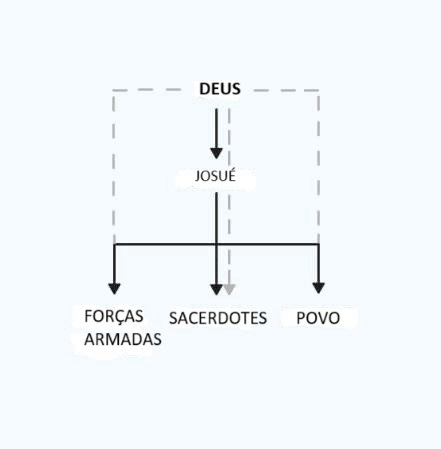
We can also extract further leadership principles from Moses and Joshua; standards for excellence from Solomon; Jesus gives us a comprehensive protocol regarding “Grievance Proceedure” (Matthew 18). Jesus also introduces the believer to the concept of “servant leadership”.
Mark 10:43 Yet it shall not be so among you; but whoever desires to become great among you shall be your servant. 44 And whoever of you desires to be first shall be slave of all. 45 For even the Son of Man did not come to be served, but to serve, and to give His life a ransom for many.”
Jesus “marvelled” at the faith of the Romans to obey direct commands (Matthew 8:9,10)
THE INTERNAL STRUCTURE OF THE BELIEVER (SPIRITUAL TEMPLE) MUST BE SIMULTANEOUSLY CONSTRUCTED
The teachings of Christ gives us principles to construct the inner man; for example a significant portion of the teachings of Christ is directed to nourish and prosper the soul. This has become vitally necessary for our own spiritual construction (inner man) because of the emergence of accelerated secularisation. The source of the living water is Christ Himself and His Word.
John 7:37 On the last day, that great day of the feast, Jesus stood and cried out, saying, “If anyone thirsts, let him come to Me and drink. 38 He who believes in Me, as the Scripture has said, out of his heart will flow rivers of living water.”
Christ is the source of the words of eternal life.
John 6:68-69 68 But Simon Peter answered Him, “Lord, to whom shall we go? You have the words of eternal life. 69 Also we have come to believe and know that You are the Christ, the Son of the living God.”
TRADUÇÃO PORTUGUESA (Traduzido por Rafael NogueiraRezende)
Há uma grande pressão experimentada por aqueles que pregam e ensinam a Palavra do Senhor nesta reforma atual; há pressão Divina de cima e há também pressão de baixo. A necessidade de manter a paz nas reuniões é mais avassaladora do que a exigência de provocar o crente a subir mais alto Nele.
A pressão de ambos os locais produz a TENSÃO ou o conflito.
Temos que ter em mente as palavras de Paulo …..
” …Se eu ainda estivesse procurando agradar a homens, não seria servo de Cristo. ” (Gálatas 1:10)
A carta de Paulo aos crentes em Corinto contém dois versículos que definem a tensão e o testemunho de vitória de Paulo…….
2 Corintios 4:8 Em tudo somos atribulados, mas não angustiados; perplexos, mas não desesperados; 9 perseguidos, mas não desamparados; abatidos, mas não destruídos;
Tensão entre lei, graça e verdade.
João 1:17 Porque a lei foi dada por Moisés, mas a graça e a verdade vieram por meio de Jesus Cristo.
Esta geração não deve ser responsabilizada por abdicar de sua responsabilidade de ensinar a verdade na totalidade da Palavra de Deus. O zelo e a coragem de declarar a verdade devem ser uma parte dominante do legado que deixamos para a próxima geração de crentes e líderes.
A tensão que se seguirá à nossa pregação deve ser entendida e abraçada como o preço que pagamos para cumprir nosso mandato como anciãos e pais.
Jeremias foi agredido por Pashur, o sumo sacerdote adjunto no Templo por entregar a Palavra do Senhor a respeito dos julgamentos vindouros do Senhor, mais especificamente a destruição de Jerusalém e o cativeiro e sua morte na Babilônia. Jeremias, revelando a fragilidade de nossa existência humana, teve um lapso momentâneo.
Ele declarou …..
Jeremias 20:8 Sempre que falo, é para gritar que há violência e destruição. Por isso a palavra do Senhor trouxe-me insulto e censura o tempo todo.
Jeremias 20:9 a Mas, se eu digo: “Não o mencionarei nem mais falarei em Seu nome”
É extremamente importante para aqueles que são chamados por Deus para representá-Lo entender a tensão que é criada quando a verdade é apresentada a um povo, a maioria dos quais serve em dois reinos, o mercado e a igreja.
Em muitos casos, pode ser mais fácil, como Jeremias declarou, evitar mencionar o nome de Deus em suas falas. Pode-se evitar perseguições intensas e espancamentos no Templo
Somos gratos por Jeremias, e para muitos de nós, esse desvio ter sido um lapso momentâneo que revela nossa construção humana
O sistema padrão de Jeremias era a vontade de Deus. Ele reconheceu a presença de um incêndio interno que não pôde ser distinguido
Jeremias 20:9 b … é como se um fogo ardesse em meu coração, um fogo dentro de mim. Estou exausto tentando contê-lo; já não posso mais!
Jeremias assumiu seu compromisso de priorizar a pressão divina, embora pudesse ouvir o clamor de seus adversários acusatórios e zombadores, que ele viu preparando a armadilha do passarinheiro, esperando ansiosamente que ele tropeçasse. Jeremias declarou que sua força estava no Senhor, o poderoso e maravilhoso (Versículo 11)
Jeremias 20:10-11 Ouço muitos comentando: “Terror por todos os lados! Denunciem-no! Vamos denunciá-lo! ” Todos os meus amigos estão esperando que eu tropece, e dizem: “Talvez ele se deixe enganar; então nós o venceremos e nos vingaremos dele”. Mas o Senhor está comigo, como um forte guerreiro! Portanto, aqueles que me perseguem tropeçarão e não prevalecerão. O seu fracasso lhes trará completa vergonha; a sua desonra jamais será esquecida.
Este incidente na vida de Jeremias deve ser uma revelação clara a todos aqueles que são chamados a representar esta reforma atual para entender e abraçar a tensão resultante que será gerada quando a verdade (a totalidade da Palavra de Deus) for declarada.
Acredito que não devemos apenas avaliar a condição espiritual das águas que refrescam uma cidade, devemos também assumir a responsabilidade conjunta pela condição espiritual da cidade. À medida que fizermos isso, vamos extinguir alguns dos manipuladores que estão atualmente em fúria
Depois de experimentar uma visita fenomenal de Deus, onde os umbrais das portas foram sacudidos e a casa estava cheia de fumaça, Isaías humilhou-se e declarou:
Isaías 6:5 Então gritei: Ai de mim! Estou perdido! Pois sou um homem de lábios impuros e vivo no meio de um povo de lábios impuros; e os meus olhos viram o Rei, o Senhor dos Exércitos! “
Foi uma visita tangível, quase cataclísmica, da Presença de Deus que causou essa intensidade de convicção em Isaías. Ele incluiu seus lábios mentirosos como parte do problema. Esta declaração de Isaías ativa o serafim que tocaria os lábios de Isaías e removeria dele a iniquidade
Depois que os lábios de Isaías foram tocados por uma “brasa viva quente”, seu discurso não pôde mais se alinhar à cultura predominante da época. Depois de termos respondido “Envia-me” ao Senhor, ficar em silêncio no meio de um ambiente corrupto, apóstata e perverso nos tornaria responsáveis perante Deus pela condição espiritual do povo.
Isso significa que, quando somos chamados a falar em meio a ambientes corruptos, em meio a pessoas com lábios mentirosos, devemos ser ousados e corajosos para declarar como Jeremias……
Jeremias 9:6 De opressão em opressão, de engano em engano, eles se recusam a reconhecer-me”, declara o Senhor.
Durante os últimos seis meses, eu estava desesperadamente procurando soluções do Senhor em relação à reconciliação de nossa responsabilidade com dois reinos – funcionando tanto dos céus quanto da terra.
Há uma tensão que é gerada quando funcionamos a partir de ambos os reinos; Estamos na terra e funcionamos do céu. Temos que estar atentos e conscientes da dinâmica de ambos os ambientes.
Como gerenciamos a tensão que é gerada quando falamos com o público enquanto estamos sob intensa pressão Divina?
Vamos apagar o primeiro fogo maipulador que está fumegante há alguns anos
A “palavra procedente” para esta temporada é “unidade”. Esta é a exigência do próprio Jesus.
Por que estamos encontrando resistência, resistência e desafio aberto em relação à unidade?
Examinaremos um apelo simples e básico do apóstolo Paulo aos crentes em Filipo a respeito da unidade
Filipenses 1:27-30 Não importa o que aconteça, exerçam a sua cidadania de maneira digna do evangelho de Cristo, para que assim, quer eu vá e os veja, quer apenas ouça a seu respeito em minha ausência, fique eu sabendo que vocês permanecem firmes num só espírito, lutando unânimes pela fé evangélica, sem de forma alguma deixar-se intimidar por aqueles que se opõem a vocês. Para eles isso é sinal de destruição, mas para vocês de salvação, e isso da parte de Deus; pois a vocês foi dado o privilégio de, não apenas crer em Cristo, mas também de sofrer por ele, já que estão passando pelo mesmo combate que me viram enfrentar e agora ouvem que ainda enfrento.
Por que não podemos chegar a esse lugar de “unidade”? Por que a manifestação de uma cultura de “unidade” é tão evasiva?
A resposta é simples …… Conhecemos a PROMESSA DE DEUS
Sabemos EXATAMENTE o resultado que o Senhor prometeu àqueles que habitariam em Sião
Primeira Promessa – AUTONOMIA
Miquéias 4:4 Mas assentar-se-á cada um debaixo da sua videira, e debaixo da sua figueira, e não haverá quem os espante, porque a boca do Senhor dos exércitos o disse.
Em um ambiente legítimo de Sião, tanto o javali quanto a fera (Salmo 80:12,13) perdem o gosto pela raiz da videira porque ela não cumpre o resultado final de Deus. A fera e o leão devem comer grama em Sião.
Isso significa que onde a destruição das vinhas está ocorrendo, vemos que essa atividade é contraproducente para o resultado desejado de Deus. Devemos reprovar práticas e estratégias que alienam o afeto entre filhos e pais. Interpretando a palavra do Senhor dita por meio de Seu profeta Malaquias, podemos prolongar a maldição sobre a terra ou podemos ser agências de libertação que trabalham para o levantamento da maldição.
Humildemente supomos que, tendo em vista o exposto, todos os dons de graça de apoio devem, necessariamente, por mais impressionantes que sejam, contribuir para levar o povo de Deus a este lugar de descanso, onde cada pessoa está sentada sob sua videira e sua figueira
LIVRE DO TERROR
Miquéias 4 b “e não haverá quem os espante”
CONHECEMOS A PROMESSA DADA A UMA COMPANHIA SIÃO
Aqui está o problema ……… Os assírios estão fazendo exatamente a mesma oferta que o Senhor – o mesmo acordo está sobre a mesa. Devemos ser capazes de discernir a fonte da oferta
2 Reis 18:31 Não deis ouvidos a Ezequias; pois assim diz o rei da Assíria: Fazei paz comigo, e saí a mim; e coma cada um da sua vide e da sua figueira, e beba cada um a água da sua cisterna; 32 até que eu venha, e vos leve para uma terra semelhante vossa, terra de trigo e de mosto, terra de pão e de vinhas, terra de azeite de oliveiras e de mel; para que vivais e não morrais. Não deis ouvidos a Ezequias, quando vos envenena, dizendo: O Senhor nos livrará. 33 Porventura os deuses das nações puderam livrar, cada um a sua terra, das mãos do rei da Assíria?
Para o coxo pegar na cama e andar, ele tem que ver algo diferente. Ele vê a multidão entrando e saindo da água e sendo curada. No entanto, ele reconhece uma deficiência no sistema. Qualquer observador veria milagres, sinais e maravilhas. Esta é a oferta na Mesa para quem procura sinais, maravilhas e milagres. Gratificação instantânea. Só traga uma oferta. Não há necessidade de uma relação de aliança. A paixão subjacente por trás dessa demanda – apenas deixe Ezequias, abandone sua aliança com Deus, Seu rei e Seu povo.
Mas pois o coxo conhece a PROMESSA DE DEUS
Que o Senhor de Sião está vindo – Esta é a Promessa do Pai
Miquéias 4:6 Naquele dia, diz o Senhor, congregarei a que coxeava, e recolherei a que tinha sido expulsa, e a que eu afligi. 7 E da que coxeava farei um resto, e da que tinha sido arrojada para longe, uma nação poderosa; e o Senhor reinará sobre eles no monte Sião, desde agora e para sempre
Talvez o coxo saiba que Aquele que vem é o Senhor sobre Sião – Ele é o grande Sumo Sacerdote – o grande simpatizante (Hebreus 4:15)
Isaías 53:3 Foi desprezado e rejeitado pelos homens, um homem de tristeza e familiarizado com o sofrimento. Como alguém de quem os homens escondem o rosto, foi desprezado, e nós não o tínhamos em estima.
RESISTA AO TERROR E À INTIMIDAÇÃO
Filipenses 1:28 sem de forma alguma deixar-se intimidar por aqueles que se opõem a vocês. Para eles isso é sinal de destruição, mas para vocês de salvação, e isso da parte de Deus;
Paulo está falando sobre uma cultura de unidade que é LIVRE do medo e da intimidação da terra
• LIVRE de interferências políticas, exceto para obedecer às leis das autoridades governamentais. Os governantes não são um terror para as boas obras, mas para o mal (Romanos 13)
• LIVRE do crime organizado, da guerra de gangues e de guerra territorial
• LIVRE do terror de nossos adversários como os assírios
Se estivermos apavorados e cedermos a essas forças, essas agências de terror perceberão que isso é perdição – sua vitória
A palavra grega para “perdição”
Apṓleia; destruir totalmente; refere-se ao estado após a morte em que a exclusão da salvação é um fato realizado, no qual o homem, em vez de se tornar o que poderia ter sido, está perdido e arruinado. (Extraído do Dicionário CWSB)
Outras definições de “perdição” um estado de ruína espiritual final; perda da alma; danação. Destruição total ou ruína. Obsoleto. (Dictionary.com)
Embora essas agências de terror e intimidação existam, estamos longe da Sião que Deus prometeu a Seu remanescente
COMO PODEMOS PARTICIPAR DO MESMO CONFLITO?
Filipenses 1:30 já que estão passando pelo mesmo combate que me viram enfrentar e agora ouvem que ainda enfrento.
Qual é o conflito de que Paulo está falando? Paulo está falando sobre abraçar a tensão que é criada quando ele pregou o evangelho dentro de uma cultura romana hostil. Paulo encoraja os crentes a suportar o sofrimento que vem com a pregação do evangelho. Jesus preparou Seus discípulos para a realidade de serem odiados neste mundo. Quando entendermos isso, estaremos mais preparados para entender o conflito e a tensão
João 15:18 já que estão passando pelo mesmo combate que me viram enfrentar e agora ouvem que ainda enfrento.
O OUTRO REINO É O REINO CELESTIAL
Filipenses 3:20 A nossa cidadania, porém, está nos céus, de onde esperamos ansiosamente um Salvador, o Senhor Jesus Cristo.
Sentado com Cristo nos lugares celestiais
Esta é a nossa suprema e valorizada cidadania, onde a nossa lealdade final é para com o Senhor. Estar sentado com Ele nos dá grande segurança e confiança a respeito de nosso domínio espiritual sobre os vários inimigos e principados que estão posicionados contra o Senhor.
Efésios 1:20-22 Esse poder ele exerceu em Cristo, ressuscitando-o dos mortos e fazendo-o assentar-se à sua direita, nas regiões celestiais, muito acima de todo governo e autoridade, poder e domínio, e de todo nome que se possa mencionar, não apenas nesta era, mas também na que há de vir. Deus colocou todas as coisas debaixo de seus pés e o designou como cabeça de todas as coisas para a igreja,
REINO DA TERRA
Embora estejamos espiritualmente assentados com Cristo que venceu todos os inimigos, vamos encontrá-los na terra e precisamos afirmar nosso domínio espiritual e obediência à Palavra de Deus para vencê-los
Sentar com Ele nos faz fazer grandes declarações como ……….
Salmos 24:1 Do Senhor é a terra e tudo o que nela existe, o mundo e os que nele vivem;
Devemos entender e abraçar a tensão que seria criada apenas neste exemplo
Na terra, a ekklesia, os que foram chamados, a assembleia dos crentes. Esses “templos espirituais” se constituíram em uma organização que o mundo reconhece como igreja. Esta organização na terra recebe e distribui finanças; possui propriedades; em muitos casos emprega Recursos Humanos; Está envolvida em projetos de responsabilidade social/socorro.
Dentro de nossa esfera de governo na Terra, muitos líderes podem usar o padrão que Davi usou para construir seu tabernáculo. Em termos de representação, a casa de Davi é como Deus.
Zacarias 12:8 Naquele dia o Senhor protegerá os que vivem em Jerusalém, de forma que o mais fraco dentre eles será como Davi, e a família de Davi será como Deus, como o anjo do Senhor que vai adiante deles.
Não podemos aplicar o Salmo 24:1 na terra para desapropriar as propriedades daqueles que funcionam de acordo com as leis governantes da terra. Os reis bíblicos conheciam a LEI DO DOMÍNIO EMINENTE que protegia os proprietários de terras da exploração. Davi sabia disso quando comprou a eira de Araúna. Ahab também sabia disso quando nos oferecemos para pagar o valor de mercado da propriedade de Naboth, oferecendo-lhe até mesmo um vinhedo melhor. Por favor, consulte o meu artigo sobre INTEGRIDADE FISCAL DOS REIS
Também podemos extrair outros princípios de liderança de Moisés e Josué; padrões de excelência de Salomão; Jesus nos dá um protocolo abrangente a respeito do “Processo de Queixa” (Mateus 18). Jesus também introduz o crente ao conceito de “liderança servidora”.
Marcos 10:43-45 Não será assim entre vocês. Pelo contrário, quem quiser tornar-se importante entre vocês deverá ser servo; e quem quiser ser o primeiro deverá ser escravo de todos. Pois nem mesmo o Filho do homem veio para ser servido, mas para servir e dar a sua vida em resgate por muitos”.
Jesus “se maravilhava” com a fé dos romanos para obedecer a ordens diretas (Mateus 8:9,10)
A ESTRUTURA INTERNA DO CRENTE (TEMPLO ESPIRITUAL) DEVE SER CONSTRUÍDA SIMULTANEAMENTE
Os ensinamentos de Cristo nos dão princípios para construir o homem interior; por exemplo, uma parte significativa dos ensinamentos de Cristo é direcionada para nutrir e prosperar a alma. Isso se tornou vitalmente necessário para nossa própria construção espiritual (homem interior) por causa do surgimento da secularização acelerada. A fonte da água viva é o próprio Cristo e Sua Palavra.
João 7:37-38 No último e mais importante dia da festa, Jesus levantou-se e disse em alta voz: “Se alguém tem sede, venha a mim e beba. Quem crer em mim, como diz a Escritura, do seu interior fluirão rios de água viva”.
Cristo é a fonte das palavras de vida eterna.
João 6:68-69 Simão Pedro lhe respondeu: “Senhor, para quem iremos? Tu tens as palavras de vida eterna. Nós cremos e sabemos que és o Santo de Deus”.
The king/priest dynamic ought to function within every believer in whom Christ is formed.
These two offices represent two voices that reside in every believer.
We must consider the total nature of Jesus. Jesus did not manifest a tranquil, serene nature at all times during His ministry. In fact, public opinion was divided concerning His true identity.
Matthew 16:13 When Jesus came into the region of Caesarea Philippi, He asked His disciples, saying, “Who do men say that I, the Son of Man, am?” 14 So they said, “Some say John the Baptist, some Elijah, and others Jeremiah or one of the prophets.”
Jesus would lie down in perfect peace in the midst of the storm, yet would not hesitate to cause havoc in the Temple by overturning the tables of moneychangers and those who sold doves.
Isaiah himself prophesied that Jesus would be a Prince of Peace (Isaiah 9:6) In the Beatitudes Jesus Himself conferred blessings and the the identity ” sons of God upon the peacemakers (Matthew 5:9)
Jesus also declared :
Matthew 10:34 “Do not think that I came to bring peace on earth. I did not come to bring peace but a sword. 35 For I have come to set a man against his father, a daughter against her mother, and a daughter-in-law against her mother-in-law’; 36 and a man’s enemies will be those of his own household.’
Many leading psychologists, philosophers, historians, and writers over the years have questioned the mental health of Jesus.
(The following information extracted from Wikipedia) The question of whether the historical Jesus was in good mental health has been explored by multiple psychologists, philosophers, historians, and writers. The first person, after several other attempts at tackling the subject, who broadly and thoroughly questioned the mental health of Jesus was French psychologistCharles Binet-Sanglé, the chief physician of Paris and author of a four-volume work La Folie de Jésus (The Madness of Jesus).[1][2][3] This view finds both supporters and opponents.
Mark 3:21 But when His own people heard about this, they went out to lay hold of Him, for they said, “He is out of His mind. 22 And the scribes who came down from Jerusalem said, “He has Beelzebub,” and, “By the ruler of the demons He casts out demons.”
The issue here is that Jesus is not only the King of Kings, Jesus is also our High Priest. Jesus is not only the Lamb who was slain (Saviour, Redeemer), Jesus is also the Lion (Consuming Fire) who roars when the Name and the integrity in the house of His Father is brought into disrepute. Our reception of Jesus will determine the response of Jesus.
Jesus declared desolation on cities like Jerusalem because the leaders killed the prophets and those servants who were sent to the city.
Fast forward to this present day. As Christ is formed in believers our nature should also be determined by accurate discernment of prevailing spiritual conditions that we may encounter in any environment.
Why would Jesus manifest this militant attitude in His Father’s house? As explained earlier, carnal people may view this behaviour as signs of Schizophrenia (a state characterized by the coexistence of contradictory or incompatible elements) – Definition – Dictionary.com
After the disciples observed the uncharacteristic response of Jesus, then they remembered what was written concerning Him.
John 2:17 Then His disciples remembered that it was written, “Zeal for Your house has eaten Me up.”
His disciples remember the writings of David
Psalms 69: 8 I have become a stranger to my brothers, And an alien to my mother’s children; 9 Because zeal for Your house has eaten me up, And the reproaches of those who reproach You have fallen on me.
We see the same zeal demonstrated in the ministry of Elijah and in the ministry of Paul.
The Hebrew word for “zeal” (Extracted from CWSB Dictionary)
qin’āh: A feminine noun meaning zeal, jealousy. This word comes from the verb qānā’ meaning to be jealous or zealous, and describes an intense fervor, passion, and emotion that is greater than a person’s wrath and anger (Proverbs 27:4). It can be either good or bad: Phinehas was commended for taking up the Lord’s jealousy
We see these two voices manifested in the apostolic/prophetic relationship. Let us consider the spiritual collaboration between King Hezekiah and the prophet Isaiah.
The voice of the King reveals his dominion mandate; to rule and govern, prioritising the prosperity of the people.
The voice of the priesthood instructs and teaches the people of God from His Word; to communicate the blessings of God; to serve as overseers of the sacrifices at the altar among other things.
These two voices must now cohabit in the same human vessel, challenging each other to ensure that the culture of God is maintained even in our dominion.
The mighty Assyrians tormented King Hezekiah with threats and insults that petrified King Hezekiah. The Assyrians mocked the God and the faith of King Hezekiah. This is the message that the King sends to the prophet …..
2 Kings 19:3 And they said to him, “Thus says Hezekiah: ‘This day is a day of trouble, and rebuke, and blasphemy; for the children have come to birth, but there is no strength to bring them forth.
This is the response of the prophet to the King
2 Kings 19: 6 And Isaiah said to them, “Thus you shall say to your master, ‘Thus says the LORD: “Do not be afraid of the words which you have heard, with which the servants of the king of Assyria have blasphemed Me. 7 Surely I will send a spirit upon him, and he shall hear a rumor and return to his own land; and I will cause him to fall by the sword in his own land.” ’ ”
Here is the tale of two voices
The terror that terrifies the King in you must not terrify the Prophet in you.
The prophetic voice is not a threat to the monarchy of Hezekiah; the purpose of the prophetic voice is to cause the King to look to the Rock that is Higher than Himself. Isaiah is not a spokesman for the palace. He is a Servant of Almighty God.
Our help comes from the Lord.
Believers must not be intimidated by prevailing circumstances or conditions.
May the two voices in us be alive, well and prosper. May we see the emergence of sacerdotal rulers
TRADUÇÃO PORTUGUESA (Traduzido por Raphael Nogueira Rezende)
AS DUAS VOZES INTERNAS
A dinâmica rei/sacerdote deve funcionar dentro de cada crente no qual Cristo é formado.
Esses dois cargos representam duas vozes que residem em cada crente.
Devemos considerar a natureza total de Jesus. Jesus não manifestou uma natureza tranquila e serena em todos os momentos durante Seu ministério. De fato, a opinião pública estava dividida sobre Sua verdadeira identidade.
Mateus 16:13 Chegando Jesus à região de Cesaréia de Filipe, perguntou aos seus discípulos: “Quem os homens dizem que o Filho do homem é? “Eles responderam: “Alguns dizem que é João Batista; outros, Elias; e, ainda outros, Jeremias ou um dos profetas”.
Jesus se deitaria em perfeita paz no meio da tempestade, mas não hesitaria em causar estragos no Templo derrubando as mesas dos cambistas e dos que vendiam pombas.
O próprio Isaías profetizou que Jesus seria um Príncipe da Paz (Isaías 9:6) Nas bem-aventuranças, o próprio Jesus conferiu bênçãos e a identidade ” filhos de Deus aos pacificadores (Mateus 5:9)
Jesus também declarou:
Mateus 10:34-36 “Não pensem que vim trazer paz à terra; não vim trazer paz, mas espada. Pois vim para fazer que ‘o homem fique contra seu pai, a filha contra sua mãe, a nora contra sua sogra; os inimigos do homem serão os da sua própria família’.
Muitos dos principais psicólogos, filósofos, historiadores e escritores ao longo dos anos questionaram a saúde mental de Jesus.
(As seguintes informações extraídas da Wikipédia)
A questão de saber se o Jesus histórico estava em boa saúde mental tem sido explorada por vários psicólogos, filósofos, historiadores e escritores. A primeira pessoa, depois de várias outras tentativas de abordar o assunto, que questionou ampla e minuciosamente a saúde mental de Jesus foi o psicólogo francês Charles Binet-Sanglé, médico-chefe de Paris e autor de uma obra de quatro volumes La Folie de Jésus (A Loucura de Jesus). [1] [2] [3] Essa visão encontra apoiadores e opositores.
Marcos 3:21 Quando seus familiares ouviram falar disso, saíram para apoderar-se dele, pois diziam: “Ele está fora de si”. E os mestres da lei que haviam descido de Jerusalém diziam: “Ele está com Belzebu! Pelo príncipe dos demônios é que ele expulsa demônios”.
A questão aqui é que Jesus não é apenas o Rei dos Reis, Jesus também é nosso Sumo Sacerdote. Jesus não é apenas o Cordeiro que foi morto (Salvador, Redentor), Jesus é também o Leão (Fogo Consumidor) que ruge quando o Nome e a integridade na casa de Seu Pai são colocados em descrédito. Nossa recepção de Jesus determinará a resposta de Jesus.
Jesus declarou desolação em cidades como Jerusalém porque os líderes mataram os profetas e os servos que foram enviados para a cidade.
Avance rapidamente até os dias atuais. Assim como Cristo é formado nos crentes, nossa natureza também deve ser determinada pelo discernimento preciso das condições espirituais prevalecentes que podemos encontrar em qualquer ambiente.
Por que Jesus manifestaria essa atitude militante na casa de Seu Pai? Como explicado anteriormente, as pessoas carnais podem ver esse comportamento como sinais de Esquizofrenia (um estado caracterizado pela coexistência de elementos contraditórios ou incompatíveis) – Definição – Dictionary.com
Depois que os discípulos observaram a resposta incaracterística de Jesus, então eles se lembraram do que estava escrito a respeito Dele.
João 2:17 Seus discípulos lembraram-se que está escrito: “O zelo pela tua casa me consumirá”.
Seus discípulos se lembram dos escritos de Davi
Salmos 69:8 Sou um estrangeiro para os meus irmãos, um estranho até para os filhos da minha mãe; pois o zelo pela tua casa me consome, e os insultos daqueles que te insultam caem sobre mim.
Vemos o mesmo zelo demonstrado no ministério de Elias e no ministério de Paulo.
A palavra hebraica para “zelo” (Extraído do Dicionário CWSB)
qin’āh: Substantivo feminino que significa zelo, ciúme. Esta palavra vem do verbo qānā’ que significa ser ciumento ou zeloso, e descreve um intenso fervor, paixão e emoção que é maior do que a ira e a raiva de uma pessoa (Provérbios 27:4). Pode ser bom ou ruim: Finéias foi elogiado por assumir o ciúme do Senhor
Vemos essas duas vozes manifestadas na relação apostólica/profética. Consideremos a colaboração espiritual entre o rei Ezequias e o profeta Isaías.
A voz do rei revela seu mandato de domínio; governar e governar, priorizando a prosperidade do povo.
A voz do sacerdócio instrui e ensina o povo de Deus a partir de Sua Palavra; comunicar as bênçãos de Deus; servir como supervisores dos sacrifícios no altar, entre outras coisas.
Essas duas vozes devem agora coabitar no mesmo vaso humano, desafiando-se mutuamente para garantir que a cultura de Deus seja mantida mesmo em nosso domínio.
Os poderosos assírios atormentaram o rei Ezequias com ameaças e insultos que petrificaram o rei Ezequias. Os assírios zombavam do Deus e da fé do rei Ezequias.
Esta é a mensagem que o Rei envia ao profeta …..
2 Reis 19:3 E disseram-lhe: Assim diz Ezequias: Este dia é dia de tribulação, repreensão e blasfêmia; pois os filhos nasceram, mas não há forças para trazê-los à luz.
Esta é a resposta do profeta ao Rei
2 Reis 19:6 E Isaías disse-lhes: Assim dirás ao teu senhor: Assim diz o Senhor: Não tenhais medo das palavras que ouvistes, com as quais os servos do rei da Assíria me blasfemaram. 7 Certamente enviarei um espírito sobre ele, e ele ouvirá um rumor e voltará para sua própria terra; e farei com que ele caia pela espada em sua própria terra.”
Eis o conto de duas vozes
O terror que aterroriza o Rei em você não deve aterrorizar o Profeta em você.
A voz profética não é uma ameaça à monarquia de Ezequias; o propósito da voz profética é fazer com que o Rei olhe para a Rocha que é mais alta do que Ele mesmo. Isaías não é porta-voz do palácio. Ele é um servo de Deus Todo-Poderoso.
Nossa ajuda vem do Senhor.
Os crentes não devem ser intimidados pelas circunstâncias ou condições prevalecentes.
Que as duas vozes em nós estejam vivas, bem e prosperem. Que possamos ver o surgimento de governantes sacerdotais
If we have been listening attentively to the various voices over the past few years, there has been a consistent appeal to see the practical manifestation of what we have been hearing and learning. Over the years this appeal has escalated to a lamentation, and in more recent times it is accompanied with a spirit of frustration and gnashing of teeth.
The reality is that there are battles raging on various fronts that are being experienced by everyone; This is a DAY OF BATTLE.
Throughout the scriptures, there has been a thread that runs through both the Old and New Testaments of wars, battles, conflicts, contentions, disputes; however, we also see victories, conquests and supernatural forms of deliverance that are experienced by His faithful that are enabled by God.
The absolute trust of the faithful remain in His Faithfulness and in His Promises
There will always be battles to be fought – the difference between believers and the carnal man is HOW WE CHOOSE TO FIGHT
The weapons of the believer are distinctly different.
We refrain from the use of carnal weapons
Together with prayers, intercession and spiritual warfare, we use THE DOUBLE EDGED SWORD – THE WORD OF GOD
These weapons have been proven to be mighty in God for pulling down strongholds, for casting down arguments and every high thing that exalts itself against the knowledge of God.
The focus of my presentation this morning is
CORPORATE COMMUNICATION IN THE DAY OF BATTLE
This presentation leans towards identifying practical solutions to our common challenges in this day of battle.
Let us study two key words in the title. The first word is the word communicate. It only appears once in the scriptures.
1 Samuel 18:22 And Saul commanded his servants, “Communicate with David secretly, and say, ‘Look, the king has delight in you, and all his servants love you. Now therefore, become the king’s son-in-law.’ ” (New King James Version)
1 Samuel 18:22 And Saul commanded his servants, saying, Commune with David secretly, and say, Behold, the king hath delight in thee, and all his servants love thee: now therefore be the king’s son in law. (King James Version)
Here is the revelation that will cause us to revisit our interpretation of the word “communication”
The Hebrew word for both the words Communicate (NKJV) and Commune (KJV) is the word “dabar”
dāḇar: A verb meaning to speak, to say, to talk, pronounce or formalize, to promise
Like when God told Moses to speak to Pharaoh
In this season, we describe it as a “word that proceeds out of the mouth of God”
CORPORATE
This word is now being used regularly in many of our presentations
Although this word is not found in the scriptures, it is a great word to adopt by leaders of organisations, families and households whose desired outcome is oneness.
Its root is found in the Latin word …..
Latincorporātus, past participle of corporāre (“to make into a body”), which in turn was formed from corpus (“body”); united or combined into one body; collective, common.
The application of this word demands that it cannot be applied selectively; most especially, in times of battle.
If our goal is oneness in the day of battle – corporate communication is mandatory.
Jesus and Paul would refer to the anatomy of the human body to bring greater clarity and understanding to functioning within a corporate culture.
In John 2, Jesus is telling the Jews that He will destroy the physical Temple and that He will raise a new Temple of His Body in three days
Greek word for “body”
sṓma; Body, an organized whole made up of parts and members.
Paul refers to the human body in his teaching on “spiritual gifts”
1 Corinthians 12:21 And the eye cannot say to the hand, “I have no need of you”; nor again the head to the feet, “I have no need of you.” 22 No, much rather, those members of the body which seem to be weaker are necessary. 23 And those members of the body which we think to be less honorable, on these we bestow greater honor; and our unpresentable parts have greater modesty, 24 but our presentable parts have no need. But God composed the body, having given greater honor to that part which lacks it, 25 that there should be no schism in the body, but that the members should have the same care for one another.
This is the clearest expression of understanding the “corporate culture”
This is the desired outcome of this present move of God – whether it is a household of faith, a family comprising various households of faith or the CITY CHURCH
CORPORATE CULTURE WITHOUT SCHISMS
When we all came here this morning, we brought our ENTIRE BODIES with us, not just our faces.
We do not have detachable limbs and parts that can be assembled according to the occasion.
It is impossible leave our dishonourable and unpresentable parts at home. We have to embrace our whole body.
When Saul was pursuing David in the wilderness of Engedi, this is how David caught Saul
When nature calls, you have to go
Saul’s robe would not have been cut off, if he was able to leave his unpresentable parts at home
I am well acquainted and familiar with every aspect of A CORPORATE CULTURE. My experiential understanding comes from over 20 years of serving an American global energy corporate organisation. I was trained and equipped over this 20 year period in every area of Corporate culture. More importantly I had to implement this culture in the sphere of my jurisdiction. It is my prayer that perhaps my perspectives can contribute to the creation of an authentic corporate culture.
This morning we are dealing with just ONE aspect – COMMUNICATION – dabar in the day of battle
There are examples in the scriptures that show us the critical need to access the voice of God before going into battles. Why? there are thousands of lives at risk
Gideon wanted to test the promise that God was with him in respect of his assignment
Judges 6: 36 So Gideon said to God, “If You will save Israel by my hand as You have said— 37 look, I shall put a fleece of wool on the threshing floor; if there is dew on the fleece only, and it is dry on all the ground, then I shall know that You will save Israel by my hand, as You have said.”
Jehoshaphat wanted to test the battle strategy with the alliance with the king of Israel before taking on the Syrians
Inspite of hearing from the 400 strong company of rehearsed, conspiratorial prophetic voices who seemed inclined to declaring what the king wanted to hear, which was to take Ramoth Gilead from the hands of the Syrians –
Jehoshaphat still asked “Is there not still a prophet of the LORD here, that we may inquire of Him?”
This is the essence of corporate communication; it seeks to access the “dabar” of the Lord to avoid any collateral loss of human lives in the day of battle.
Although Micaiah was languishing in chains and rags in prison – his involvement in the process of corporate communication in the day of battle was essential.
What Jehoshaphat was searching for was the dabar – Jehoshaphat was not being obstructive or negative towards the military strategy that was overwhelmingly approved by the 400 strong prophetic company. Jehoshaphat sought for “DIVINE CLASSIFIED INTELLIGENCE”
Eventually Micaiah released the “dabar” for the battle against the Syrians for Ramoth Gilead.
1 Kings 22:17 Then he said, “I saw all Israel scattered on the mountains, as sheep that have no shepherd. And the LORD said, ‘These have no master. Let each return to his house in peace.’ ”
THE FOCUS OF THIS ARTICLE IS THE CRITICAL IMPORTANCE OF CORPORATE COMMUNICATION IN THE DAY OF BATTLE
SOME NATIONS HAVE A WAR ROOM OR THE SITUATION ROOM
This is an Intelligence Communication and Management Centre. It has advanced communication equipment that enables the nation’s leader to communicate with the armed forces anywhere in the world. The personnel in that room include National security officers who would advise and update the leader on any crisis. This is where strategies are formulated and communicated
Many believers may counter that the need for direct, specific instructions may be accessed by listening attentively.
Preaching is a form of communication. However when we preach, we would use parables, similes, illustrations, symbols, cryptic language, dark sayings, riddles and we use a lot of hinting
In the day of battle, where thousands of lives are at risk – when we are all sitting together in the SITUATION ROOM, this is not the time or place for prophetic utterances or speaking in parables. We need a DIRECT DABAR FROM GOD in the plainest of communication.
DIRECT SPECIFIC INSTRUCTIONS
Let us examine “The taking of Jericho”
We will talk about Joshua, an experienced military strategist and his method in communicating the “dabar” corporately.
The Lord rolls out His battle plan, speaking DIRECTLY to His Servant Joshua.
Joshua 6:2 And the LORD said to Joshua: “See! I have given Jericho into your hand, its king, and the mighty men of valor. 3 You shall march around the city, all you men of war; you shall go all around the city once. This you shall do six days. 4 And seven priests shall bear seven trumpets of rams’ horns before the ark. But the seventh day you shall march around the city seven times, and the priests shall blow the trumpets. 5 It shall come to pass, when they make a long blast with the ram’s horn, and when you hear the sound of the trumpet, that all the people shall shout with a great shout; then the wall of the city will fall down flat. And the people shall go up every man straight before him.” 6 Then Joshua the son of Nun called the priests and said to them, “Take up the ark of the covenant, and let seven priests bear seven trumpets of rams’ horns before the ark of the LORD.” 7 And he said to the people, “Proceed, and march around the city, and let him who is armed advance before the ark of the LORD.” 8 So it was, when Joshua had spoken to the people, that the seven priests bearing the seven trumpets of rams’ horns before the LORD advanced and blew the trumpets, and the ark of the covenant of the LORD followed them. 9 The armed men went before the priests who blew the trumpets, and the rear guard came after the ark, while the priests continued blowing the trumpets. 10 Now Joshua had commanded the people, saying, “You shall not shout or make any noise with your voice, nor shall a word proceed out of your mouth, until the day I say to you, ‘Shout!’ Then you shall shout.” 11 So he had the ark of the LORD circle the city, going around it once. Then they came into the camp and lodged in the camp. 12 And Joshua rose early in the morning, and the priests took up the ark of the LORD. 13 Then seven priests bearing seven trumpets of rams’ horns before the ark of the LORD went on continually and blew with the trumpets. And the armed men went before them. But the rear guard came after the ark of the LORD, while the priests continued blowing the trumpets. 14 And the second day they marched around the city once and returned to the camp. So they did six days. 15 But it came to pass on the seventh day that they rose early, about the dawning of the day, and marched around the city seven times in the same manner. On that day only they marched around the city seven times. 16 And the seventh time it happened, when the priests blew the trumpets, that Joshua said to the people: “Shout, for the LORD has given you the city! 17 Now the city shall be doomed by the LORD to destruction, it and all who are in it. Only Rahab the harlot shall live, she and all who are with her in the house, because she hid the messengers that we sent. 18 And you, by all means abstain from the accursed things, lest you become accursed when you take of the accursed things, and make the camp of Israel a curse, and trouble it. 19 But all the silver and gold, and vessels of bronze and iron, are consecrated to the LORD; they shall come into the treasury of the LORD.”
• Joshua trusted God absolutely.
• Joshua had a keen ear for the voice of God.
• Joshua was obedient.
• Joshua was an excellent military strategist.
THE COMMUNICATION TRAIL
FIRST – The Lord communicated to Joshua – this becomes the “dabar” for Joshua and the people of God. Direct commands and instructions
SECOND – Joshua communicates with the priests, armed forces and the people. Direct commands and instructions
THIRD – Implementation of the dabar – direct commands and instructions
Here lies the key to our Kingdom advancement. If we despise the need to communicate the “dabar” corporately, it is impossible to achieve a CORPORATE OUTCOME FOR SUCCESS IN THE BATTLEFIELD or even the marketplace.
WHAT ARE THE POTENTIAL DANGERS FOR FAILING TO COMMUNICATE THE “DABAR” FOR THE TAKING OF JERICHO
• Innocent people will not have been told that the battle is the Lord’s
• No one would have told them that
“You shall not shout or make any noise with your voice, nor shall a word proceed out of your mouth, until the day I say to you, ‘Shout!’ Then you shall shout.”
They will be a “noisy group” in the midst of those who have been privy to Divine Classified intelligence
• Some will blow their own trumpets with great vigor on the first day and compromise the entire military operation. No one would have communicated to them the supernatural deliverance will happen on the 7th day
• Some will start shooting enthusiastically on the first day
• In their zeal for victory some will destroy the house of Rahab because they have not been told of the significance of the scarlet cord hanging outside her window. They will assume it is Valentines Day washing hanging out to dry
• They will have no knowledge of the covenant established between the men of God and Rahab
• They will take out the entire family that Rahab brought into her house for safety – bringing into disrepute the authority of Rahab in her own house as well as compromising the integrity of the men of God who promised her Divine immunity over her and her entire family
• They will merrily help themselves to the accursed things – receiving them as spoils of war
These are the consequences of a failure to communicate the “dabar” corporately in the day of battle
If corporate communication does not reach the weak, the frail, the elderly and the stragglers at the rear of the army – the most vulnerable we will be devoured by the Amalekites
TRADUÇÃO PORTUGUESA (Traduzido por Rafael Nogueira Rezende)
A COMUNICAÇÃO CORPORATIVA NO DIA DA BATALHA
Se estivemos a ouvir atentamente as várias vozes ao longo dos últimos anos, tem havido um apelo consistente para ver a manifestação prática do que temos ouvido e aprendido. Ao longo dos anos, este apelo escalou para um lamento e, em tempos mais recentes, é acompanhado de um espírito de frustração e ranger de dentes.
A realidade é que há batalhas travadas em várias frentes que estão sendo vividas por todos; Este é um DIA DE BATALHA.
Ao longo das escrituras, houve um fio que atravessa tanto o Antigo quanto o Novo Testamento de guerras, batalhas, conflitos, contendas, disputas; no entanto, também vemos vitórias, conquistas e formas sobrenaturais de libertação que são experimentadas por Seus fiéis que são capacitadas por Deus.
A confiança absoluta dos fiéis permanece em Sua Fidelidade e em Suas Promessas
Sempre haverá batalhas a serem travadas – a diferença entre os crentes e o homem carnal é como escolhemos lutar
As armas do crente são distintamente diferentes.
Abstemos o uso de armas carnais.
Juntamente com orações, intercessão e guerra espiritual, usamos A ESPADA DE DOIS GUMES – A PALAVRA DE DEUS.
Essas armas provaram ser poderosas em Deus para derrubar fortalezas, para derrubar argumentos e toda coisa elevada que se exalta contra o conhecimento de Deus.
O foco da minha apresentação desta manhã é:
A COMUNICAÇÃO CORPORATIVA NO DIA DA BATALHA
Esta apresentação tende a identificar soluções práticas para os nossos desafios comuns neste dia de batalha.
Estudemos duas palavras-chave no título. A primeira palavra é a palavra comunicar. Ela só aparece uma vez nas escrituras.
1 Samuel 18:22 E Saul ordenou aos seus servos: “Comuniquem-se secretamente com Davi e digam: Olha, o rei tem prazer em ti, e todos os seus servos te amam. Agora, portanto, torne-se genro do rei’. ” (Nova versão King James)
1 Samuel 18:22 E Saul ordenou aos seus servos, dizendo: Comungai secretamente com Davi, e dizei: Eis que o rei se deleita em ti, e todos os seus servos te amam: agora seja, pois, genro do rei. (Versão King James)
Eis a revelação que nos fará revisitar nossa interpretação da palavra “comunicação”
A palavra hebraica para as palavras Comunicar (NKJV) e Comungai (KJV) é a palavra “dabar”
dāḇar: Verbo que significa falar, dizer, falar, pronunciar ou formalizar, prometer.
Como quando Deus disse a Moisés para falar com o Faraó
Nesta temporada, descrevemo-la como uma “palavra que sai da boca de Deus”
CORPORATIVO
Esta palavra está agora a ser usada regularmente em muitas das nossas apresentações
Embora essa palavra não seja encontrada nas escrituras, é uma ótima palavra a ser adotada por líderes de organizações, famílias e lares cujo resultado desejado é a unidade.
Sua raiz é encontrada na palavra latina …..
Latimcorporātus, particípio passado de corporāre (“fazer um corpo”), que por sua vez era formado a partir de corpus (“corpo”), unido ou combinado em um só corpo; coletivo, comum.
A aplicação desta palavra exige que ela não possa ser aplicada selectivamente; mais especialmente, em tempos de batalha.
Se o nosso objetivo é a unidade no dia da batalha – a comunicação corporativa é obrigatória.
Jesus e Paulo referiram-se à anatomia do corpo humano para trazer maior clareza e compreensão ao funcionamento dentro de uma cultura corporativa.
Em João 2, Jesus está dizendo aos judeus que Ele destruirá o Templo físico e que levantará um novo Templo do Seu Corpo em três dias.
Palavra grega para “corpo”.
sṓma; Corpo, um todo organizado formado por partes e membros.
Paulo se refere ao corpo humano em seu ensinamento sobre “dons espirituais”
1 Coríntios 12:21-25 O olho não pode dizer à mão: “Não preciso de você! ” Nem a cabeça pode dizer aos pés: “Não preciso de vocês! ” Pelo contrário, os membros do corpo que parecem mais fracos são indispensáveis, e os membros que pensamos serem menos honrosos, tratamos com especial honra. E os membros que em nós são indecorosos são tratados com decoro especial, enquanto os que em nós são decorosos não precisam ser tratados de maneira especial. Mas Deus estruturou o corpo dando maior honra aos membros que dela tinham falta, a fim de que não haja divisão no corpo, mas, sim, que todos os membros tenham igual cuidado uns pelos outros.
Essa é a expressão mais clara da compreensão da “cultura corporativa”
Este é o resultado desejado deste presente movimento de Deus – seja uma família de fé, uma família composta por várias famílias de fé ou a IGREJA DA CIDADE
CULTURA CORPORATIVA SEM CISMAS
Quando todos nós viemos aqui esta manhã, trouxemos nossos CORPOS INTEIROS conosco, não apenas nossos rostos.
Não temos membros destacáveis e peças que possam ser montadas de acordo com a ocasião.
É impossível deixar nossas partes desonrosas e inapresentáveis em casa. Temos que abraçar todo o nosso corpo.
Quando Saul estava perseguindo Davi no deserto de Engedi, foi assim que Davi pegou Saul
Quando a natureza chama, você tem que ir
O manto de Saul não teria sido cortado, se ele pudesse deixar suas partes apresentáveis em casa
Estou bem familiarizado e familiarizado com todos os aspectos de uma cultura corporativa. Minha compreensão experiencial vem de mais de 20 anos servindo a uma organização corporativa global de energia americana. Fui treinado e capacitado ao longo desses 20 anos em todas as áreas da cultura corporativa. Mais importante ainda, tive que implementar essa cultura na esfera da minha jurisdição. É minha oração que talvez minhas perspectivas possam contribuir para a criação de uma autêntica cultura corporativa.
Esta manhã estamos lidando com apenas UM aspecto – COMUNICAÇÃO – dabar no dia da batalha
Há exemplos nas escrituras que nos mostram a necessidade crítica de acessar a voz de Deus antes de entrar em batalhas. Por quê? Há milhares de vidas em risco.
Gideão queria testar a promessa de que Deus estava com ele em relação à sua missão.
Juízes 6:36-37 E Gideão disse a Deus: “Quero saber se vais libertar Israel por meu intermédio, como prometeste. Vê, colocarei uma porção de lã na eira. Se o orvalho molhar apenas a lã e todo o chão estiver seco, saberei que tu libertarás Israel por meu intermédio, como prometeste”.
Josafá queria testar a estratégia de batalha com a aliança com o rei de Israel antes de enfrentar os sírios
Apesar de ouvir da companhia de 400 vozes proféticas ensaiadas e conspiratórias que pareciam inclinadas a declarar o que o rei queria ouvir, que era tirar Ramote Gileade das mãos dos sírios –
Josafá ainda perguntou: “Ainda não há aqui um profeta do Senhor, para que possamos inquiri-Lo?”
Essa é a essência da comunicação corporativa; procura acessar o “dabar” do Senhor para evitar qualquer perda colateral de vidas humanas no dia da batalha.
Embora Micaías estivesse definhando em correntes e trapos na prisão – seu envolvimento no processo de comunicação corporativa no dia da batalha foi essencial.
O que Josafá procurava era o dabar – Josafá não estava sendo obstrutivo ou negativo em relação à estratégia militar que foi esmagadoramente aprovada pela companhia profética de 400 homens. Josafá buscou a “INTELIGÊNCIA DIVINA CLASSIFICADA”.
Eventualmente, Micaías liberou o “dabar” para a batalha contra os sírios por Ramoth Gileade.
1 Reis 22:17 Então ele disse: “Vi todo o Israel espalhado nos montes, como ovelhas que não têm pastor. E o SENHOR disse: Estes não têm mestre. Que cada um volte para sua casa em paz”. “
O FOCO DESTE ARTIGO É A IMPORTÂNCIA CRÍTICA DA COMUNICAÇÃO CORPORATIVA NO DIA DA BATALHA.
ALGUMAS NAÇÕES TÊM UMA SALA DE GUERRA OU A SALA SITUACIONAL.
Trata-se de um Centro de Inteligência, Comunicação e Gestão. Possui equipamentos avançados de comunicação que permitem ao líder da nação se comunicar com as forças armadas em qualquer lugar do mundo. O pessoal naquela sala inclui agentes de segurança nacional que aconselhariam e atualizariam o líder sobre qualquer crise. É aqui que as estratégias são formuladas e comunicadas.
Muitos crentes podem contrapor que a necessidade de instruções diretas e específicas pode ser acessada ouvindo atentamente.
A pregação é uma forma de comunicação. No entanto, quando pregamos, usamos parábolas, símiles, ilustrações, símbolos, linguagem enigmática, ditos sombrios, enigmas e usamos muitas dicas
No dia da batalha, onde milhares de vidas estão em risco – quando estamos todos sentados juntos na SALA DE SITUAÇÃO, este não é o momento ou o lugar para declarações proféticas ou falar em parábolas. Precisamos de um DABAR DIRETO DE DEUS na mais simples comunicação.
INSTRUÇÕES ESPECÍFICAS DIRETAS.
Examinemos “A tomada de Jericó”
Falaremos sobre Josué, um experiente estrategista militar e seu método em comunicar o “dabar” corporativamente.
O Senhor lança Seu plano de batalha, falando DIRETAMENTE a Seu Servo Josué.
Josué 6:2-19 Então o Senhor disse a Josué: “Saiba que entreguei nas suas mãos Jericó, seu rei e seus homens de guerra. Marche uma vez ao redor da cidade, com todos os homens armados. Faça isso durante seis dias. Sete sacerdotes levarão cada um uma trombeta de chifre de carneiro à frente da arca. No sétimo dia, marchem todos sete vezes ao redor da cidade, e os sacerdotes toquem as trombetas. Quando as trombetas soarem um longo toque, todo o povo dará um forte grito; o muro da cidade cairá e o povo atacará, cada um do lugar onde estiver”. Josué, filho de Num, chamou os sacerdotes e lhes disse: “Levem a arca da aliança do Senhor. Sete de vocês levarão trombetas à frente da arca”. E ordenou ao povo: “Avancem! Marchem ao redor da cidade! Os soldados armados irão à frente da arca do Senhor”. Quando Josué terminou de falar ao povo, os sete sacerdotes que levavam suas trombetas perante o Senhor saíram à frente, tocando as trombetas. E a arca da aliança do Senhor ia atrás deles. Os soldados armados marchavam à frente dos sacerdotes que tocavam as trombetas, e o restante dos soldados seguia a arca. Durante todo esse tempo tocavam-se as trombetas. Mas, Josué tinha ordenado ao povo: “Não dêem o brado de guerra, não levantem a voz, não digam palavra alguma, até ao dia em que eu lhes ordenar. Então vocês gritarão! ” Assim se fez a arca do Senhor rodear a cidade, dando uma volta em torno dela. Então o povo voltou para o acampamento, onde passou a noite. Josué levantou-se na manhã seguinte, e os sacerdotes levaram a arca do Senhor. Os sete sacerdotes que levavam as trombetas iam adiante da arca do Senhor, tocando as trombetas. Os homens armados iam à frente deles, e o restante dos soldados seguia a arca do Senhor, enquanto as trombetas tocavam continuamente. No segundo dia também rodearam a cidade uma vez, e voltaram ao acampamento. E durante seis dias repetiram aquilo. No sétimo dia, levantaram-se ao romper da manhã e marcharam da mesma maneira sete vezes ao redor da cidade; foi apenas nesse dia que rodearam a cidade sete vezes. Na sétima vez, quando os sacerdotes deram o toque de trombeta, Josué ordenou ao povo: “Gritem! O Senhor lhes entregou a cidade! A cidade, com tudo o que nela existe, será consagrada ao Senhor para destruição. Somente a prostituta Raabe e todos os que estão com ela em sua casa serão poupados, pois ela escondeu os espiões que enviamos. Mas fiquem longe das coisas consagradas, não se apossem de nenhuma delas, para que não sejam destruídos. Do contrário trarão destruição e desgraça ao acampamento de Israel. Toda a prata, todo o ouro e todos os utensílios de bronze e de ferro são sagrados e pertencem ao Senhor e deverão ser levados para o seu tesouro”.
• Josué confiava em Deus absolutamente.
• Josué tinha um ouvido aguçado para a voz de Deus.
• Josué foi obediente.
• Josué foi um excelente estrategista militar.
A TRILHA DE COMUNICAÇÃO
PRIMEIRO – O Senhor comunicou a Josué – este se torna o “dabar” para Josué e o povo de Deus. Comandos e instruções diretas
SEGUNDO – Josué se comunica com os sacerdotes, as forças armadas e o povo. Comandos e instruções diretas
TERCEIRO – Implementação do dabar – comandos e instruções diretas
Aqui está a chave para o avanço do nosso Reino. Se desprezarmos a necessidade de comunicar o “dabar” corporativamente, é impossível alcançar um RESULTADO CORPORATIVO PARA O SUCESSO NO CAMPO DE BATALHA ou mesmo no mercado.
QUAIS SÃO OS PERIGOS POTENCIAIS DE NÃO COMUNICAR O “DABAR” PARA A TOMADA DE JERICÓ
• Pessoas inocentes não terão sido informadas de que a batalha é do Senhor
• Ninguém lhes teria dito isso
“Não gritarás nem farás barulho com a tua voz, nem uma palavra sairá da tua boca, até ao dia em que te digo: ‘‘grite!’ Então gritarás.”
Eles serão um “grupo barulhento” no meio daqueles que foram privados da inteligência Divina Classificada
• Alguns tocarão suas próprias trombetas com grande vigor no primeiro dia e comprometerão toda a operação militar. Ninguém lhes teria comunicado que a libertação sobrenatural aconteceria no 7º dia
• Alguns começarão a fotografar com entusiasmo no primeiro dia
• Em seu zelo pela vitória, alguns destruirão a casa de Raabe porque não foram informados do significado do cordão escarlate pendurado fora de sua janela. Eles vão assumir que é Dia dos Namorados lavando para secar
• Eles não terão conhecimento da aliança estabelecida entre os homens de Deus e Raabe
• Eles vão tirar toda a família que Raabe trouxe para sua casa por segurança – colocando em descrédito a autoridade de Raabe em sua própria casa, bem como comprometendo a integridade dos homens de Deus que prometeram a ela imunidade Divina sobre ela e toda a sua família
• Eles se ajudarão alegremente com as coisas amaldiçoadas – recebendo-as como despojos de guerra
Estas são as consequências de uma falha em comunicar o “dabar” corporativamente no dia da batalha
Se a comunicação corporativa não chegar aos fracos, aos frágeis, aos idosos e aos retardatários na retaguarda do exército – os mais vulneráveis seremos devorados pelos amalequitas
2 Samuel 6:20 Then David returned to bless his household. And Michal the daughter of Saul came out to meet David, and said, “How glorious was the king of Israel today, uncovering himself today in the eyes of the maids of his servants, as one of the base fellows shamelessly uncovers himself!”
2 Samuel 6:22 And I will be even more undignified than this, and will be humble in my own sight. But as for the maidservants of whom you have spoken, by them I will be held in honor.”
The daughter of Saul despised David because she thought his behaviour was unbecoming of a king; it lacked the dignity, the pomp, the majesty, the decorum that one would associate with a king. She failed to perceive what was unfolding right before her eyes; her entire life was exposed to institutional indoctrination (the ways of Saul); this shaped her understanding of what she believed constituted “undignified behaviour” She could be forgiven for not realising that she was witnessing the manifestation of the royal priesthood in her husband because of her upbringing.
Just like in this present time, the husband of the church is the Lord Jesus Himself. Very often believers are not able to discern the manifestation of the royal priesthood that is happening right before our eyes.
Through years of religious, institutionalised indoctrination we hold preconceived views on how believers should behave; how believers should dress etc. Anything that challenges the status quo is viewed as rebellion
Michal, the daughter of Saul compared the behaviour of her husband David the king to “a base fellow”. David knew the value of “base fellows” and those who lack dignity and have been outcast by society. He did not forget the type of people who came to him at Adullam when he was at one of the lowest points in his life.
1 Samuel 22:1 David therefore departed from there and escaped to the cave of Adullam. So when his brothers and all his father’s house heard it, they went down there to him. 2 And everyone who was in distress, everyone who was in debt, and everyone who was discontented gathered to him. So he became captain over them. And there were about four hundred men with him.
David clearly did not forget the “base fellows” who supported him when he dwelt in a cave. His comment to the daughter of Saul was a clear reflection of this experience. David experienced being honoured by “base fellows and maidservants”
2 Samuel 6:22 And I will be even more undignified than this, and will be humble in my own sight. But as for the maidservants of whom you have spoken, by them I will be held in honor.”
This was the precursor of the believer’s status as the royal priesthood in Christ who is both our High Priest Forever and our Eternal King. Christ is the ultimate standard in the expression of the royal priesthood.
In the Davidic model ………..
The grace, leadership skills, the Presence of God, the talent of David was imparted to the 400 weak men who transformed into a formidable, mighty army. David conferred safety and security over these men. However, David would not be able to save them from their sins. David could intercede and pray for them, but the blood of David cannot save the 400 men from their sins (Read Hebrews 10:11-14). The 400 men needed to be faithful to David whilst knowing that he cannot save them from their sins. Only Jesus can. Just like Timothy needed to follow Paul whilst knowing that Paul was not crucified for him. Jesus was.
Hebrews 10:1 For the law, having a shadow of the good things to come, and not the very image of the things, can never with these same sacrifices, which they offer continually year by year, make those who approach perfect. 2 For then would they not have ceased to be offered? For the worshipers, once purified, would have had no more consciousness of sins. 3 But in those sacrifices there is a reminder of sins every year. 4 For it is not possible that the blood of bulls and goats could take away sins.
Only the blood of Jesus can. This is the ultimate, perfect manifestation of the Royal Priesthood.
The apostle Paul declares that the base, foolish and weak things that are despised within a religious institutional system have been brought out of darkness into His marvellous Light; they have been given an identity and are chosen to become the royal priesthood in Christ; this is the great equaliser, that no flesh should glory in His Presence. This is the redeeming work of Christ, who Himself was rejected and despised, who was familiar with sufferings, a man of sorrows.
1 Corinthians 1:27 But God has chosen the foolish things of the world to put to shame the wise, and God has chosen the weak things of the world to put to shame the things which are mighty; 28 and the base things of the world and the things which are despised God has chosen, and the things which are not, to bring to nothing the things that are, 29 that no flesh should glory in His presence. 30 But of Him you are in Christ Jesus, who became for us wisdom from God—and righteousness and sanctification and redemption— 31 that, as it is written, “He who glories, let him glory in the LORD.”
A PRACTICAL UNDERSTANDING
Because Christ is being formed in us, the features of both the king and priest dimensions ought to be formed in us. This is the Divine partnership; two voices within a believer that serve as our internal auditing system that will often produce a healthy turbulence within each one of us for our spiritual development. For example in the Old Testament, when these two offices were separate, this dispute and contention occurred externally.
2 Chronicles 26:16 But when he was strong his heart was lifted up, to his destruction, for he transgressed against the LORD his God by entering the temple of the LORD to burn incense on the altar of incense. 17 So Azariah the priest went in after him, and with him were eighty priests of the LORD—valiant men. 18 And they withstood King Uzziah, and said to him, “It is not for you, Uzziah, to burn incense to the LORD, but for the priests, the sons of Aaron, who are consecrated to burn incense. Get out of the sanctuary, for you have trespassed! You shall have no honor from the LORD God.” 19 Then Uzziah became furious; and he had a censer in his hand to burn incense. And while he was angry with the priests, leprosy broke out on his forehead, before the priests in the house of the LORD, beside the incense altar. 20 And Azariah the chief priest and all the priests looked at him, and there, on his forehead, he was leprous; so they thrust him out of that place. Indeed he also hurried to get out, because the LORD had struck him.
This whole scenario needs to be played out internally, within the innermost parts of each believer who has embraced the call of becoming the royal priesthood of God. Note that King Uzziah belonged to the tribe of Judah. Azariah and the 80 priests represented the resistance of the priesthood concerning Uzziah’s violation of spiritual authority and boundaries. When this form of turbulence occurs in our hearts and spirits, remember that this is a HEALTHY contention between the priest and king in all of us for our spiritual development.
The apostle Paul explains this contention in very simple language in Romans 7:14-25
To Him be the glory and the dominion forever and ever. Amen.
TRADUÇÃO PORTUGUESA (Traduzido por Rafael Nogueira)
UMA REFLEXÃO SOBRE O SACERDÓCIO REAL EM CRISTO
2 Samuel 6:20 Voltando Davi para casa para abençoar sua família, Mical, filha de Saul, saiu ao seu encontro e lhe disse: “Como o rei de Israel se destacou hoje, tirando o manto na frente das escravas de seus servos, como um homem vulgar! ”
2 Samuel 6:22 ²² e me rebaixarei ainda mais, e me humilharei aos meus próprios olhos. Mas serei honrado por essas escravas que você mencionou”.
A filha de Saul desprezava Davi porque achava que seu comportamento era inapropriado para um rei; faltava-lhe a dignidade, a pompa, a majestade, o decoro que se associaria a um rei. Ela não conseguiu perceber o que estava se desenrolando diante de seus olhos; toda a sua vida foi exposta à doutrinação institucional (os caminhos de Saul); isso moldou sua compreensão do que ela acreditava constituir “comportamento indigno”. Ela poderia ser perdoada por não perceber que estava testemunhando a manifestação do sacerdócio real em seu marido por causa de sua educação.
Assim como neste tempo presente, o marido da igreja é o próprio Senhor Jesus. Muitas vezes os crentes não são capazes de discernir a manifestação do sacerdócio real que está acontecendo diante de nossos olhos.
Através de anos de doutrinação religiosa e institucionalizada, mantemos visões preconcebidas sobre como os crentes devem se comportar; como os crentes devem se vestir etc. Qualquer coisa que desafie o status quo é vista como rebelião
Mical, filha de Saul, comparou o comportamento de seu marido, Davi, o rei, a “um sujeito comum”. Davi sabia o valor dos “companheiros comuns” e daqueles que não têm dignidade e foram marginalizados pela sociedade. Ele não esqueceu o tipo de pessoas que o procuraram em Adulão quando ele estava em um dos pontos mais baixos de sua vida.
1 Samuel 22:1-2 ¹ Davi fugiu da cidade de Gate e foi para a caverna de Adulão. Quando seus irmãos e a família de seu pai souberam disso, foram até lá para encontrá-lo. ² Também juntaram-se a ele todos os que estavam em dificuldades, os endividados e os descontentes; e ele se tornou o líder deles. Havia cerca de quatrocentos homens com ele.
Davi claramente não se esqueceu dos “companheiros comuns” que o apoiaram quando ele morava em uma caverna. Seu comentário à filha de Saul foi um claro reflexo dessa experiência. Davi experimentou ser homenageado por “companheiros comuns e servas”.
2 Samuel 6:22 ²² e me rebaixarei ainda mais, e me humilharei aos meus próprios olhos. Mas serei honrado por essas escravas que você mencionou”.
Este foi o precursor do status do cristão como o sacerdócio real em Cristo, que é nosso Sumo Sacerdote para Sempre e nosso Rei Eterno. Cristo é o padrão máximo na expressão do sacerdócio real.
No modelo Davídico ………..
A graça, as habilidades de liderança, a Presença de Deus, o talento de Davi foram transmitidos aos 400 homens fracos que se transformaram em um exército formidável e poderoso. Davi conferiu segurança e proteção a esses homens. No entanto, Davi não seria capaz de salvá-los de seus pecados. Davi poderia interceder e orar por eles, mas o sangue de Davi não pode salvar os 400 homens de seus pecados (Leia Hebreus 10:11-14). Os 400 homens precisavam ser fiéis a Davi, sabendo que ele não pode salvá-los de seus pecados. Só Jesus pode. Assim como Timóteo precisava seguir Paulo sabendo que Paulo não foi crucificado por ele. Jesus estava.
Hebreus 10:1-4 ¹ A Lei traz apenas uma sombra dos benefícios que hão de vir, e não a realidade dos mesmos. Por isso ela nunca consegue, mediante os mesmos sacrifícios repetidos ano após ano, aperfeiçoar os que se aproximam para adorar. ² Se pudesse fazê-lo, não deixariam de ser oferecidos? Pois os adoradores, tendo sido purificados uma vez por todas, não mais se sentiriam culpados de seus pecados. ³ Contudo, esses sacrifícios são uma recordação anual dos pecados, ⁴ pois é impossível que o sangue de touros e bodes tire pecados.
Só o sangue de Jesus pode. Esta é a manifestação última e perfeita do Sacerdócio Real.
O apóstolo Paulo declara que as coisas básicas, tolas e fracas que são desprezadas dentro de um sistema institucional religioso foram tiradas das trevas para Sua maravilhosa Luz; eles receberam uma identidade e foram escolhidos para se tornarem o sacerdócio real em Cristo; este é o grande equalizador, para que nenhuma carne se glorie em Sua Presença. Esta é a obra redentora de Cristo, que Ele mesmo foi rejeitado e desprezado, que estava familiarizado com os sofrimentos, um homem de dores.
1 Coríntios 1:27-31 ²⁷ Mas Deus escolheu as coisas loucas do mundo para envergonhar os sábios, e escolheu as coisas fracas do mundo para envergonhar as fortes. ²⁸ Ele escolheu as coisas insignificantes do mundo, as desprezadas e as que nada são, para reduzir a nada as que são, ²⁹ para que ninguém se vanglorie diante dele. ³⁰ É, porém, por iniciativa dele que vocês estão em Cristo Jesus, o qual se tornou sabedoria de Deus para nós, isto é, justiça, santidade e redenção, ³¹ para que, como está escrito: “Quem se gloriar, glorie-se no Senhor”.
UM ENTENDIMENTO PRÁTICO
Porque Cristo está sendo formado em nós, as características das dimensões do rei e do sacerdote devem ser formadas em nós. Esta é a parceria Divina; duas vozes dentro de um cristão que servem como nosso sistema de auditoria interna que muitas vezes produzirá uma turbulência saudável dentro de cada um de nós para o nosso desenvolvimento espiritual. Por exemplo, no Antigo Testamento, quando esses dois ofícios eram separados, essa disputa e contenda ocorriam externamente.
2 Crônicas 26:16-20 ¹⁶ Entretanto, depois que Uzias se tornou poderoso, o seu orgulho provocou a sua queda. Ele foi infiel ao Senhor, ao seu Deus, e entrou no templo do Senhor para queimar incenso no altar de incenso. ¹⁷ O sumo sacerdote Azarias, e outros oitenta corajosos sacerdotes do Senhor, foram atrás dele. ¹⁸ Eles o enfrentaram e disseram: “Não é certo que você, Uzias, queime incenso ao Senhor. Isto é tarefa dos sacerdotes, os descendentes de Arão consagrados para queimar incenso. Saia do santuário, pois você foi infiel e não será honrado por Deus, o Senhor”. ¹⁹ Uzias, que estava com um incensário na mão, pronto para queimar o incenso, irritou-se e indignou-se contra os sacerdotes; e na mesma hora, na presença deles, diante do altar de incenso no templo do Senhor, surgiu lepra em sua testa. ²⁰ Quando o sumo sacerdote Azarias e todos os outros sacerdotes viram a lepra, expulsaram-no imediatamente do templo. Na verdade, ele mesmo ficou ansioso para sair, pois o Senhor o havia ferido.
Todo esse cenário precisa ser jogado internamente, dentro das partes mais íntimas de cada crente que abraçou o chamado de se tornar o sacerdócio real de Deus. Note que o rei Uzias pertencia à tribo de Judá. Azarias e os 80 sacerdotes representavam a resistência do sacerdócio em relação à violação da autoridade espiritual e dos limites de Uzias. Quando essa forma de turbulência ocorrer em nossos corações e espíritos, lembre-se de que esta é uma disputa SAUDÁVEL entre o sacerdote e o rei em todos nós para o nosso desenvolvimento espiritual.
O apóstolo Paulo explica essa afirmação em uma linguagem muito simples em Romanos 7:14-25
A Ele seja a glória e o domínio para todo o sempre. Amém.
Prayers of repentance are seldom offered because they may be viewed as weakness within any culture that is focussed on dominion at all costs.
Assuming corporate ownership of corporate transgressions is the FIRST STEP towards corporate spiritual revival and renewal. We will use the book of Nehemiah as our primary reference.
Nehemiah 1:5 And I said: “I pray, LORD God of heaven, O great and awesome God, You who keep Your covenant and mercy with those who love You and observe Your commandments, 6 please let Your ear be attentive and Your eyes open, that You may hear the prayer of Your servant which I pray before You now, day and night, for the children of Israel Your servants, and confess the sins of the children of Israel which we have sinned against You. Both my father’s house and I have sinned. 7 We have acted very corruptly against You, and have not kept the commandments, the statutes, nor the ordinances which You commanded Your servant Moses.
Although Nehemiah was serving King Artaxerxes in Persia, far away from the affairs of Jerusalem, he counted himself as a sinner together with all the Israelites. We see the image of Christ in this.
2 Corinthians 5:21 For He made Him who knew no sin to be sin for us, that we might become the righteousness of God in Him.
We need to focus on the process required for the corporate spiritual renewal of the people of God.
Nehemiah 9:1 Now on the twenty-fourth day of this month the children of Israel were assembled with fasting, in sackcloth, and with dust on their heads. 2 Then those of Israelite lineage separated themselves from all foreigners; and they stood and confessed their sins and the iniquities of their fathers. 3 And they stood up in their place and read from the Book of the Law of the LORD their God for one-fourth of the day; and for another fourth they confessed and worshiped the LORD their God
The wall was built; the work was finished in 52 days. The physical work on reconstruction was complete.
Just as the Lord showed the prophet Ezekiel in the spiritual condition of the people of God by showing their dry, scattered bones in the Valley, we also need to evaluate our spiritual condition as God’s people in this present day.
A bone to bone connection is a symbol of covenantal associations. However, we just don’t want skeletal structures; we just don’t want sinews and muscles to demonstrate our strength.
We want God to breathe Himself into the structure. The evidence of Corporate Spiritual Renewal is the emergence from the Valley of a formidable army of God’s people.
For this to happen God’s people need to heed the call for CORPORATE REPENTANCE.
GOD IS RIGHTEOUS AND JUST IN ALL HIS WAYS
Nehemiah 9:33 However You are just in all that has befallen us; for You have dealt faithfully, but we have done wickedly. Neither our kings nor our princes, our priests nor our fathers, have kept Your law, nor heeded Your commandments and Your testimonies, with which You testified against them.
An integral part of the confession and repentance of the people was to cause the people to remember the mighty acts of goodness, deliverance and mercies of God
THINGS TO REMEMBER WHEN WE ARE REPENTING
1. Nehemiah 9:5 And the Levites, Jeshua, Kadmiel, Bani, Hashabniah, Sherebiah, Hodijah, Shebaniah, and Pethahiah, said: “Stand up and bless the LORD your God Forever and ever! “Blessed be Your glorious name, Which is exalted above all blessing and praise! “Stand up and bless the LORD your GodForever and ever!
His Name is EXALTED above ALL BLESSING AND PRAISE
2. Nehemiah 9:6 You alone are the LORD; You have made heaven, The heaven of heavens, with all their host, The earth and everything on it, The seas and all that is in them, And You preserve them all. The host of heaven worships You.
The Lord alone He is God. Acknowledging the Lord as Creator and Preserver of Heaven and the Earth and all that He has created. This confession was critical in their repentance, because idolatry was the reason that the people were judged by God in the first place. God will not compete with the gods of the heathen nations for the attention of His people. Babylon was the preferred instrument chosen by God to judge His people.
This is the demand of the Lord in the New covenant.
Mark 12:30 And you shall love the LORD your God with all your heart, with all your soul, with all your mind, and with all your strength.’ This is the first commandment.
3. Nehemiah 9:7 “You are the LORD God, Who chose Abram, And brought him out of Ur of the Chaldeans, And gave him the name Abraham; 8 You found his heart faithful before You, And made a covenant with him To give the land of the Canaanites, The Hittites, the Amorites, The Perizzites, the Jebusites, And the Girgashites— To give it to his descendants. You have performed Your words, For You are righteous.
Remember the principles of the Abrahamic covenant. God establishes His covenant with His faithful people . Blessings are attracted by acts of faithfulness. The inherent, essential attribute of the nature of God is that “He is faithful”. When we see faithfulness in a people, we see His image and likeness. We are inspired. We must confess in our repentance that God performs His Words because He is a Righteous God.
Jesus also demands a continuous, pursuit of Him as the characteristic trait of a disciple’s faithfulness.
Matthew 16:24 Then Jesus said to His disciples, “If anyone desires to come after Me, let him deny himself, and take up his cross, and follow Me.
4. Nehemiah 9: 9 “You saw the affliction of our fathers in Egypt, And heard their cry by the Red Sea.10 You showed signs and wonders against Pharaoh, Against all his servants, And against all the people of his land. For You knew that they acted proudly against them. So You made a name for Yourself, as it is this day. 11 And You divided the sea before them, So that they went through the midst of the sea on the dry land; And their persecutors You threw into the deep, As a stone into the mighty waters.
Our remembrance must include the supernatural intervention of God when He delivered His people from their afflictions in Egypt. How God is able to hear our cry in the midst of ALL the Egyptian voices. Remember how God made an open show of the Egyptian regime and defeated all the persecutors of God’s people
# to be continued
TRADUÇÃO PORTUGUESA (Traduzido por Rafael Nogueira Rezende)
ARREPENDIMENTO CORPORATIVO – PARTE 1
Orações de arrependimento raramente são feitas porque podem ser vistas como fraqueza em qualquer cultura que esteja focada no domínio a todo custo.
Assumir a propriedade corporativa das transgressões corporativas é o PRIMEIRO PASSO para o reavivamento e renovação espiritual corporativa. Usaremos o livro de Neemias como referência principal.
Neemias 1:5-7 ⁵ Então eu disse: Senhor, Deus dos céus, Deus grande e temível, fiel à aliança e misericordioso com os que o amam e obedecem aos seus mandamentos, que os teus ouvidos estejam atentos e os teus olhos estejam abertos para ouvir a oração que o teu servo está fazendo dia e noite diante de ti em favor de teus servos, o povo de Israel. Confesso os pecados que nós, os israelitas, temos cometido contra ti. Sim, eu e o meu povo temos pecado contra ti. Agimos de forma corrupta e vergonhosa contra ti. Não temos obedecido aos mandamentos, aos decretos e às leis que deste ao teu servo Moisés.
Embora Neemias servisse ao Rei Artaxerxes na Pérsia, longe dos assuntos de Jerusalém, ele se considerava pecador junto com todos os israelitas. Vemos a imagem de Cristo nisso.
2 Coríntios 5:21 Deus tornou pecado por nós aquele que não tinha pecado, para que nele nos tornássemos justiça de Deus.
Precisamos nos concentrar no processo necessário para a renovação espiritual corporativa do povo de Deus.
Neemias 9:1-3 Ora, no vigésimo quarto dia deste mês, os filhos de Israel estavam reunidos em jejum, vestidos de saco e com pó sobre a cabeça. Então os da linhagem israelita separaram-se de todos os estrangeiros; e eles se levantaram e confessaram os seus pecados e as iniqüidades de seus pais. E levantaram-se no seu lugar e leram o livro da Lei do Senhor seu Deus durante uma quarta parte do dia; e por outro quarto eles confessaram e adoraram o Senhor seu Deus
O muro foi construído; a obra foi concluída em 52 dias. O trabalho físico de reconstrução foi concluído.
Assim como o Senhor mostrou ao profeta Ezequiel a condição espiritual do povo de Deus ao mostrar seus ossos secos e espalhados no Vale, também precisamos avaliar nossa condição espiritual como povo de Deus nos dias atuais.
Uma conexão osso a osso é um símbolo de associações de aliança. Contudo, simplesmente não queremos estruturas esqueléticas; simplesmente não queremos que tendões e músculos demonstrem nossa força.
Queremos que Deus sopre na estrutura. A evidência da Renovação Espiritual Corporativa é o surgimento do Vale de um formidável exército do povo de Deus.
Para que isso aconteça, o povo de Deus precisa atender ao chamado ao ARREPENDIMENTO CORPORATIVO.
DEUS É JUSTO EM TODOS OS SEUS CAMINHOS
Neemias 9:33 Contudo, Tu és justo em tudo o que nos aconteceu; pois você agiu fielmente, mas nós agimos mal. Nem os nossos reis, nem os nossos príncipes, nem os nossos sacerdotes, nem os nossos pais guardaram a tua lei, nem deram ouvidos aos teus mandamentos e aos teus testemunhos, com os quais testemunhaste contra eles.
Uma parte integrante da confissão e arrependimento do povo era fazer com que o povo se lembrasse dos poderosos atos de bondade, libertação e misericórdia de Deus.
COISAS PARA LEMBRAR QUANDO ESTAMOS ARREPENDENDO
1. Neemias 9:5 ⁵ E os levitas Jesua, Cadmiel, Bani, Hasabnéias, Serebias, Hodias, Sebanias e Petaías conclamavam o povo, dizendo: “Levantem-se e louvem o Senhor, o seu Deus, que vive para todo o sempre. “Bendito seja o teu nome glorioso! A tua grandeza está acima de toda expressão de louvor.
Seu nome é EXALTADO acima de TODA BÊNÇÃO E LOUVOR
2. Neemias 9:6 Somente você é o Senhor; Tu fizeste o céu, o céu dos céus, com todo o seu exército, a terra e tudo o que nela há, os mares e tudo o que neles há, e tu os preservaste a todos. O exército do céu te adora.
Somente o Senhor Ele é Deus. Reconhecendo o Senhor como Criador e Preservador do Céu e da Terra e de tudo o que Ele criou. Esta confissão foi fundamental para o seu arrependimento, porque a idolatria foi a razão pela qual o povo foi julgado por Deus em primeiro lugar. Deus não competirá com os deuses das nações pagãs pela atenção do Seu povo. Babilônia foi o instrumento preferido escolhido por Deus para julgar Seu povo.
Esta é a exigência do Senhor na Nova Aliança.
Marcos 12:30 E amarás o Senhor teu Deus de todo o teu coração, de toda a tua alma, de todo o teu entendimento e de todas as tuas forças.’ Este é o primeiro mandamento.
3. Neemias 9:7-8 “Tu és o Senhor Deus, que escolheste Abrão, e o tiraste de Ur dos caldeus, e lhe deste o nome de Abraão; Tu achaste o seu coração fiel diante de ti, e fizeste com ele uma aliança para dar a terra dos cananeus, dos hititas, dos amorreus, dos ferezeus, dos jebuseus e dos girgaseus, para dá-la aos seus descendentes. Você cumpriu Suas palavras, pois Você é justo.
Lembre-se dos princípios da aliança abraâmica. Deus estabelece Sua aliança com Seu povo fiel. As bênçãos são atraídas por atos de fidelidade. O atributo inerente e essencial da natureza de Deus é que “Ele é fiel”. Quando vemos fidelidade em um povo, vemos Sua imagem e semelhança. Estamos inspirados. Devemos confessar em nosso arrependimento que Deus cumpre Suas Palavras porque Ele é um Deus Justo.
Jesus também exige uma busca contínua por Ele como traço característico da fidelidade de um discípulo.
Mateus 16:24 Então Jesus disse aos seus discípulos: “Se alguém quiser vir após mim, negue-se a si mesmo, tome a sua cruz e siga-me.
4. Neemias 9: 9 “Você viu a aflição de nossos pais no Egito, e ouviu seu clamor junto ao Mar Vermelho. 10 Você mostrou sinais e prodígios contra Faraó, contra todos os seus servos, e contra todo o povo de sua terra. Pois você sabia que eles agiram orgulhosamente contra eles. Então você fez um nome para si mesmo, como é hoje. 11 E dividiste o mar diante deles, de modo que passaram pelo meio do mar em seco; E lançaste os seus perseguidores nas profundezas, como uma pedra nas águas impetuosas.
A nossa recordação deve incluir a intervenção sobrenatural de Deus quando Ele libertou o Seu povo das suas aflições no Egito. Como Deus é capaz de ouvir o nosso clamor no meio de TODAS as vozes egípcias. Lembre-se de como Deus fez uma exibição aberta do regime egípcio e derrotou todos os perseguidores do povo de Deus
This article serves to highlight the importance of demanding a covenant undergirded by a peace accord.
The period from the time David flees from the palace and the presence of Saul to Ziklag, was littered with a variety of extreme provocations and tests of endurance for David.
His journey of avoiding a confrontation with Saul caused him to seek refuge with Achish, the king of Gath where he fakes insanity; then he flees to Adullam; the reason for his fleeing from one place to another was a constant betrayal by the people; he lived in the Forest Horesh in the wilderness of Ziph; even here the people betray his location to Saul. David resists the opportunity to kill Saul at the cave at Engedi, where he refuses to the touch the anointed of the Lord. He would eventually arrive at Ziklag. David could not understand the senseless persecution where he lived as a fugitive for ten years.
1 Samuel 26:18 And he said, “Why does my lord thus pursue his servant? For what have I done, or what evil is in my hand? 19 Now therefore, please, let my lord the king hear the words of his servant: If the LORD has stirred you up against me, let Him accept an offering. But if it is the children of men, may they be cursed before the LORD, for they have driven me out this day from sharing in the inheritance of the LORD, saying, ‘Go, serve other gods.’
Imagine a man after God’s own heart finding refuge amongst the Philistines. Imagine a man after God’s own heart giving preference to Moab as a “place of safety” for his aging parents, rather than trusting his own people. It is important to chart the history of David’s journey to Ziklag because it will help understand his model of governance.
David was literally learning “on the job” concerning the behavioural patterns of people. These ten years, living as a fugitive, represented the school of leadership for David.
We will carefully study just one of these betrayals experienced by David. Both Saul and David were anointed by the prophet Samuel, at various times, to be king over Israel.
The young David was a loyalist submitted to the commands of Saul, king over Israel. Being addicted to the praises of men, Saul’s initial admiration for the young warrior David quickly turned to envy as the women danced and sang the praises of David. David resisted every opportunity to kill Saul because he respected the anointed of the Lord.
David’s reception of carriers of a variety of specialised graces reveals the outcome of the multiple lessons that David had learned over ten years as a fugitive during his nomadic journey.
David decides that the FIRST barrier of entry into his camp for those who desired to join him would be them coming in PEACE TO HELP HIM
David PRIORITISED PEACE TO HELP HIM over the gift, talent, skill, grace, appearance, reputation etcetera of an individual. David did not despise the excellence of the grace gifts; but he had learned over the ten years that PEACE was mandatory in any covenantal relationship.
Paul instructed the Corinthian believers not to prioritise gifts that are failing, ceasing, vanishing, passing away, diminishing, fading over CHRIST, who is the embodiment of the Agape Love of God and the GIVER OF ALL GIFTS (1 Corinthians 13:8)
Think about it carefully for a moment. Standing at the entrance to his camp were the finest assembly and array of gifts and graces
• brethren of Saul (expert, formidable mighty warriors from the tribe of Benjamin) • Gadites (mighty, swift, courageous men trained for battle encounters at elevated altitudes; trained to prevail over the enemy) • Judah (sons of Judah representing quality leadership) • Manasseh
David, a man after God’s own heart, prioritised the first, primary demand to entry into his camp :
ARE YOU ENTERING MY CAMP IN PEACE TO HELP ME BUILD?
How can the present day church, that has adopted the Davidic model of leadership, implement this foundational principle in its construction ?
As the leadership of the church configures carriers of diverse graces around the heart of David (heart of God) always remember that the peace of the leader and his helpers should not be offered at the altar of political expediency in order to accommodate certain graces that would enter the camp of David like a Trojan Horse, bringing with them the spirit of chaos, lawlessness, confusion and anarchy.
All those graces must be joint signatories to a peace treaty that would serve as a restraining influence over those who would otherwise creep in to cause random acts of spiritual violations, brutality, violence, strife and contention.
David was a mighty man of war. David would never hesitate for a moment to engage his enemies in battle. However, he demanded peace WITHIN his camp.
Jesus and the Sword. How would we explain this?
Matthew 10:34 “Do not think that I came to bring peace on earth. I did not come to bring peace but a sword. 35 For I have come to set a man against his father, a daughter against her mother, and a daughter-in-law against her mother-in-law’; 36 and a man’s enemies will be those of his own household.’
It is clear that Jesus was not referring to a physical sword. He was referring to His Word that would challenge the loyalty of a believer to choose between God and the gods of this world. This demand causes the polarisation and fragmentation.
Jesus advocates against the use of violence as we see in the following incident involving a physical assault against the servant of the High Priest
Matthew 26:52 But Jesus said to him, “Put your sword in its place, for all who take the sword will perish by the sword. 53 Or do you think that I cannot now pray to My Father, and He will provide Me with more than twelve legions of angels?
Paul writes to the Ephesians about this mandate for peace being fulfilled in Christ
Paul’s letter to the Ephesians states that it is Christ, who is our Peace, who can break the middle wall of separation; it is this demand for peace that needs to be embraced if the men from some of the other tribes want to join David. Enmity can only be put to death through the Cross. This is the believer’s spiritual reality. Christ is our Shalom.
Ephesians 2:14 For He Himself is our peace, who has made both one, and has broken down the middle wall of separation, 15 having abolished in His flesh the enmity, that is, the law of commandments contained in ordinances, so as to create in Himself one new man from the two, thus making peace, 16 and that He might reconcile them both to God in one body through the cross, thereby putting to death the enmity. 17 And He came and preached peace to you who were afar off and to those who were near. 18 For through Him we both have access by one Spirit to the Father.
Both David and Paul recognised the importance of peace for the culture of ONENESS to manifest. The new man emerges and rises like a Phoenix out of the ashes of the two men (operating systems) with the Cross behind him.
To Him be the glory and the dominion forever and ever. Amen.
TRADUÇÃO PORTUGUESA
(Traduzido por Rafael Nogueira Rezende)
GRAÇA ILIMITADA – Parte 8 Priorizando a Paz – Reunindo portadores da graça em torno de Davi (coração de Deus)
Este artigo serve para destacar a importância de exigir um pacto sustentado por um acordo de paz.
O período desde a fuga de Davi do palácio e a presença de Saul até Ziclague foi repleto de uma variedade de provocações extremas e testes de resistência para Davi.
Sua jornada para evitar um confronto com Saul fez com que ele buscasse refúgio em Aquis, o rei de Gate, onde ele finge insanidade; então ele foge para Adulão; o motivo de sua fuga de um lugar para outro foi uma traição constante por parte do povo; ele morava na Floresta de Horesh, no deserto de Zife; mesmo aqui o povo revela sua localização a Saul. Davi resiste à oportunidade de matar Saul na caverna de En-Gedi, onde se recusa a tocar no ungido do Senhor. Ele acabaria por chegar a Ziclague. Davi não conseguia compreender a perseguição sem sentido onde viveu como fugitivo durante dez anos.
1 Samuel 26:18-19 E ele disse: “Por que o meu senhor persegue assim o seu servo? Pois o que fiz eu, ou que mal está em minhas mãos? Agora, pois, peço-te que o rei meu senhor ouça as palavras do seu servo: Se o Senhor te incitou contra mim, aceite ele uma oferta. Mas se forem os filhos dos homens, que sejam amaldiçoados diante do Senhor, pois hoje me expulsaram da participação na herança do Senhor, dizendo: ‘Vá e sirva a outros deuses’.
Imagine um homem segundo o coração de Deus encontrando refúgio entre os filisteus. Imagine um homem segundo o coração de Deus dando preferência a Moabe como um “lugar seguro” para seus pais idosos, em vez de confiar em seu próprio povo. É importante traçar a história da viagem de Davi até Ziclague porque isso ajudará a compreender o seu modelo de governação.
Davi estava literalmente aprendendo “no trabalho” sobre os padrões de comportamento das pessoas. Esses dez anos vivendo como fugitivo representaram a escola de liderança para Davi.
Estudaremos cuidadosamente apenas uma dessas traições sofridas por Davi. Tanto Saul quanto Davi foram ungidos pelo profeta Samuel, em diversas ocasiões, para serem reis de Israel.
O jovem Davi era um leal e submetido às ordens de Saul, rei de Israel. Sendo viciado nos elogios dos homens, a admiração inicial de Saul pelo jovem guerreiro Davi rapidamente se transformou em inveja enquanto as mulheres dançavam e cantavam louvores a Davi. Davi resistiu a todas as oportunidades de matar Saul porque respeitava o ungido do Senhor.
A experiência invariavelmente influencia nossas perspectivas.
A recepção de portadores de uma variedade de graças especializadas por Davi revela o resultado das múltiplas lições que Davi aprendeu ao longo de dez anos como fugitivo durante a sua viagem nômada.
Davi decide que a PRIMEIRA barreira de entrada em seu acampamento para aqueles que desejam se juntar a ele seria que eles viessem em PAZ PARA AJUDÁ-LO.
Davi PRIORIZOU A PAZ PARA AJUDÁ-LO acima do dom, talento, habilidade, graça, aparência, reputação, etc., de um indivíduo. Davi não desprezou a excelência dos dons da graça; mas ele aprendeu ao longo dos dez anos que a PAZ era obrigatória em qualquer relacionamento de aliança.
Paulo instruiu os crentes de Corinto a não priorizarem dons que estão falhando, cessando, desaparecendo, desaparecendo, diminuindo, desaparecendo sobre CRISTO, que é a personificação do Amor Ágape de Deus e o DOADOR DE TODOS OS DONS (1 Coríntios 13:8)
Pense nisso cuidadosamente por um momento. Parados na entrada de seu acampamento estavam a melhor assembléia e uma variedade de dons e graças.
• irmãos de Saul (guerreiros poderosos, experientes e formidáveis da tribo de Benjamim) • Gaditas (homens poderosos, rápidos e corajosos treinados para batalhas em altitudes elevadas; treinados para prevalecer sobre o inimigo) • Judá (filhos de Judá representando liderança de qualidade) • Manassés
Davi, um homem segundo o coração de Deus, priorizou a primeira e principal exigência para entrar em seu acampamento:
VOCÊ ESTÁ ENTRAR NO MEU ACAMPAMENTO EM PAZ PARA ME AJUDAR A CONSTRUIR?
Como pode a igreja atual, que adotou o modelo davídico de liderança, implementar este princípio fundamental na sua construção?
Como a liderança da igreja configura portadores de diversas graças em torno do coração de Davi (coração de Deus), lembre-se sempre que a paz do líder e de seus ajudantes não deve ser oferecida no altar da conveniência política, a fim de acomodar certas graças que seriam entrar no acampamento de Davi como um Cavalo de Troia, trazendo consigo o espírito de caos, ilegalidade, confusão e anarquia.
Todas essas graças devem ser cossignatários de um tratado de paz que serviria como uma influência restritiva sobre aqueles que, de outra forma, se infiltrariam para causar atos aleatórios de violações espirituais, brutalidade, violência, conflitos e discórdias.
Davi era um poderoso homem de guerra. Davi nunca hesitaria nem por um momento em enfrentar seus inimigos na batalha. No entanto, ele exigiu paz DENTRO de seu acampamento.
Jesus e a Espada. Como explicaríamos isso?
Mateus 10:34-36 “Não pensem que vim trazer paz à terra. Eu não vim trazer a paz, mas uma espada. Pois vim colocar o homem contra seu pai, a filha contra sua mãe, e a nora contra sua sogra’; e os inimigos do homem serão os da sua própria família.’
É claro que Jesus não estava se referindo a uma espada física. Ele estava se referindo à Sua Palavra que desafiaria a lealdade de um crente na escolha entre Deus e os deuses deste mundo. Essa demanda causa polarização e fragmentação.
Jesus defende contra o uso da violência, como vemos no seguinte incidente envolvendo uma agressão física contra o servo do Sumo Sacerdote
Mateus 26:52-53 Mas Jesus lhe disse: “Põe a tua espada no lugar, porque todos os que usarem a espada à espada perecerão. Ou vocês acham que agora não posso orar a Meu Pai, e Ele Me fornecerá mais de doze legiões de anjos?
Paulo escreve aos Efésios sobre este mandato para a paz sendo cumprido em Cristo.
A carta de Paulo aos Efésios afirma que é Cristo, que é a nossa Paz, quem pode quebrar o muro intermediário da separação; é esta exigência de paz que precisa de ser abraçada se os homens de algumas das outras tribos quiserem juntar-se a Davi. A inimizade só pode ser morta através da Cruz. Esta é a realidade espiritual do crente. Cristo é o nosso Shalom.
Efésios 2:14-18 Porque ele mesmo é a nossa paz, o qual fez de ambos um e derrubou o muro intermediário da separação, tendo abolido na sua carne a inimizade, isto é, a lei dos mandamentos contidos nas ordenanças, para criar em Si mesmo um novo homem dos dois, fazendo assim a paz, e para que Ele possa reconciliar ambos com Deus em um só corpo através da cruz, matando assim a inimizade. E ele veio e pregou paz a vocês que estavam longe e aos que estavam perto. Porque por meio dele ambos temos acesso ao Pai por um só Espírito.
Tanto Davi como Paulo reconheceram a importância da paz para a manifestação da cultura da UNIDADE. O novo homem emerge e surge como uma Fênix das cinzas dos dois homens (sistemas operacionais) com a Cruz atrás dele.
A Ele seja a glória e o domínio para todo o sempre. Amém.
Samaria was the capital city of the Northern Kingdom of Israel. The famine was the judgement declared by a God that had suffered long with the atrocities, abominations and blatant spiritual violations of His people.
The forces of the enemy had besieged the city, the economy was in a state of extreme distress and ruin.
The Northern Kingdom constituted the ten tribes that seceded from the monarchy of David that was ruled by Rehoboam who rejected the counsel of wise elders in respect of the mandatory labour laws, taxation and tributes; he chose to implement the counsel of his young men who suggested that Rehoboam implements harsher laws.
In spite of the judgements of God against His people, their deliverance arrived in a most unusual form.
Prophetic grace declares the supernatural deliverance of the city that will literally happen overnight. The mercies of the Lord are new every morning.
2 Kings 7:1 Then Elisha said, “Hear the word of the LORD. Thus says the LORD: Tomorrow about this time a seah of fine flour shall be sold for a shekel, and two seahs of barley for a shekel, at the gate of Samaria.’ ”
This is impossible naturally, according to agricultural timelines concerning sowing and reaping. God uses the common grace that He has invested in the four lepers who are positioned outside the city gate to practically manifest the proceeding Word of the Lord declared by Elisha.
2 Kings 7:3 (a) 3 Now there were four leprous men at the entrance of the gate
We know that God does not have the same limitations and constraints that man has regarding access and deployment of various types of carriers of grace to deliver individuals, people and cities. Very simply, God can use any vessel in any shape, form or condition as part of His logistical chain for grace delivery.
The four lepers represent those who have been disconnected from the affairs of the city. They represent a despised and disenfranchised community. If the famine was severe within the city, the situation was life threatening outside the gates. God uses the common grace of these lepers to activate His plan of deliverance to access provision that was declared by the Word of the Lord released by Elisha.
COMMON GRACE ACTIVATED
2 Kings 7:3-4 It happened that four lepers were sitting just outside the city gate. They said to one another, “What are we doing sitting here at death’s door? If we enter the famine-struck city we’ll die; if we stay here we’ll die. So let’s take our chances in the camp of Aram and throw ourselves on their mercy. If they receive us we’ll live, if they kill us we’ll die. We’ve got nothing to lose.” (Message Bible)
In spite of their condition, these four lepers were able to think clearly and analyse their options. Clearly, the hand of God was upon them to bring their courage to a victorious conclusion that God intended to benefit the whole city.
2 Kings 7:6 For the Lord had caused the army of the Syrians to hear the noise of chariots and the noise of horses—the noise of a great army; so they said to one another, “Look, the king of Israel has hired against us the kings of the Hittites and the kings of the Egyptians to attack us!”
The lepers were able to discern that the “day of good news”. This was not the time to be silent. They realised their moral responsibility to inform the king; they realised they were not doing that which is right by being silent (manifestation of righteousness)
2 Kings 7:9 Then they said to one another, “We are not doing right. This day is a day of good news, and we remain silent. If we wait until morning light, some punishment will come upon us. Now therefore, come, let us go and tell the king’s household.”
Last week in Part 6 we examined the features of accurate partnerships. This week we discover how God can use the desperation of carriers of common grace to deliver an entire city from famine in collaboration with the Word of the Lord released by Elisha. Although the people of the city provoked the wrath and judgements of the Lord, God demonstrated His enduring mercies and grace by orchestrating their deliverance.
To Him be the glory and the dominion forever and ever. Amen.
TRADUÇÃO PORTUGUESA (Traduzido por Rafael Nogueira Rezende)
GRAÇA ILIMITADA – Parte 7 Implantação da Graça Comum para combater a fome na cidade.
Samaria era a capital do Reino do Norte de Israel. A fome era o julgamento declarado por um Deus que havia sofrido por muito tempo com as atrocidades, abominações e violações espirituais flagrantes de Seu povo.
As forças do inimigo haviam sitiado a cidade, a economia estava em um estado de extrema aflição e ruína.
O Reino do Norte constituía as dez tribos que se separavam da monarquia de Davi que era governada por Roboão, que rejeitava o conselho dos sábios anciãos em relação às leis trabalhistas obrigatórias, impostos e tributos; ele escolheu implementar o conselho de seus rapazes que sugeriram que Roboão implementasse leis mais duras.
Apesar dos julgamentos de Deus contra Seu povo, sua libertação chegou de uma forma muito incomum.
A graça profética declara a libertação sobrenatural da cidade que literalmente acontecerá da noite para o dia. As misericórdias do Senhor se renovam a cada manhã.
2 Reis 7:1 ¹ Eliseu respondeu: “Ouçam a palavra do Senhor! Assim diz o Senhor: Amanhã, por volta desta hora, na porta de Samaria, tanto uma medida de farinha como duas medidas de cevada serão vendidas por uma peça de prata”.
Isso é impossível naturalmente, de acordo com os cronogramas agrícolas relativos à semeadura e colheita. Deus usa a graça comum que Ele investiu nos quatro leprosos que estão posicionados fora do portão da cidade para praticamente manifestar a Palavra do Senhor declarada por Eliseu.
2 Reis 7:3 (a) 3 ³ Havia quatro leprosos junto à porta da cidade.
Sabemos que Deus não tem as mesmas limitações e constrangimentos que o homem tem em relação ao acesso e implantação de vários tipos de portadores de graça para libertar indivíduos, pessoas e cidades. Muito simplesmente, Deus pode usar qualquer vaso em qualquer forma, forma ou condição como parte de Sua cadeia logística para a entrega da graça.
Os quatro leprosos representam aqueles que foram desligados dos assuntos da cidade. Eles representam uma comunidade desprezada e sem direitos. Se a fome era grave dentro da cidade, a situação era de risco de vida fora dos portões. Deus usa a graça comum desses leprosos para ativar Seu plano de libertação para acessar a provisão que foi declarada pela Palavra do Senhor divulgada por Eliseu.
GRAÇA COMUM ATIVADA
2 Reis 7:3-4 ³ Havia quatro leprosos junto à porta da cidade. Eles disseram uns aos outros: “Por que ficar aqui esperando a morte? Se resolvermos entrar na cidade, morreremos de fome, mas se ficarmos aqui, também morreremos. Vamos, pois, ao acampamento dos arameus para nos render. Se eles nos pouparem, viveremos; se nos matarem, morreremos”.
Apesar de sua condição, esses quatro leprosos foram capazes de pensar com clareza e analisar suas opções. Claramente, a mão de Deus estava sobre eles para levar sua coragem a uma conclusão vitoriosa de que Deus pretendia beneficiar toda a cidade.
2 Reis 7:6 pois o Senhor tinha feito os arameus ouvirem o ruído de um grande exército com cavalos e carros de guerra, de modo que disseram uns aos outros: “Ouçam, o rei de Israel contratou os reis dos hititas e dos egípcios para nos atacar! “
Os leprosos foram capazes de discernir que o “dia das boas novas”. Não era hora de ficar calado. Eles perceberam sua responsabilidade moral de informar o rei; Eles perceberam que não estavam fazendo o que é certo ao se calarem (manifestação de justiça)
2 Reis 7:9 ⁹ Então disseram uns aos outros: “Não estamos agindo certo. Este é um dia de boas notícias, e não podemos ficar calados. Se esperarmos até o amanhecer, seremos castigados. Vamos imediatamente contar tudo no palácio do rei”.
Na semana passada, na Parte 6, examinamos as características das parcerias precisas. Esta semana descobrimos como Deus pode usar o desespero dos portadores da graça comum para livrar uma cidade inteira da fome em colaboração com a Palavra do Senhor divulgada por Eliseu. Embora o povo da cidade tenha provocado an ira e os julgamentos do Senhor, Deus demonstrou Suas misericórdias e graça duradouras orquestrando sua libertação.
A Ele seja a glória e o domínio para todo o sempre. Amém.
Luke 5:5 But Simon answered and said to Him, “Master, we have toiled all night and caught nothing; nevertheless at Your word I will let down the net.” 6 And when they had done this, they caught a great number of fish, and their net was breaking
We are familiar with these verses when Simon and his companions, who were fishermen, had toiled the whole night and had caught nothing. Jesus encountered these fishermen washing their nets. Simon was told to launch his boat into the deep. The instruction was not to change the locality of the beach; it was to move away from the earth; where our total dependence will be upon God; where our sight will not be upon the “failed systems of the earth” but will be focussed on the instructions from the proceeding Word of the Lord. Let us reflect on the words of a old hymn that we used to sing in past times …..
“Turn your eyes upon Jesus. Look full in his wonderful face. And the things of earth will grow strangely dim, in the light of his glory and grace.”
The outcome in the mind of the Lord was to make Simon, John and James to forsake all and to follow Jesus to become “fishers of men”
Luke 5:10 and so also were James and John, the sons of Zebedee, who were partners with Simon. And Jesus said to Simon, “Do not be afraid. From now on you will catch men.” 11 So when they had brought their boats to land, they forsook all and followed Him.
The word “nevertheless” in Verse 5 is one of the most powerful words in the English language.
The Greek word for “nevertheless” is “dé”
This word denotes transition or conversion, and serving to introduce something else, whether opposed to what precedes or simply continuative or explanatory
(CWSB Dictionary)
This word, in the context of this scripture, demands a “reset” of our minds …..
• despite anything to the contrary • despite everything that has preceded • in spite of whatever has been said or referred to or happened • despite historical evidence or data
The proceeding Word of the Lord (dabar in Hebrew) must be prioritised and it will determine, order and establish the steps of the righteous.
The Word of the Lord must be allowed to override everything that has happened before. It may stand opposed to the signals being emitted from every one of our 5 senses. It must be given priority over our “gut feeling”. Our ego must bow down to it. It must be allowed to replace “yesterday’s manna”
COVENANTAL PARTNERS WILL BE SIGNALLED
Luke 5:7 So they signaled to their partners in the other boat to come and help them. And they came and filled both the boats, so that they began to sink.
Covenantal partners are identified as those who have “toiled all night” with us. They have shared in our struggle, in our disappointments, in our persecution, in our profits and in our losses. These are the individuals who have access to the grace to experience an “uncapped harvest”
This is the remnant who have discovered the password to “uncapped grace” – the word “nevertheless”
Grace for salvation demands believing in the name of Jesus; Grace for dominion demands our collaboration with the instructions from the proceeding Word of the Lord.
This will bring us to a “prevailing position” after “toiling through the night”; wrestling with God and with men and having endured the struggle – we will prevail.
To Him be the glory both now and forever. Amen.
Tradução portuguesa (Traduzido por Rafael Nogueira Rezende)
Graça Ilimitada – Parte 6 – “No entanto” – Senha para acessar a graça ilimitada para a colheita
Lucas 5:5-6 Simão respondeu: “Mestre, esforçamo-nos a noite inteira e não pegamos nada. Mas, porque és tu quem está dizendo isto, vou lançar as redes”. Quando o fizeram, pegaram tal quantidade de peixe que as redes começaram a rasgar-se.
Estamos familiarizados com esses versículos quando Simão e seus companheiros, que eram pescadores, haviam trabalhado a noite inteira e não tinham capturado nada. Jesus encontrou esses pescadores lavando suas redes. Simão foi instruído a lançar seu barco nas profundezas. A instrução era não mudar a localidade da praia ; era afastar-se da terra; onde nossa total dependência será de Deus; onde nossa visão não estará sobre os “sistemas falidos da Terra”, mas se concentrará nas instruções da Palavra procedente do Senhor. Reflitamos sobre a letra de um antigo hino que cantávamos em tempos passados…..
“Volte seus olhos para Jesus Olhe completamente em Seu rosto maravilhoso E as coisas da terra ficarão estranhamente turvas À luz de Sua glória e graça”
O resultado na mente do Senhor foi fazer com que Simão, João e Tiago abandonassem tudo e seguissem Jesus para se tornarem “pescadores de homens”
Lucas 5:10-11 como também Tiago e João, os filhos de Zebedeu, sócios de Simão. Então Jesus disse a Simão: “Não tenha medo; de agora em diante você será pescador de homens”. Eles então arrastaram seus barcos para a praia, deixaram tudo e o seguiram.
A palavra “no entanto” no versículo 5 é uma das palavras mais poderosas da língua inglesa.
A palavra grega para “no entanto” é “dé”
Esta palavra denota transição ou conversão, e serve para introduzir outra coisa, seja oposta ao que precede ou simplesmente contínua ou explicativa (Dicionário CWSB)
Esta palavra, no contexto desta escritura, exige um “reset” de nossas mentes.
• apesar de qualquer coisa em contrário • apesar de tudo o que precedeu • apesar de tudo o que foi dito, referido ou acontecido • apesar de evidências ou dados históricos
A Palavra procedente do Senhor (dabar em hebraico) deve ser priorizada e ela determinará, ordenará e estabelecerá os passos dos justos.
A Palavra do Senhor deve ser autorizada a sobrepor-se a tudo o que aconteceu antes. Ele pode se opor aos sinais que estão sendo emitidos de cada um dos nossos 5 sentidos. Deve ser dada prioridade sobre o nosso “instinto”. Nosso ego deve se curvar a ele. É preciso permitir que substitua o “maná de ontem”
PARCEIROS CONVENIADOS SERÃO SINALIZADOS
Lucas 5:7 Então eles sinalizaram aos seus parceiros no outro barco para vir ajudá-los. E eles vieram e encheram os dois barcos, de modo que começaram a afundar.
Os parceiros de aliança são identificados como aqueles que “trabalharam a noite toda” conosco. Partilharam a nossa luta, as nossas desilusões, as nossas perseguições, os nossos lucros e as nossas perdas. Estes são os indivíduos que têm acesso à graça de experimentar uma “colheita sem limites”
Este é o remanescente que descobriu a senha para “graça sem limite” – a palavra “no entanto”
A graça para a salvação exige crer no nome de Jesus; A graça para o domínio exige nossa colaboração com as instruções da Palavra procedente do Senhor.
Isso nos levará a uma “posição dominante” depois de “trabalhar durante a noite”; lutando com Deus e com os homens e tendo suportado a luta, venceremos.