This week’s perspective is presented by Ap Robson Berdeville of Ministério Internacional Crescendo em Fé (MICEF)

Ap Robson and Ps Cristiane Berdeville are Pastors of Ministério Internacional Crescendo em Fé (MICEF) in Rio de Janeiro
Taking the Yoke of Christ – Sonship and Rest
1 Peter 1:1 “Peter, an apostle of Jesus Christ, to God’s elect, exiles scattered throughout the provinces of Pontus, Galatia, Cappadocia, Asia and Bithynia.” (NIV)
Introduction This letter was written by Peter to believers living in various regions of what is now modern-day Turkey. He addresses them as God’s elect—those chosen by God—and as exiles or strangers, emphasizing that their ultimate citizenship is in God’s Kingdom rather than in this world.
Peter reminds believers of two foundational truths:
1. You Are Chosen by God
Your relationship with God is rooted in His grace, purpose, and eternal plan. Before the foundations of the world, God knew you and called you to belong to Him.
2. You Are a Pilgrim in This World
While Christians live in earthly societies, their deepest identity and hope are found in Christ and His eternal Kingdom.
We should never forget who we are: people loved by God, called by Him, and living with an eternal perspective.
Even when you feel out of place in the world, you are known by God, chosen in Christ, and part of His people.
Christ Living in Us The Gospel has become a living reality through Jesus Christ. God is living in us through His Spirit, and His character is being revealed through our lives. Christ lives in us, and God is transforming us into the likeness of His Son.This is the profound spiritual union taught throughout the New Testament.
The Believer’s Union with Christ “But whoever is united with the Lord is one with Him in spirit.” — 1 Corinthians 6:17
“I have been crucified with Christ and I no longer live, but Christ lives in me.” — Galatians 2:20
When Christ lives in us, we are no longer defined by our old life. We have been given a new identity, a new purpose, and a new relationship with God.
His presence strengthens us, guides us, and transforms us from within.
Because Christ Lives in You – You are never alone. – You have access to His strength and grace. – You are called to reflect His character. – Your life becomes a testimony of His power and love. – You can find true rest by taking His yoke upon you.
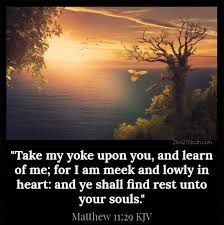
Jesus said ….. “Take my yoke upon you and learn from me, for I am gentle and humble in heart, and you will find rest for your souls.” (Matthew 11:29)
The yoke of Christ is not a burden of religious performance; it is a relationship of sonship, surrender, and fellowship with Him. As we walk with Christ, we discover the rest that comes from trusting the Father’s will.
Conclusion To be one with Christ means: – We belong to Him. – We share in His victory over sin and death. – His Spirit lives within us. – Our lives should reflect His character.
This union is not merely symbolic; it is a spiritual reality. As branches are connected to the vine, believers are connected to Christ and receive life from Him.
“I am the vine; you are the branches.” — John 15:5
When we abide in Christ, His presence becomes visible in our words, actions, attitudes, and relationships. We are called to live in such a way that the world can see Jesus through us.
“Christ in you, the hope of glory.” — Colossians 1:27
May we continually take the yoke of Christ upon us, walk in our identity as sons and daughters of God, and experience the rest that comes from abiding in Him.
TAKING THE YOKE OF CHRIST – SONSHIP AND REST
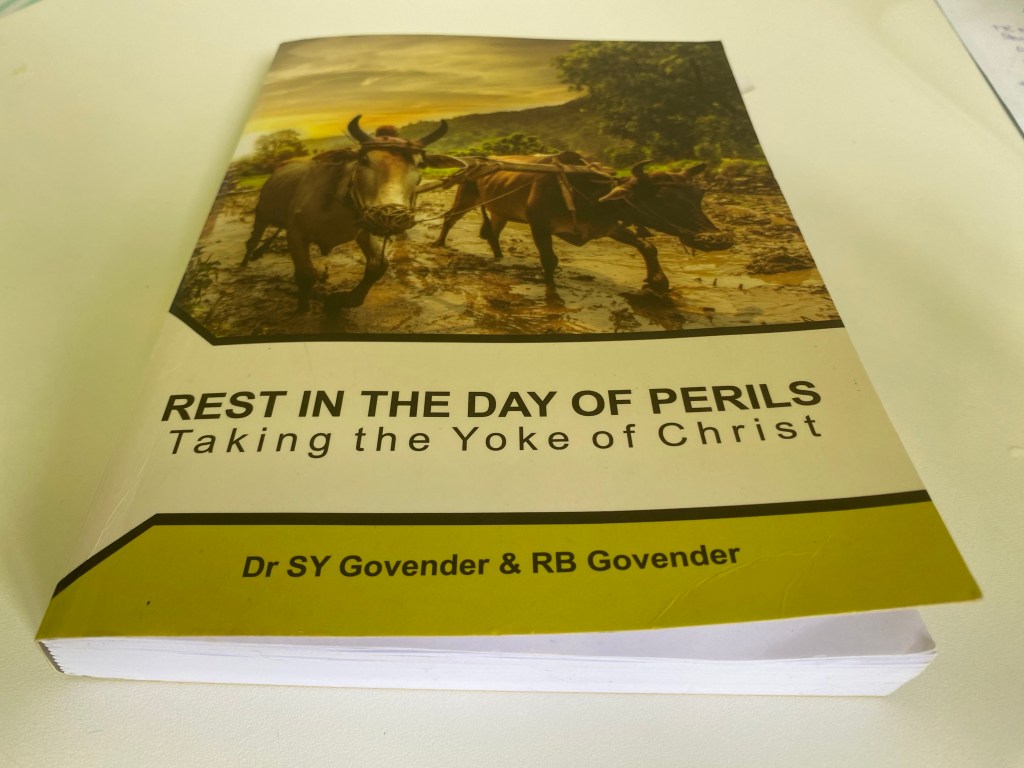
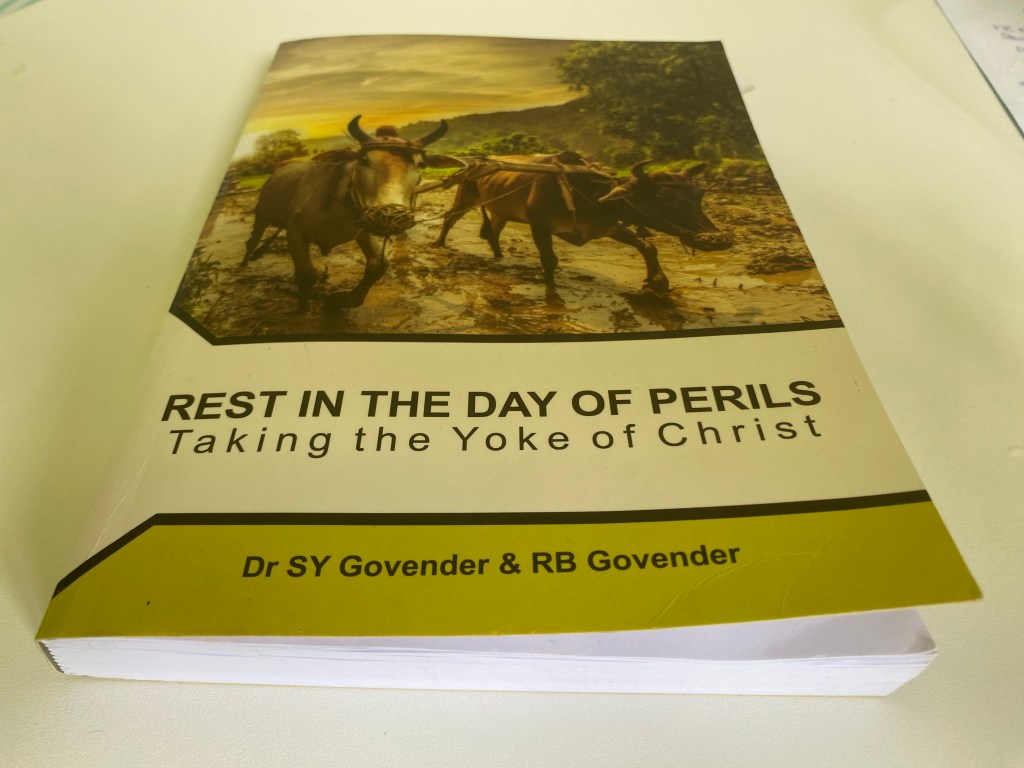
Notes extracted from the book “Rest in the Day of Perils” – Dr S.Y. Govender
Matthew 11:28 Come to Me, all you who labor and are heavy laden, and I will give you rest. 29 Take My yoke upon you and learn from Me, for I am gentle and lowly in heart, and you will find rest for your souls. 30 For My yoke is easy and My burden is light.”
Jesus advocated the taking of His yoke to find rest for our souls. Jesus was yoked to Father God.
John 10:30 I and My Father are one.”
His statements declare His intimate joining with Father God.
- If you know Me, you know My Father (John 14:7)
- If you receive Me, then you receive my Father (Matthew 10:40, Mark 9:37)
- If you imitate Me, you are imitating My Father, because I do exactly what My Father does (John 5:19, John 6:38, John 4.34)
- If you see Me, you see My Father (John 14:9)
- I speak what My Father speaks – if you hear Me, you hear My Father (John 12:49-50)
The implication of His statement : “Take My yoke upon you” is that we also must become sons of God.
John 1:12 But as many as received him, to them gave he power to become the sons of God, even to them that believe on his name:
The word “sons” is derived from the Greek word “teknon” (G5043). “Huios” and “teknon” are two Greek words translated as sons in King James Version, obscuring the subtle but important differences
TEKNON Teknon (G5043) means child, descendent, inhabitant (Strongs Greek Lexicon)
- one who has been birthed to another. Emphasises one’s origin. All believers become tekna by faith
- Emphasises true, genuine children (Thayer)
- Emphasises affectionate relationship (Thayer)
- Emphasises a childlike dependent relationship – not childishness (Helps Word Studies)
Teknon points to one’s origin and implies one who is cherished and loved by the Father. It is an expression of tenderness and affection. The term is used to affirm the deep love and care of the Father for His son. The older son in the prodigal story of Luke 15 was pacified by being called teknon. The father referred to his younger son as huios.
The use of teknon in the following scriptures :
John 1:12 But as many as received him, to them gave he power to become the sons (teknon) of God, even to them that believe on his name:
This scripture should read “become the children of God”. All of us become children of God by faith – believing and receiving Christ.
1 John 3:1 Behold what manner of love the Father has bestowed on us, that we should be called children (teknon) of God! Therefore the world does not know us, because it did not know Him.
Here also, teknon should be translated as children. The word implies deep affection for all those who are children of God
Romans 8:16 The Spirit Himself bears witness with our spirit that we are children of God, 17 and if children, then heirs—heirs of God and joint heirs with Christ, if indeed we suffer with Him, that we may also be glorified together.
In Verses 16 and 17, the word “children” is teknon. The Spirit bears witness with our spirit that we are teknon – states our point of origin. We are born from above. We are authentically saved ones. We are heirs or possessors of God. We can be possessors if God and still have no authority.
Galatians 4:1 Now I say that the heir, as long as he is a child, does not differ at all from a slave, though he is master of all, 2 but is under guardians and stewards until the time appointed by the father.
Here Paul uses the word nepios to indicate that you could be authentic, but as long as you are immature you will still live as a slave.
Paul continues in Roman 8
Romans 8:19 For the earnest expectation of the creation eagerly waits for the revealing of the sons of God.
The created order is waiting for the manifestation of HUIOS SONS – MATURE SONS

The father/son wineskin is inspired by the relationships within the Holy Trinity.
John 10:30 “I and My Father are one.”
Deuteronomy 6:4 “Hear, O Israel: The LORD our God, the LORD is one!
Jesus made a clear, unambiguous statement that triggered the Jews to the point where they wanted to stone him (John 10:31-32). He was accused of blasphemy for “making Himself a God being a man”.
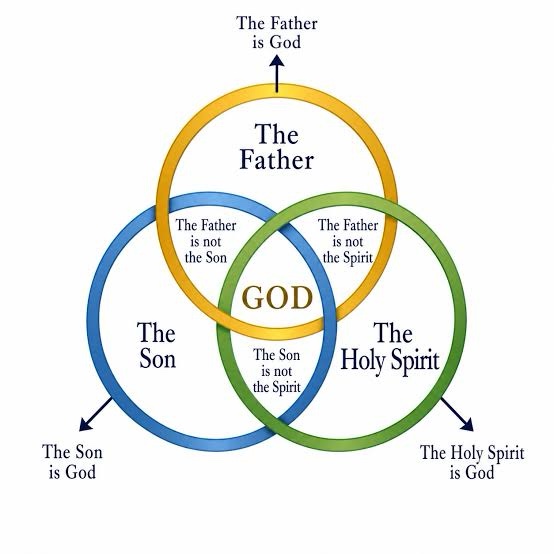
To understand the words of Jesus, we must understand the essential doctrine of the Holy Trinity.
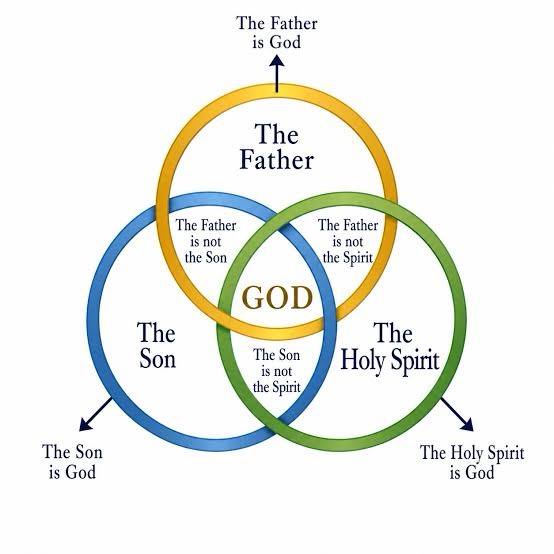
The three persons of the Trinity, Father, Son and the Holy Spirit are co-equal and co- eternal and share the same Divine nature and essence. However, they are functionally distinct from each other.
The three persons of the Trinity are not conflicted in their doctrines. They are inseparable, indivisible and united in purpose.
Jesus prayed, just before His crucifixion, that this model of oneness may be manifested and visible in His disciples
John 17:11 Now I am no longer in the world, but these are in the world, and I come to You. Holy Father, keep through Your name those whom You have given Me, that they may be one as We are.
Jesus prays for oneness among all believers
John 17:20 “I do not pray for these alone, but also for those who will believe in Me through their word; 21 that they all may be one, as You, Father, are in Me, and I in You; that they also may be one in Us, that the world may believe that You sent Me.
This expression of oneness within the Trinity must be represented within a father/son wineskin
This scripture demonstrates the transition from a “teknon” son (child like, immature) to a “huios” son (spiritually, emotionally mature)
1 Corinthians 13:11 When I was a child, I spoke as a child, I understood as a child, I thought as a child; but when I became a man, I put away childish things.
TRADUÇÃO PORTUGUESA

TOMANDO O JUGO DE CRISTO – FILIAÇÃO E DESCANSO
Esta perspectiva foi enviada por Ap Robson Berdeville.

Assumindo o Jugo de Cristo – Filiação e Descanso
1 Pedro 1:1 “Pedro, apóstolo de Jesus Cristo, aos eleitos de Deus, exilados espalhados pelas províncias de Ponto, Galácia, Capadócia, Ásia e Bitínia.” (NIV)
Introdução: Esta carta foi escrita por Pedro para fiéis que vivem em várias regiões do que hoje é a Turquia. Ele os chama de eleitos de Deus — aqueles escolhidos por Deus — e como exilados ou estrangeiros, enfatizando que sua cidadania última está no Reino de Deus, e não neste mundo.
Pedro lembra aos crentes duas verdades fundamentais:
1. Você é escolhido por Deus
Seu relacionamento com Deus está enraizado na graça, propósito e plano eterno de Sua vida. Antes dos alicerces do mundo, Deus te conhecia e te chamava a pertencer a Ele.
2. Você é um peregrino neste mundo
Embora os cristãos vivam em sociedades terrenas, sua identidade e esperança mais profundas estão em Cristo e em Seu Reino eterno.
Nunca devemos esquecer quem somos: pessoas amadas por Deus, chamadas por Ele e vivendo com uma perspectiva eterna.
Mesmo quando você se sente deslocado no mundo, você é conhecido por Deus, escolhido em Cristo e parte do Seu povo.
Cristo Vivendo em Nós O Evangelho se tornou uma realidade viva por meio de Jesus Cristo. Deus está vivendo em nós por meio de Seu Espírito, e Seu caráter está sendo revelado através de nossas vidas. Cristo vive em nós, e Deus está nos transformando à semelhança de Seu Filho. Esta é a profunda união espiritual ensinada ao longo do Novo Testamento.
A União do Crente com Cristo “Mas quem está unido ao Senhor é um com Ele em espírito.” — 1 Coríntios 6:17
“Fui crucificado com Cristo e não vivo mais, mas Cristo vive em mim.” — Gálatas 2:20
Quando Cristo vive em nós, não somos mais definidos pela nossa vida antiga. Recebemos uma nova identidade, um novo propósito e uma nova relação com Deus.
Sua presença nos fortalece, guia e nos transforma por dentro.
Porque Cristo vive em Você – Você nunca está sozinho. – Você tem acesso à força e graça Dele. – Você está chamado a refletir Seu caráter. – Sua vida torna-se um testemunho do poder e do amor d’Ele. – Você pode encontrar o verdadeiro descanso tomando Seu jugo sobre você.
Jesus disse ….. “Tomem meu jugo sobre vós e aprendam comigo, pois sou gentil e humilde de coração, e vocês encontrarão descanso para suas almas.” (Mateus 11:29)
O jugo de Cristo não é um fardo do desempenho religioso; é uma relação de filiação, entrega e comunhão com Ele. Enquanto caminhamos com Cristo, descobrimos o descanso que vem de confiar na vontade do Pai.
Conclusão: Ser um com Cristo significa: – Pertencemos a Ele. – Compartilhamos Sua vitória sobre o pecado e a morte. – Seu Espírito vive em nós. – Nossas vidas devem refletir o caráter dele.
Essa união não é meramente simbólica; é uma realidade espiritual. Assim como os ramos estão conectados à videira, os crentes estão conectados a Cristo e recebem vida dele.
“Eu sou a videira; vocês são os galhos.” — João 15:5
Quando permanecemos em Cristo, Sua presença se torna visível em nossas palavras, ações, atitudes e relacionamentos. Somos chamados a viver de modo que o mundo possa ver Jesus através de nós.
“Cristo em vós, a esperança da glória.” — Colossenses 1:27
Que possamos continuamente carregar sobre nós o jugo de Cristo, caminhar em nossa identidade como filhos e filhas de Deus e experimentar o descanso que vem de permanecer nele.
TOMANDO O JUGO DE CRISTO – FILIAÇÃO E DESCANSO
Notas extraídas do livro “Descanse no Dia dos Perigos” – Dr. S.Y. Govender
Mateus 11:28 Vinde a mim, todos vós que trabalhais e estão pesados, e eu vos darei descanso. 29 Tomem Meu jugo sobre vós e aprendam de mim, pois sou gentil e humilde de coração, e vocês encontrarão descanso para as vossas almas. 30 Pois o meu jugo é fácil e meu fardo é leve.”
Jesus defendia a tomada de Seu jugo para encontrar descanso para nossas almas. Jesus foi ligado ao Pai Deus.
João 10:30 Eu e Meu Pai somos um só.”
Suas declarações declaram sua união íntima com o Pai Deus.
• Se você me conhece, conhece Meu Pai (João 14:7)
• Se você me recebe, então recebe meu Pai (Mateus 10:40, Marcos 9:37)
• Se você me imita, está imitando Meu Pai, porque eu faço exatamente o que Meu Pai faz (João 5:19, João 6:38, João 4,34)
• Se você me vê, você vê Meu Pai (João 14:9)
• Eu falo o que Meu Pai fala – se você me ouve, você ouve Meu Pai (João 12:49-50)
A implicação de Sua afirmação: “Tome Meu jugo sobre vocês” é que também devemos nos tornar filhos de Deus.
João 1:12 Mas todos os que o receberam, lhes deu poder para se tornarem filhos de Deus, até aqueles que creem em seu nome:
A palavra “sons” deriva do grego “teknon” (G5043). “Huios” e “teknon” são duas palavras gregas traduzidas como filhos na versão King James, obscurecendo as diferenças sutis, mas importantes
TEKNON Teknon (G5043) significa criança, descendente, habitante (Léxico Grego Strongs)
• um que foi gerado a outro. Enfatiza a origem de alguém. Todos os crentes tornam-se tekna pela fé
• Enfatiza crianças verdadeiras e genuínas (Thayer)
• Enfatiza o relacionamento afetuoso (Thayer)
• Enfatiza uma relação infantil dependente – não infantil (Estudos de Palavras Ajuda)
Teknon aponta para a origem de alguém e sugere alguém que é amado e amado pelo Pai. É uma expressão de ternura e afeto. O termo é usado para afirmar o profundo amor e cuidado do Pai por Seu filho. O filho mais velho na história pródiga de Lucas 15 foi pacificado ao ser chamado de teknon. O pai se referia ao filho mais novo como huios.
O uso de teknon nas seguintes escrituras:
João 1:12 Mas tantos quanto o receberam, lhes deu poder para se tornarem filhos (teknon) de Deus, até aqueles que acreditam em seu nome:
Esta escritura deveria dizer “tornem-se filhos de Deus”. Todos nós nos tornamos filhos de Deus pela fé – acreditando e recebendo Cristo.
1 João 3:1 Eis que tipo de amor o Pai nos concedeu, para que sejamos chamados filhos (teknon) de Deus! Portanto, o mundo não nos conhece, porque não o conheceu.
Aqui também, teknon deve ser traduzido como crianças. A palavra implica um profundo afeto por todos que são filhos de Deus
Romanos 8:16 O próprio Espírito testemunha com nosso espírito que somos filhos de Deus, 17 e, se somos filhos, então herdeiros — herdeiros de Deus e herdeiros conjuntos com Cristo, se realmente sofrermos com Ele, para que também sejamos glorificados juntos.
Nos versículos 16 e 17, a palavra “crianças” é teknon. O Espírito testemunha com nosso espírito que somos teknon– declara nosso ponto de origem. Nascemos do alto. Somos autênticamente salvos. Somos herdeiros ou possuidores de Deus. Podemos ser possuidores de Deus e ainda assim não ter autoridade.
Gálatas 4:1 Agora digo que o herdeiro, enquanto criança, não difere em nada de um escravo, embora seja senhor de todos, 2, mas esteja sob guardiões e administradores até o tempo designado pelo pai.
Aqui Paulo usa a palavra nepios para indicar que você pode ser autêntico, mas enquanto for imaturo, ainda viverá como escravo.
Paulo continua em Romanos 8
Romanos 8:19 Pois a sincera expectativa da criação aguarda ansiosamente a revelação dos filhos de Deus.
A ordem criada está esperando pela manifestação de HUIOS SONS – FILHOS MADUROS

O odre de vinho pai/filho é inspirado pelas relações dentro da Santíssima Trindade.
João 10:30 “Eu e meu Pai somos um só.”
Deuteronômio 6:4 “Ouçai, ó Israel: O SENHOR nosso Deus, o SENHOR é um só!
Jesus fez uma declaração clara e inequívoca que desencadeou os judeus a ponto de quererem apedrejá-lo (João 10:31-32). Ele foi acusado de blasfêmia por “se fazer um Deus sendo homem”.
Para entender as palavras de Jesus, devemos compreender a doutrina essencial da Santíssima Trindade.
As três pessoas da Trindade, Pai, Filho e o Espírito Santo, são co-iguais e co-eternas e compartilham a mesma natureza e essência Divina. No entanto, eles são funcionalmente distintos entre si.
As três pessoas da Trindade não estão em conflito em suas doutrinas. Elas são inseparáveis, indivisíveis e unidas em propósito.
Jesus orou, pouco antes de Sua crucificação, para que este modelo de unidade possa ser manifestado e visível em Seus discípulos.
João 17:11 Agora não estou mais no mundo, mas eles estão no mundo, e eu venho a Ti. Santo Pai, guarda em Teu nome aqueles que Me deste, para que sejam um como Nós somos.
Jesus ora pela unidade entre todos os crentes.
João 17:20 “Não rogo somente por estes, mas também por aqueles que crerão em Mim por meio da sua palavra; 21 para que todos sejam um, como Tu, Pai, estás em Mim, e Eu em Ti; para que também sejam um em Nós, para que o mundo creia que Tu Me enviaste.
Essa expressão de unidade dentro da Trindade deve ser representada em uma canta de vinho pai/filho
Esta escritura demonstra a transição de um filho “teknon” (infantil, imaturo) para um filho “huios” (espiritualmente e emocionalmente maduro)
1 Coríntios 13:11 Quando eu era criança, eu falava como criança, entendia como criança, pensava como criança; mas quando me tornei homem, deixei de lado as coisas infantis.


Leave a Reply